

How Baseball Appeal Plays Work Explainer
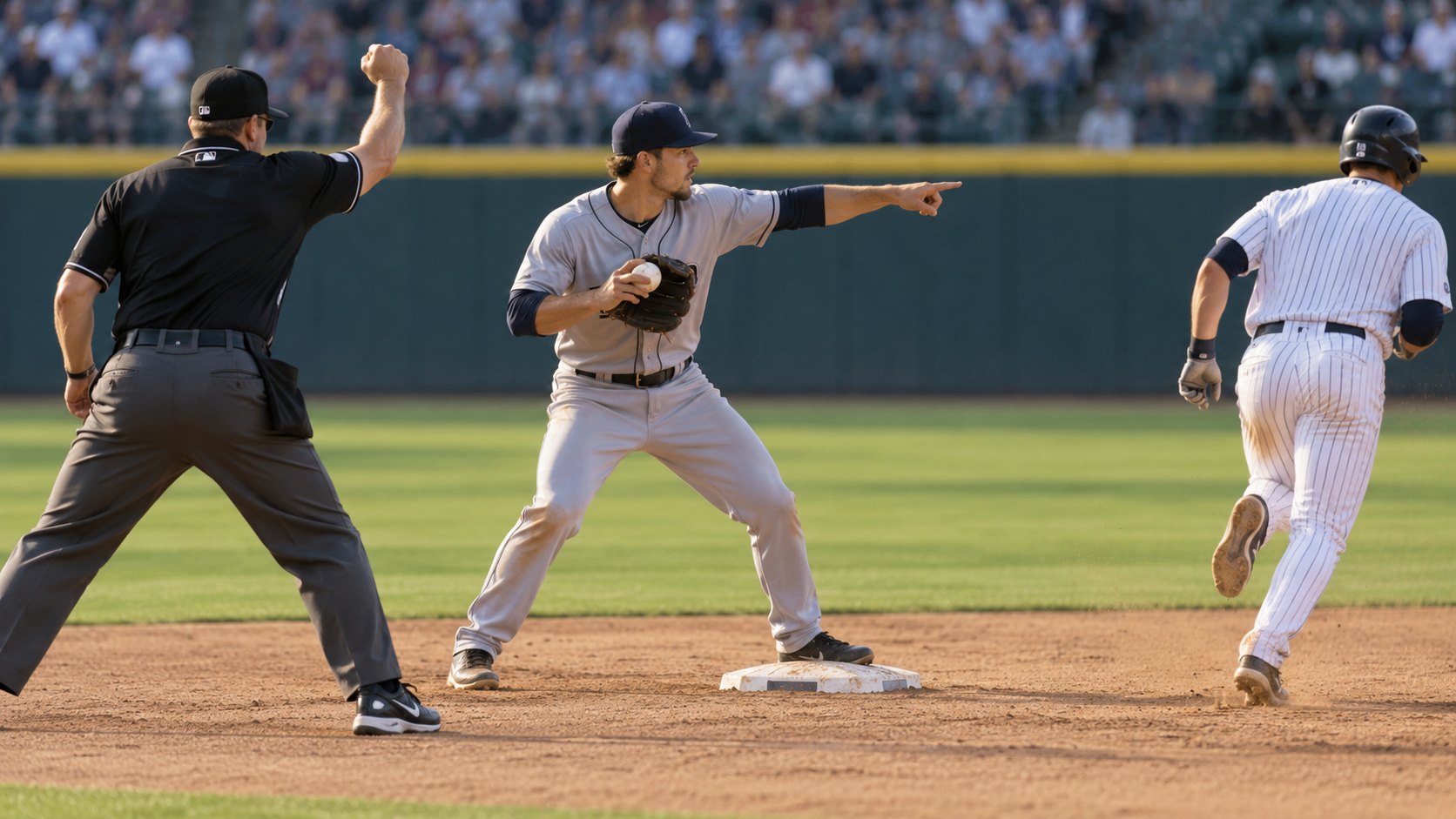
A baseball appeal play lets the defense ask an umpire to rule on a baserunning mistake that the umpire does not enforce automatically. Common examples are a runner missing a base or leaving a base too early on a caught fly ball. Until the defense properly appeals, the runner is generally treated as having touched or retouched the base.
The defense makes the appeal while the ball is live by clearly identifying the runner and the alleged violation, usually while a fielder touches the relevant base with the ball. Some professional rules also allow a verbal appeal during a dead ball. The umpire then rules safe or out on that specific claim.
Timing matters. An appeal normally must be completed before the next pitch or any play or attempted play. If several runners violated the rules, the defense may make separate appeals, but it must do so in the proper window. An unsuccessful appeal can itself count as an attempted play and affect what remains available.
Appeals can also change scoring because an apparent run may disappear if the third out is upheld on certain force or missed-base situations. That is why teams must recognize the mistake, preserve the right to appeal, and state the challenge precisely instead of waiting for the umpire to initiate it.
No. Many missed-base and early-departure violations require a proper defensive appeal.
Usually after the next pitch or a play or attempted play following the violation.
Yes. A successful appeal that creates the third out can prevent a run from counting in specified situations.
Explore more "Explainers"
Discover additional explainers across politics, science, business, technology, and other fields. Each explainer breaks down a complex idea into clear, everyday language—helping you better understand how major concepts, systems, and debates shape the world around us.