

How NFL Fumbles Through the End Zone Work Explainer
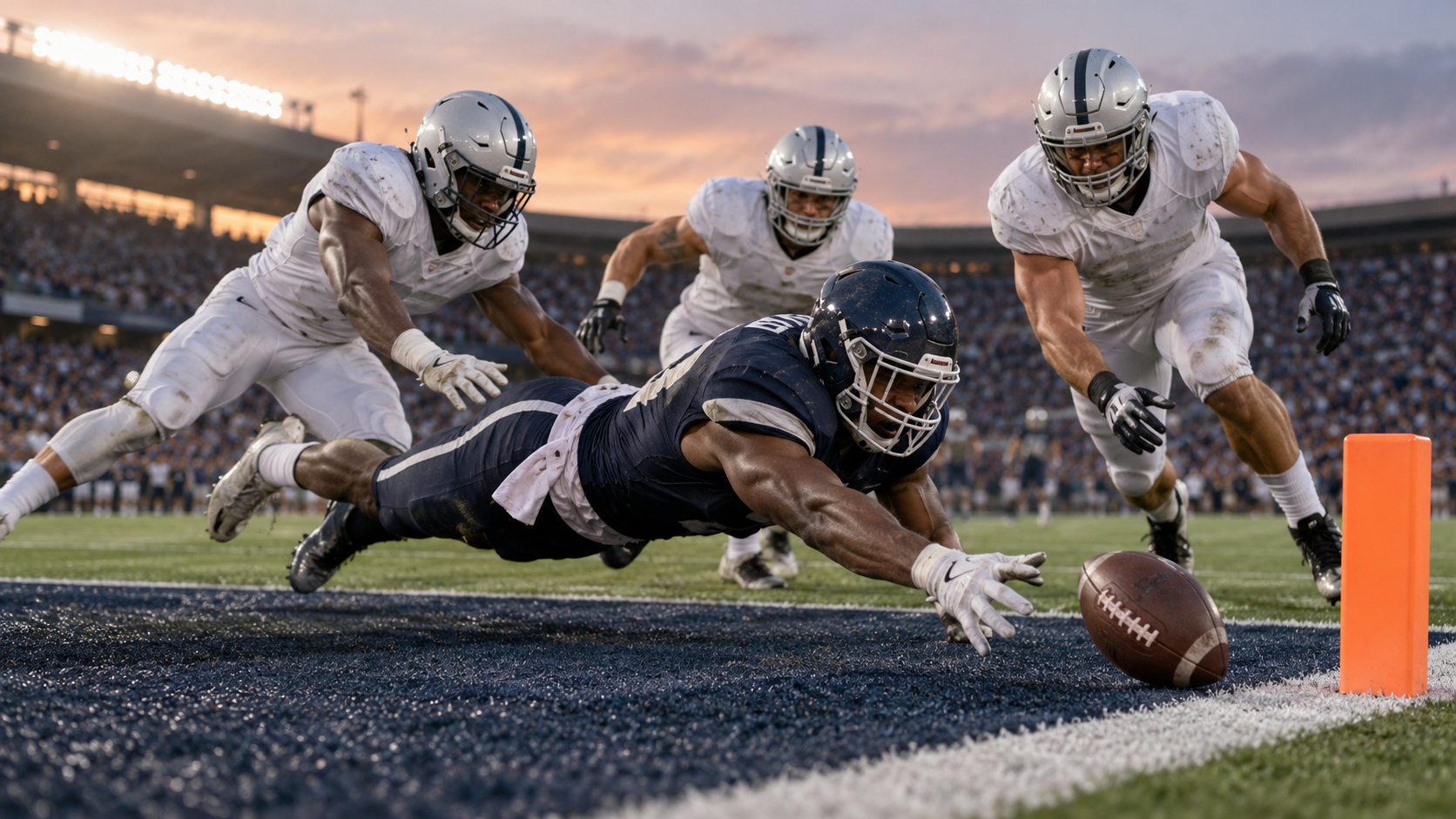
When an NFL runner fumbles forward and the loose ball goes out of bounds through the opponent's end zone, the result is a touchback for the defending team. The offense does not keep the ball at the spot of the fumble, even if the runner was inches from scoring. Possession changes at the touchback spot.
The outcome follows the league's goal-line and impetus rules. The offense supplied the force that sent the loose ball across the goal line, no player recovered it, and the ball became dead out of bounds behind the line the defense protects. That combination makes it a touchback rather than a touchdown.
Elsewhere, a forward fumble that leaves the sideline is generally returned to the fumble spot. A backward fumble out of bounds belongs to the fumbling team at the out-of-bounds spot. Late in a half or on fourth down, separate restrictions can prevent a teammate from advancing a recovered fumble.
The rule feels severe because the location transforms a routine loss of control into a turnover. Officials therefore determine where possession was lost, whether the ball crossed the plane before the fumble, who supplied the force, and exactly where the loose ball became dead. Those facts distinguish touchdown, touchback, safety, and retained possession.
The defense receives possession on a touchback.
A touchdown is scored if possession and the other requirements were established before the ball came loose.
No. The special turnover result applies when the ball exits through the opponent's end zone.
Explore more "Explainers"
Discover additional explainers across politics, science, business, technology, and other fields. Each explainer breaks down a complex idea into clear, everyday language—helping you better understand how major concepts, systems, and debates shape the world around us.