

How Hockey Cross-Checking Penalties Work Explainer
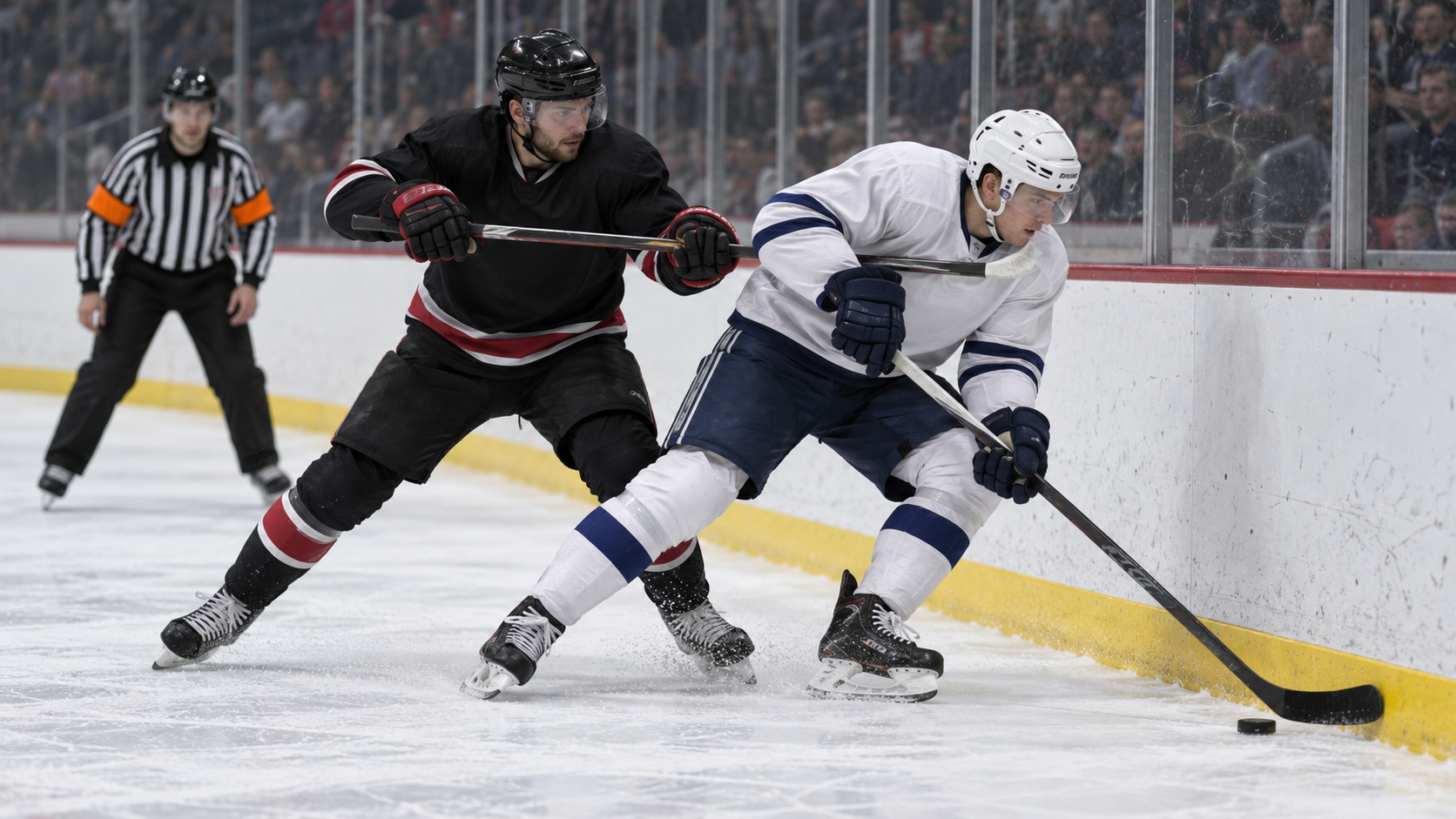
Cross-checking in the NHL is the action of using the shaft of the stick between the hands to forcefully check an opponent. The player pushes or strikes with the stick held away from the body rather than delivering a legal body check with the shoulder or torso.
Officials evaluate the amount of force, the location of contact, the vulnerability of the opponent, and the effect on the play. Light stick pressure during ordinary net-front positioning may be managed differently from a sharp extension into an exposed back, ribs, neck area, or player near the boards.
A minor penalty is the standard call. The referee may impose a major penalty and game misconduct when the cross-check is judged likely to injure. The rules also allow a match penalty for a deliberate attempt to injure, and supplementary discipline may follow after league review.
The stick's position distinguishes cross-checking from many legal battles. Players can use controlled body position and limited stick contact to compete for space, but driving the exposed shaft into an opponent turns that leverage into a stick infraction. Consistent enforcement focuses on both safety and the competitive advantage gained.
The player uses the shaft between the hands to forcefully check an opponent.
A minor penalty is standard, depending on force and danger.
Yes. A major carries a game misconduct, and an attempt to injure can bring a match penalty.
Explore more "Explainers"
Discover additional explainers across politics, science, business, technology, and other fields. Each explainer breaks down a complex idea into clear, everyday language—helping you better understand how major concepts, systems, and debates shape the world around us.