

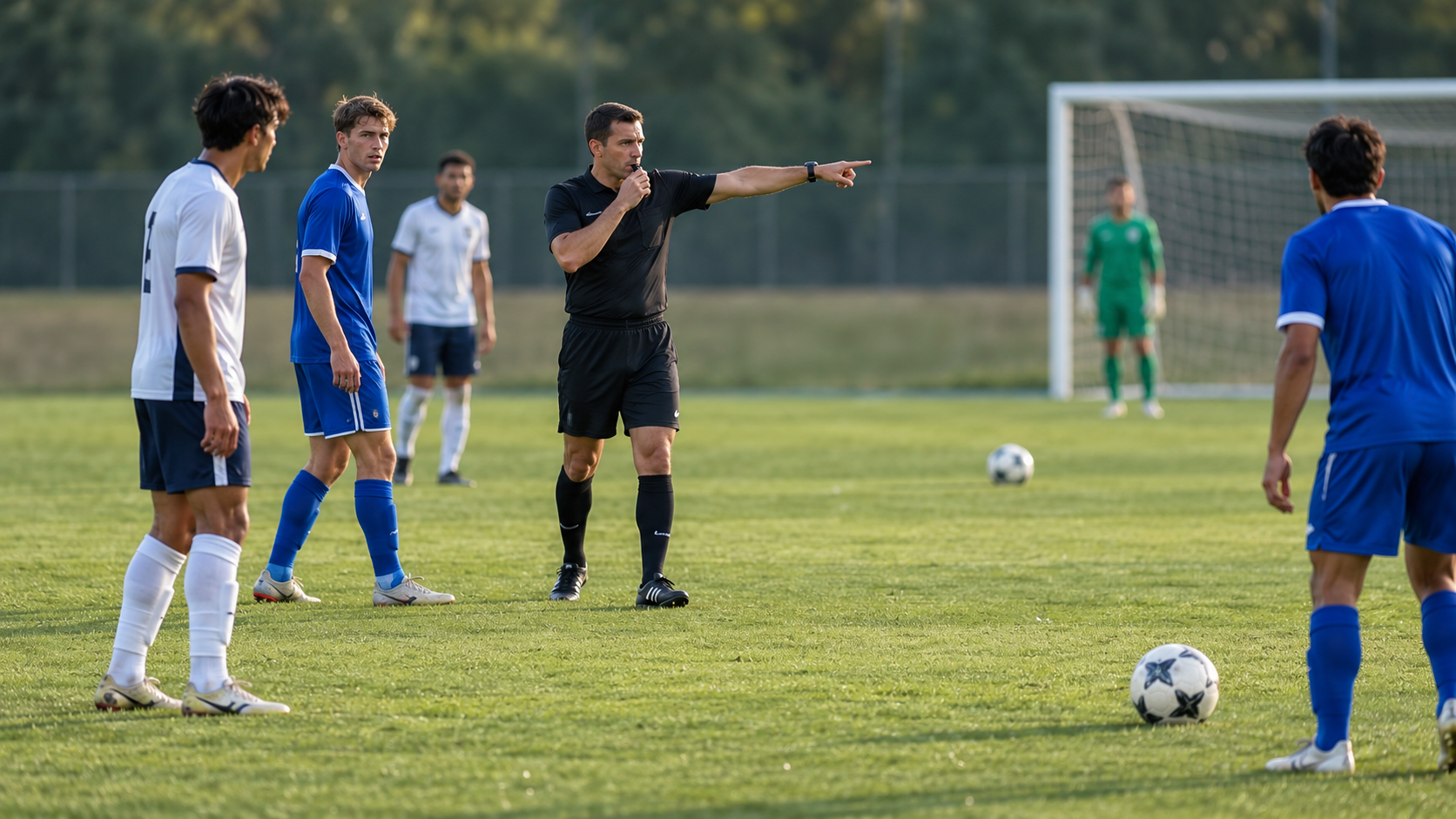
How Soccer Restarts After Outside Interference Work Explainer
Outside interference in soccer can come from a spectator, an animal, an extra ball, or another person or object not entitled to affect play. The referee stops the match when that interference actually influences the action. A harmless object far from play does not require an automatic whistle.
When play is stopped solely for an outside agent, the normal restart is a dropped ball. If the original ball was inside the penalty area, or its last touch was there, the referee drops it for the defending goalkeeper. Otherwise, it is dropped for one player of the team that last touched it.
All other players from both teams must remain at least four metres away until the ball touches the ground. The ball becomes live at that moment. If it enters a goal without touching at least two players, the restart is a goal kick or corner kick rather than a goal.
Different conduct can produce a different restart. A substitute or team official who deliberately interferes may be penalized with a direct free kick or penalty kick and disciplined. Officials identify who or what caused the interruption before selecting a neutral dropped ball or a foul-based restart.
No. The referee stops only when it interferes with the action or creates a safety problem.
One player from the team that last touched the ball receives it at the proper location.
All other players must remain at least four metres away until the ball touches the ground.
Explore more "Explainers"
Discover additional explainers across politics, science, business, technology, and other fields. Each explainer breaks down a complex idea into clear, everyday language—helping you better understand how major concepts, systems, and debates shape the world around us.