

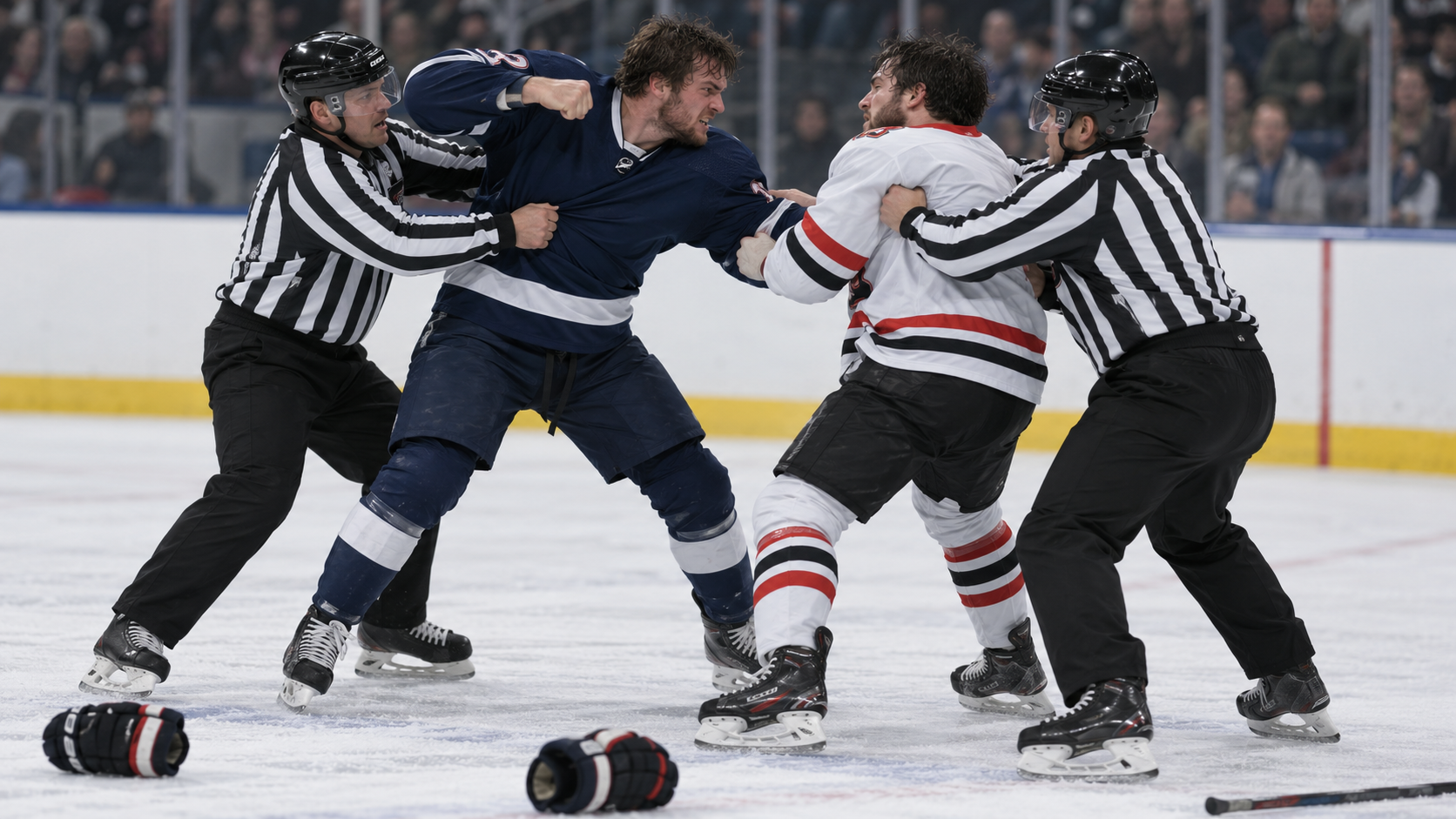
How Hockey Instigator Penalties Work Explainer
In the NHL, an instigator is a player who starts a fight through words or actions rather than merely accepting an opponent's challenge. Officials look for factors such as distance traveled, gloves removed first, the first punch thrown, a threatening posture, or retaliation against an unwilling opponent.
The instigator receives a minor penalty, a major penalty for fighting, and a ten-minute misconduct. Those sanctions are served or recorded together, so the team is short-handed for the minor even though the fighting majors may cancel against one another.
A player judged both the instigator and aggressor can receive additional punishment. An aggressor is the participant who continues throwing punches at an opponent who cannot or will not defend. The two labels address different behavior and may arise from the same confrontation.
Automatic suspension provisions apply when a player accumulates multiple instigator penalties during the season. A player who instigates in the final five minutes or overtime can also face a one-game suspension, with consequences for the coach, unless hockey operations rescinds the finding after review.
A minor, a fighting major, and a ten-minute misconduct are assessed to the instigator.
Not automatically. Officials consider the full sequence, including pursuit, threats, glove removal, and willingness to engage.
Yes. Accumulation and certain late-game instigator calls can trigger automatic suspensions.
Explore more "Explainers"
Discover additional explainers across politics, science, business, technology, and other fields. Each explainer breaks down a complex idea into clear, everyday language—helping you better understand how major concepts, systems, and debates shape the world around us.