

How NBA Kicked-Ball Violations Work Explainer
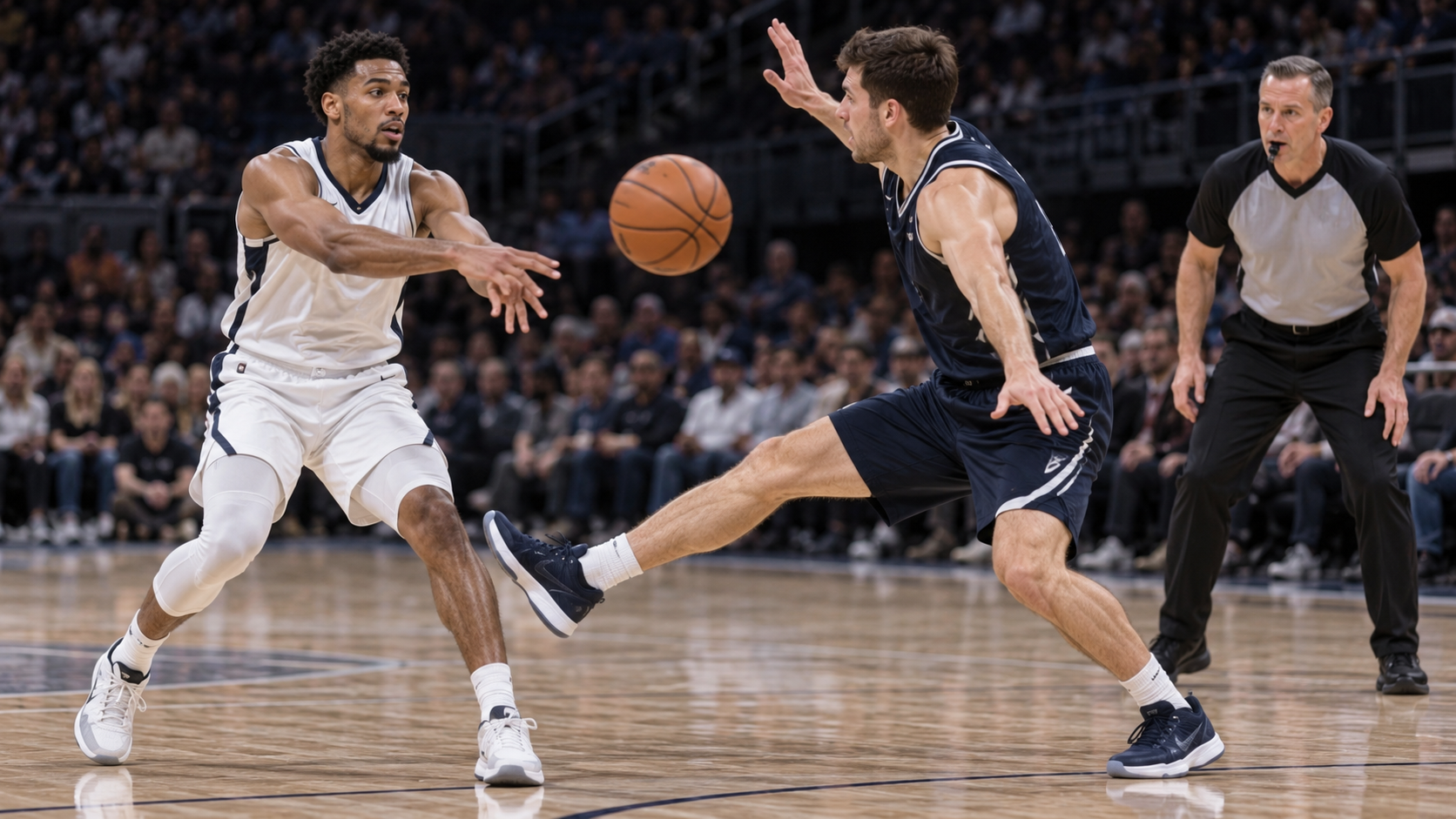
An NBA kicked-ball violation occurs when a player intentionally strikes or blocks the ball with any part of the leg. The rule covers both offense and defense. Accidental contact, such as a pass glancing off a stationary foot, is not a violation simply because the ball touched a leg.
Intent is judged from the movement. Extending a foot into a passing lane, swinging a knee toward the ball, or deliberately trapping the ball with a leg can trigger the whistle. A normal running or defensive motion that produces incidental contact may be allowed to continue.
When the defense violates, the offense retains the ball at the nearest appropriate sideline spot, no nearer the baseline than the free-throw-line extended. The shot clock may be reset under the shot-clock rules, including to 14 seconds in frontcourt situations when less time remained.
An offensive kicked ball gives possession to the defense for a throw-in near the violation. Repeated defensive acts are not personal fouls, but the interruption can be strategically important because it stops a dangerous pass and may restore shot-clock time. Officials therefore distinguish a deliberate leg action from unavoidable contact.
No. The contact must be intentional; accidental contact is not a kicked ball.
Yes. Either team can violate by intentionally using a leg to strike or block the ball.
It can. The applicable reset depends on court location and the time showing when play stopped.
Explore more "Explainers"
Discover additional explainers across politics, science, business, technology, and other fields. Each explainer breaks down a complex idea into clear, everyday language—helping you better understand how major concepts, systems, and debates shape the world around us.