

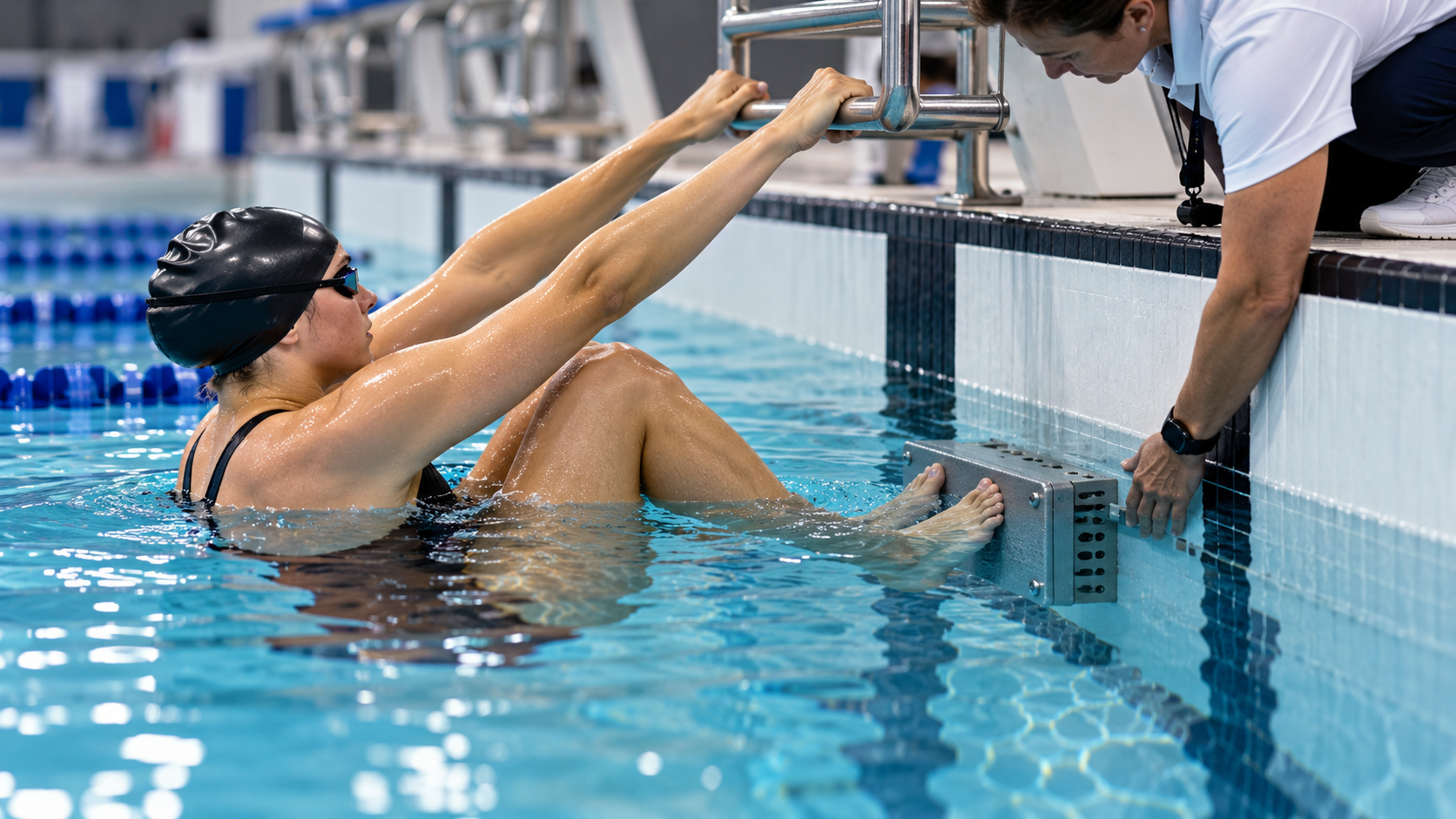
How Swimming Backstroke Ledges Work Explainer
A backstroke ledge is an adjustable platform attached to the starting block and positioned below the waterline. It gives swimmers a firmer surface for their feet than a smooth pool wall, helping them drive backward and upward at the start without changing the basic backstroke starting position.
World Aquatics specifications control the ledge's size, angle, surface, and placement. Recent regulations set a minimum length of 60 centimetres. The device must be securely installed and adjusted within the permitted vertical range so it does not create an individual equipment advantage.
Use is optional. A swimmer may start with feet on the wall instead, and both feet still must comply with the start rules. Toes may be above the water, but they cannot curl over the gutter or touchpads in a way the rules prohibit.
Officials and technical staff check the ledge before a race and can remove or reset an unsafe device. After the start, the apparatus should not interfere with the race. Standard dimensions let athletes use a familiar traction aid while keeping every lane's start equipment equivalent.
No. It is optional, and a swimmer may place the feet directly on the wall.
It provides a grippy underwater surface for the feet during the backstroke start.
No. Adjustment must stay within the dimensions and positions allowed by World Aquatics specifications.
Explore more "Explainers"
Discover additional explainers across politics, science, business, technology, and other fields. Each explainer breaks down a complex idea into clear, everyday language—helping you better understand how major concepts, systems, and debates shape the world around us.