

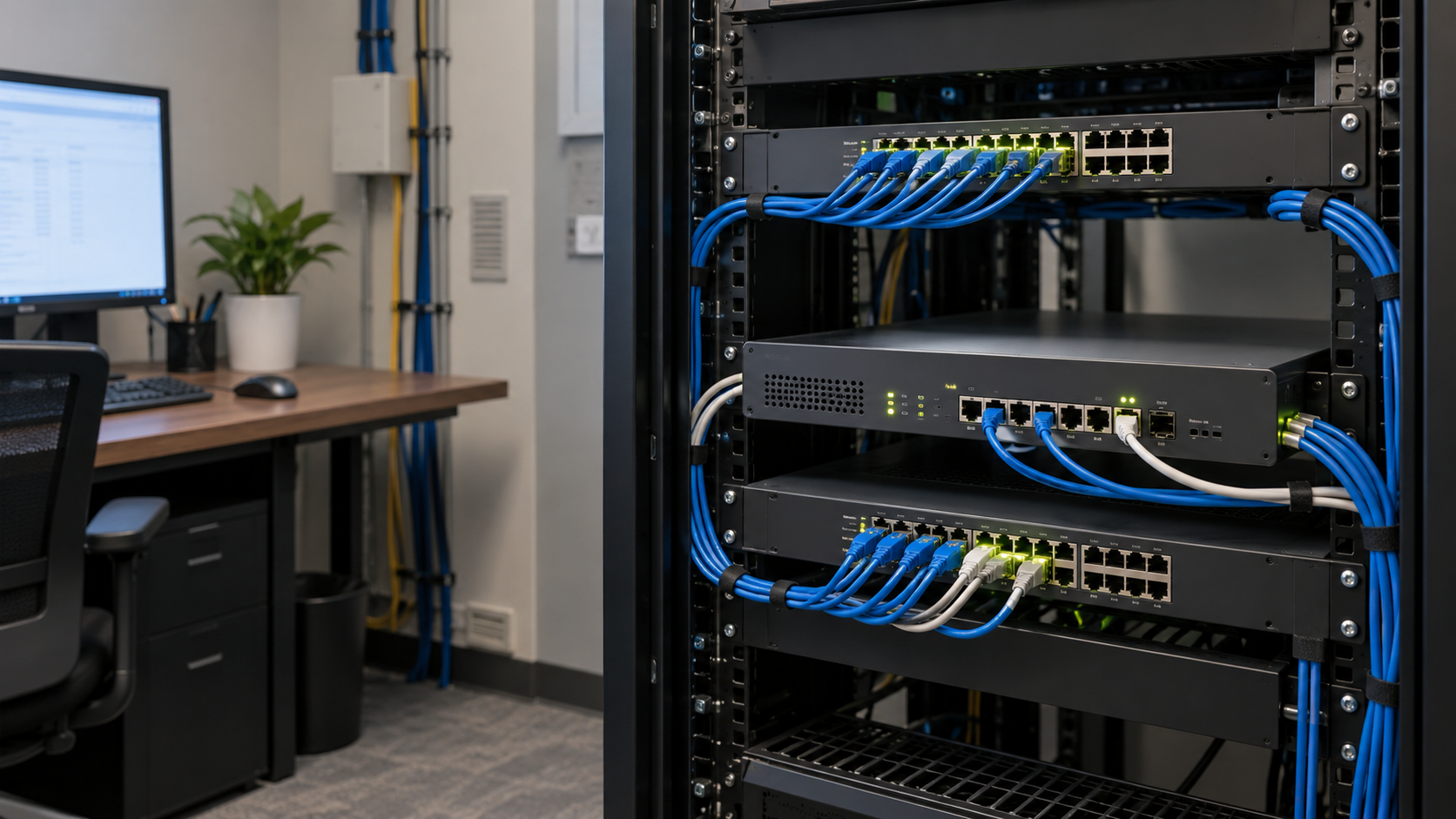
A network firewall is hardware, software, or a cloud service that controls traffic moving between networks or hosts with different security requirements. It compares packets and connections with an ordered policy, then allows, blocks, rejects, or records the traffic. A home router may use a basic firewall between local devices and the Internet, while an organization may place several firewalls between public services, employee networks, sensitive databases, and remote connections. The firewall is a policy enforcement point: its value comes from the traffic it can observe and the rules administrators configure.
At the simplest level, packet-filtering rules examine fields such as source and destination addresses, protocol, and port numbers. A rule might allow web traffic to a public server while blocking unsolicited connections to internal workstations. Stateful firewalls remember active connections. When a device starts an approved connection, the firewall records enough information to recognize legitimate reply packets and can permit them without treating each packet as unrelated. This connection tracking provides more context than a stateless list, although it requires memory and careful handling of unusual or fragmented traffic.
Application-aware firewalls can inspect higher-level protocol details, identify applications that share common ports, or apply controls to web requests and other content. Encrypted traffic limits what an ordinary network firewall can see unless the system terminates or intermediates the protected connection, which introduces privacy, certificate, and operational consequences. Host-based firewalls run on individual computers and can use local information such as the program requesting access. Network and host firewalls often work together because each sees a different part of the environment and remains useful if another boundary is bypassed.
Rules usually follow a least-privilege approach: allow the traffic required for a documented purpose and deny unnecessary paths. Order matters when the device stops at the first matching rule, and broad exceptions can unintentionally override narrow protections. Administrators therefore identify services, directions, sources, destinations, protocols, and time or identity conditions as specifically as practical. Network address translation is often performed by the same gateway, but address translation and firewall filtering are different functions. Hiding internal addresses does not automatically create a complete access-control policy.
Firewalls also produce logs and alerts that help operators understand attempted connections, policy violations, and failures. Logs need synchronized time, useful context, and retention appropriate to the environment. Excessive rules or inspection can reduce performance, while overly permissive policies provide little protection. Changes should be reviewed and tested because a mistake can interrupt important services or expose systems. Firmware and firewall software require updates like other security products, and management interfaces should be restricted so attackers cannot simply modify the policy.
A firewall cannot determine that every allowed action is safe. Malware can communicate through permitted channels, stolen credentials can authorize harmful access, and an application flaw can be exploited over a port that must remain open. Internal threats and devices already inside a trusted segment may never cross the expected boundary. Effective defense combines filtering with secure configuration, software updates, authentication, endpoint protection, segmentation, monitoring, and backups. The practical question is not whether a firewall blocks everything, but whether it reduces reachable attack paths while preserving the communications the organization actually needs. Segmentation makes that policy more useful by placing devices with different roles or risk levels on separate networks. A compromised guest device should not automatically reach payroll systems, management interfaces, or backups. Cloud environments apply similar controls through virtual networks, security groups, and managed filtering services. Whatever form the boundary takes, administrators need an inventory of expected flows; otherwise temporary exceptions accumulate until the rules no longer express a clear security policy.
No. It controls network paths according to policy, but attacks can still use permitted traffic, stolen credentials, vulnerable applications, or compromised internal devices.
It records active connections and uses that context to recognize legitimate packets belonging to an approved session.
No. Address translation changes addressing information, while firewall rules explicitly decide which traffic is allowed or blocked.
Explore more "Explainers"
Discover additional explainers across politics, science, business, technology, and other fields. Each explainer breaks down a complex idea into clear, everyday language—helping you better understand how major concepts, systems, and debates shape the world around us.