

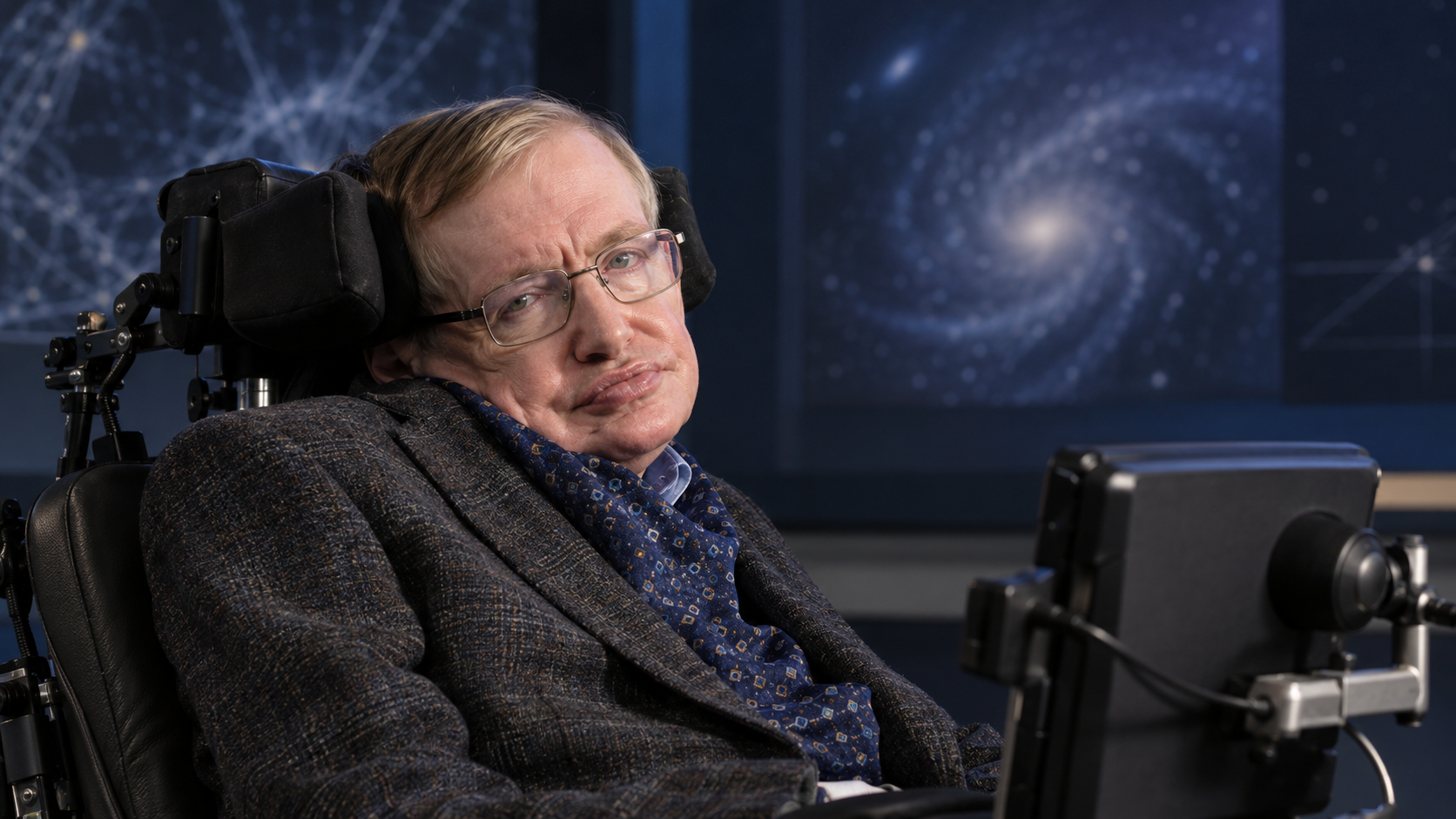
“Success in creating AI could be the biggest event in the history of our civilisation.”
Stephen Hawking opened the Leverhulme Centre for the Future of Intelligence at the University of Cambridge in October 2016 with a striking assessment: “Success in creating AI could be the biggest event in the history of our civilisation.” He was not offering a simple prediction of doom. His speech paired enormous optimism with an equally serious warning that the outcome was uncertain. Intelligent systems could help eliminate disease and poverty, repair environmental damage, and transform nearly every area of life. Yet a technology with such broad power could also amplify existing inequality, enable autonomous weapons, or escape the control of institutions unprepared for its speed and reach.
The quote’s force comes from the scale of comparison. Earlier general-purpose technologies changed how societies produced food, moved people, communicated, and organized work. Advanced AI could touch all of those domains at once because it acts on information and decision making themselves. Progress in perception, language, robotics, and scientific discovery may allow systems to perform tasks once treated as exclusive signs of human intelligence. That possibility does not require a conscious machine to be historically important. Even specialized systems, connected across markets and public services, can alter who has knowledge, who exercises power, and how quickly consequential choices are made.
Hawking therefore emphasized research into consequences as well as capabilities. The technical question is not only how to make a system more powerful, but how to make its objectives reliable, its behavior understandable, and its deployment compatible with human values. Social questions are inseparable from that work. Who owns the systems? Who benefits from higher productivity? What happens to workers whose tasks change? How are military uses constrained? A breakthrough can be beneficial in one setting and dangerous in another, so safety cannot be reduced to a single switch installed after development is complete.
His sentence remains a useful antidote to both complacency and fatalism. If AI could become a civilization-shaping event, then its direction deserves sustained public attention rather than decisions made only inside a few laboratories or companies. At the same time, calling the future inevitable would contradict the point of studying it. Rules, incentives, engineering standards, international agreements, and public investment can influence which applications advance and how risks are shared. Hawking’s message was ultimately about stewardship: powerful knowledge creates an obligation to think further ahead, involve more of society, and ensure that intelligence—human or artificial—serves a future people would actually choose.
Hawking spoke at the 2016 opening of a research center dedicated to the long-term opportunities and challenges of artificial intelligence. His address deliberately held promise and danger in the same frame.
He identified potential gains in health, poverty reduction, and environmental repair while warning that autonomous weapons, disruption, and poorly controlled systems could create profound harm.
AI is a general-purpose capability that can influence science, communication, industry, and government simultaneously. Its effects may spread through decisions and institutions faster than earlier physical technologies.
Historic impact does not depend on machine consciousness. Systems that predict, generate, optimize, and act at scale can reshape society even when their intelligence is narrow or statistical.
Hawking’s warning supports serious safety research, but it does not say disaster is unavoidable. The future depends on design choices, incentives, governance, and cooperation.
The quote calls for democratic attention proportionate to AI’s potential. The larger the benefits and risks become, the more society needs transparency, shared oversight, and a long view.
Explore more "Quotes of The Day"
Continue exploring how writers, thinkers, artists, and advocates have described the choices that shape an everyday life.