

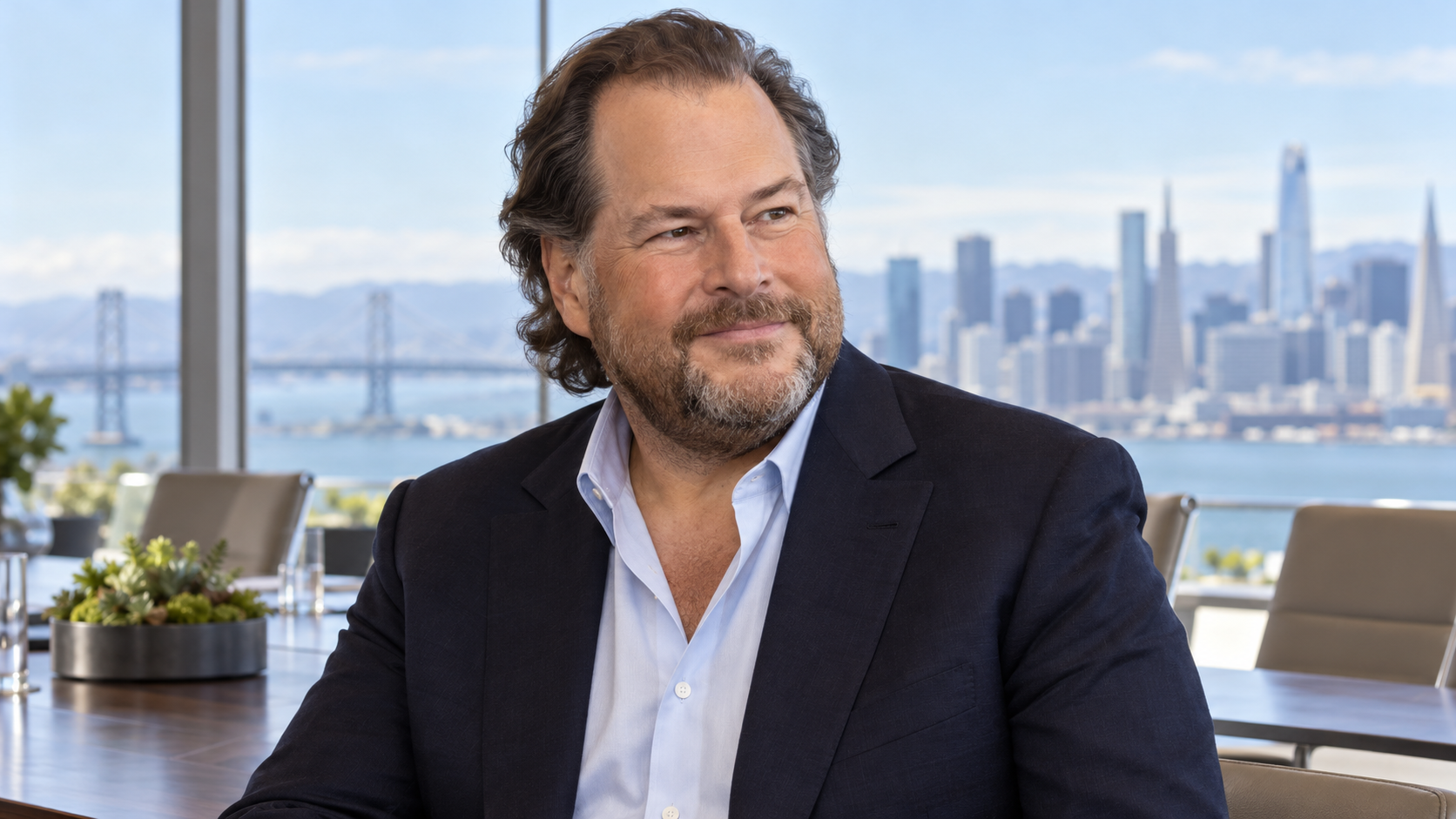
“The business of business is improving the state of the world.”
Marc Benioff used this formulation in a 2021 discussion of stakeholder capitalism associated with the World Economic Forum’s Davos gathering. It deliberately challenges the narrower proposition that the social responsibility of business ends with increasing profit within the rules. Benioff’s version places companies inside the systems that make commerce possible: healthy communities, capable workers, trusted institutions, and a livable environment. If firms draw value from those systems, he argues, they should help strengthen rather than deplete them.
The statement expands strategic attention beyond a single financial measure. A company may create a useful product while also affecting wages, privacy, emissions, housing, suppliers, and public knowledge. Treating those effects as part of management can reveal risks that ordinary accounting delays or places on someone else. It can also uncover opportunity: investments in accessibility, skills, clean operations, or community resilience may improve both lives and the durability of the enterprise. Purpose becomes practical when it changes capital allocation, product rules, and executive incentives.
Broad purpose also creates a danger of vagueness. If management claims to serve everyone, leaders may avoid clear tradeoffs and select causes that generate publicity without challenging the core business. Corporate executives do not have a general democratic mandate to decide what “improving the world” means. Taxes, labor law, regulation, and public institutions remain essential. Stakeholder language deserves skepticism unless companies identify who is affected, publish relevant measures, and accept consequences when their profitable activities conflict with their stated values.
Benioff’s sentence is therefore less a reassuring description than a demanding test. Boards can connect environmental and social claims to audited targets, examine whether political activity matches public commitments, and invite workers or communities into decisions that materially affect them. Managers can start with the company’s largest impacts rather than unrelated philanthropy. Profit remains necessary for continuity, but it does not automatically prove that value was created fairly. A business improves the world only when its ordinary way of operating makes that claim observable. Progress reports should include setbacks and conflicting interests, not only selected success stories. Independent assurance can strengthen confidence in important measures. The harder the claim is to verify, the more likely it is to function as reputation management instead of a guide to conduct. Compensation and promotion criteria offer another test: they show which outcomes the organization rewards when stakeholder goals conflict with short-term financial targets.
Benioff used the line in a 2021 conversation about stakeholder capitalism and the responsibilities of companies beyond shareholders alone.
It reflects his argument that business depends on social and environmental systems it should help sustain.
Corporate purpose becomes meaningful when effects on workers, communities, customers, and the environment influence everyday decisions.
Vague stakeholder claims can hide tradeoffs or substitute executive preferences for democratic institutions unless results are measured and scrutinized.
Climate, inequality, privacy, and trust increasingly shape the operating conditions and legitimacy of companies.
Leaders can make purpose accountable through targets, aligned incentives, transparent political activity, and participation by people bearing the consequences.
Explore more "Quotes of The Day"
Discover more notable quotes from influential voices across politics, science, business, technology, sports, and culture. Each quote offers insight into how ideas, beliefs, and decisions shape the world around us.