

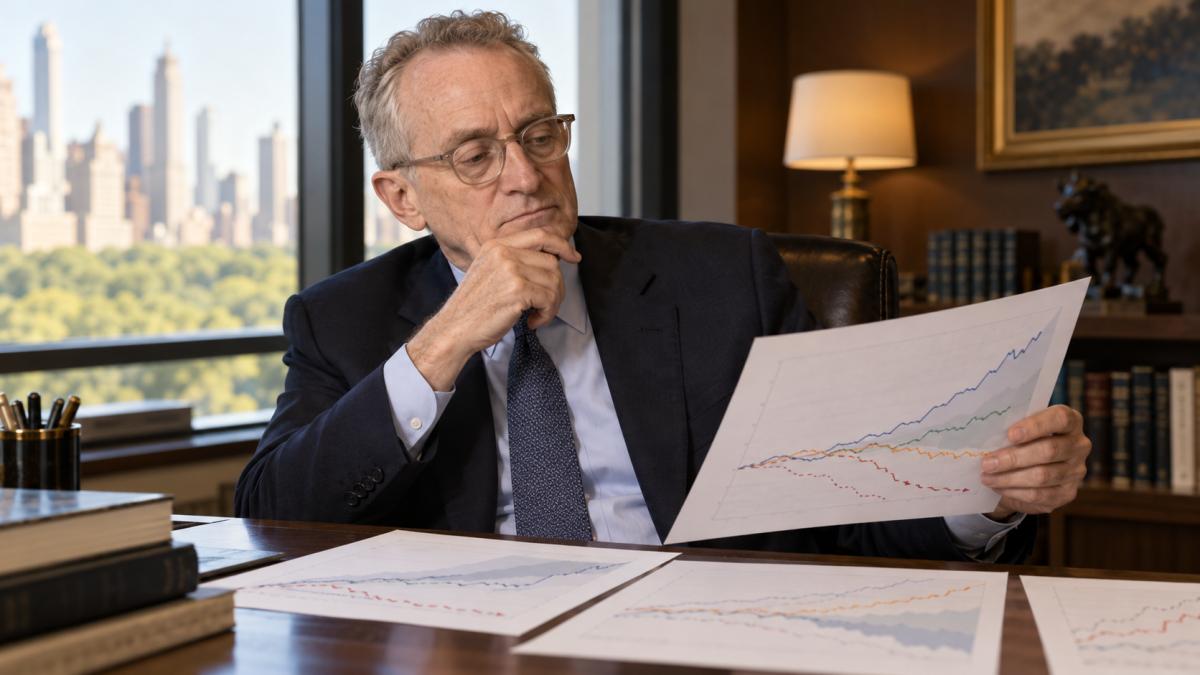
“You can’t predict. You can prepare.”
Howard Marks used these words as the title and conclusion of a 2001 investment memo. Writing after the technology bubble and amid deep uncertainty, he distinguished forecasts from preparation. Investors naturally want to know which event will occur and when, but confidence about a single future often exceeds the evidence. Preparation accepts a range of outcomes and constructs a position that can survive being wrong. Marks’s formulation condenses a broader risk philosophy: the future cannot be made certain, yet exposure, resilience, and response remain within an investor’s or manager’s influence.
In a business, preparation begins with scenarios rather than one official forecast. Leaders can identify conditions that would threaten liquidity, supply, safety, demand, or trust; estimate how quickly each could develop; and decide which early signals deserve attention. They can preserve cash and borrowing capacity, diversify critical dependencies, rehearse incident roles, and create options before they are urgently needed. The purpose is not to defend equally against every imaginable event. It is to avoid a structure that succeeds only if one confident prediction proves exactly right.
Preparation has costs and can become fear-driven. Excessive buffers may suppress investment, experimentation, and returns. Scenarios can also give an illusion of completeness when the most damaging event arrives from outside the list. Marks does not make prediction useless; probabilities, market research, and operating forecasts still inform decisions. His warning is about precision and certainty. A good plan combines a view of what is likely with humility about what is possible, then sizes commitments so that surprise does not eliminate the ability to respond.
The line is especially relevant when AI accelerates markets while also encouraging confident forecasts based on abundant data. Models can expose patterns, but they cannot remove regime change, human reflexivity, or rare shocks. Boards can stress-test assumptions, monitor concentration, and specify actions linked to thresholds rather than debating predictions indefinitely. Teams can perform pre-mortems and test recovery paths. Marks’s compact contrast turns uncertainty from an excuse into a design constraint: because the future cannot be known, resilience, options, and disciplined readiness become part of strategy. Preparation improves when responsibility is assigned before the event. For each scenario, a team can identify who declares the threshold, who communicates, which decisions are preauthorized, and what resource is immediately available. After a drill or real disruption, the playbook is revised from observed friction. This transforms resilience from a binder of possibilities into practiced coordination, while keeping room for judgment when the actual event refuses to match the script.
Marks used the phrase for a November 2001 Oaktree memo written after the technology bubble.
He argued that investors should focus less on precise forecasts and more on readiness across plausible outcomes.
Preparation uses scenarios, buffers, options, signals, and rehearsed responses to reduce the cost of being wrong.
Resilience is not maximal caution; excessive protection can prevent investment, learning, and value creation.
Data-rich models may increase confidence without eliminating shocks, feedback loops, or structural change.
Stress tests and threshold-based actions let organizations use forecasts while remaining capable when forecasts fail.
Explore more "Quotes of The Day"
Discover more notable quotes from influential voices across politics, science, business, technology, sports, and culture. Each quote offers insight into how ideas, beliefs, and decisions shape the world around us.