

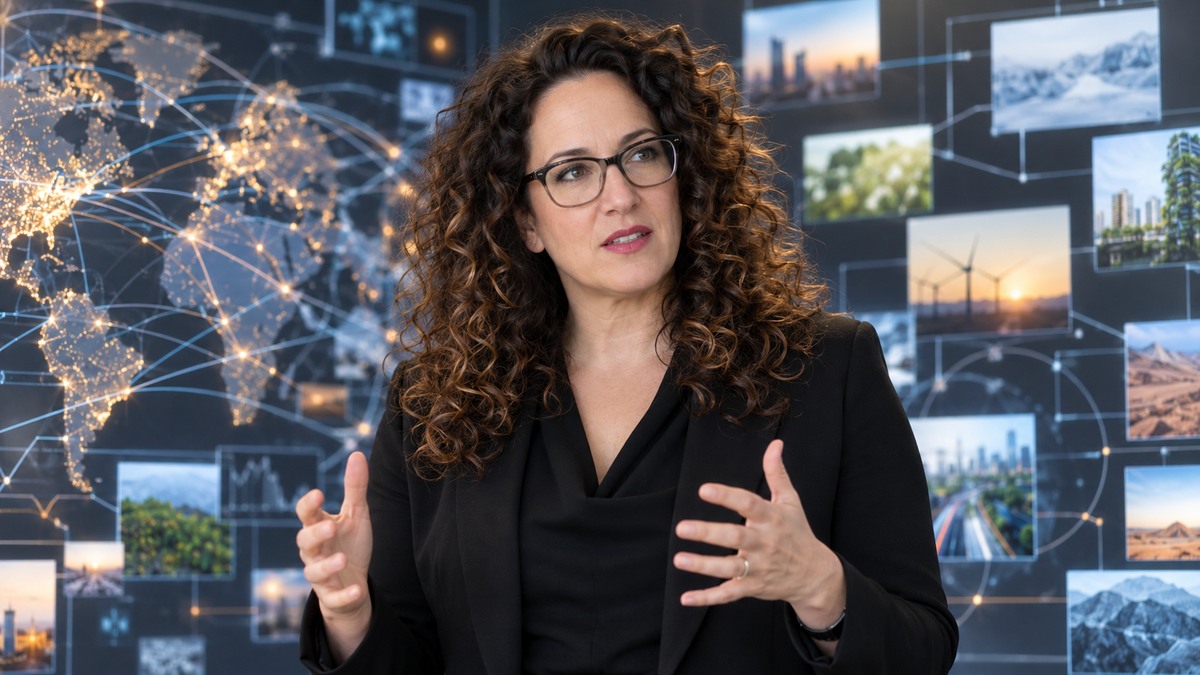
“The future is not pre-determined and that is a good thing because it means we have the ability to shape it.”
Amy Webb used this formulation in a Trustmakers conversation about quantitative foresight and institutional readiness. It rejects the idea that leaders can only wait for disruption, emphasizing disciplined observation, alternative scenarios, and present choices that shape possible futures. Foresight is not prediction with greater confidence. It identifies signals, uncertainties, stakeholders, and plausible paths so an organization can act before one forecast becomes a crisis. The future remains partly open because present incentives, investments, standards, and habits influence what becomes likely. The business value of the line appears when it changes a real decision. It directs attention toward assumptions that routine can hide and invites a team to examine the system behind an outcome instead of treating the visible result as a complete explanation.
Teams can scan outside their industry, distinguish durable trends from temporary noise, and build several scenarios with clear assumptions. Each scenario should produce a near-term action that is useful across multiple futures or a signpost that tells leaders when to change direction. Application therefore requires an explicit mechanism: what should people do differently, what signal should move, and when will the team examine the result? Writing those elements down turns general agreement into a testable management practice.
Scenario work can become elaborate storytelling detached from budgets and decisions. It can also amplify the perspective of people already in power. Effective foresight includes affected communities, documents uncertainty, and resists treating a technologically possible future as socially desirable or inevitable. Context matters because an idea that improves one situation can create harm in another. Leaders need boundaries, dissent, representative evidence, and a way to correct course. Accountability cannot be delegated to the quotation or the tool used to implement it.
AI, climate risk, geopolitics, and demographic change interact in ways that make single-point forecasts especially fragile. Organizations need recurring observation and governance, not an annual trend presentation. The objective is greater readiness and choice, not the performance of certainty. Choose one strategic assumption expected to remain true for three years. Identify two signals that could weaken it, two stakeholders who see different evidence, and one reversible investment that preserves options while the organization learns. The review should preserve what was known when the choice was made, document what changed, and share the learning beyond one team. Repeated with discipline, that cycle converts a memorable sentence into better judgment rather than another short-lived management theme. It also makes the cost of assumptions visible, allowing future teams to reuse proven knowledge while recognizing the point at which a different customer, risk, or operating environment requires fresh testing.
Amy Webb used this formulation in a Trustmakers conversation about quantitative foresight and institutional readiness. It rejects the idea that leaders can only wait for disruption, emphasizing disciplined observation, alternative scenarios, and present choices that shape possible futures.
Foresight is not prediction with greater confidence. It identifies signals, uncertainties, stakeholders, and plausible paths so an organization can act before one forecast becomes a crisis. The future remains partly open because present incentives, investments, standards, and habits influence what becomes likely.
Teams can scan outside their industry, distinguish durable trends from temporary noise, and build several scenarios with clear assumptions. Each scenario should produce a near-term action that is useful across multiple futures or a signpost that tells leaders when to change direction.
Scenario work can become elaborate storytelling detached from budgets and decisions. It can also amplify the perspective of people already in power. Effective foresight includes affected communities, documents uncertainty, and resists treating a technologically possible future as socially desirable or inevitable.
AI, climate risk, geopolitics, and demographic change interact in ways that make single-point forecasts especially fragile. Organizations need recurring observation and governance, not an annual trend presentation. The objective is greater readiness and choice, not the performance of certainty.
Choose one strategic assumption expected to remain true for three years. Identify two signals that could weaken it, two stakeholders who see different evidence, and one reversible investment that preserves options while the organization learns.
Explore more "Quotes of The Day"
Discover more notable quotes from influential voices across politics, science, business, technology, sports, and culture. Each quote offers insight into how ideas, beliefs, and decisions shape the world around us.