

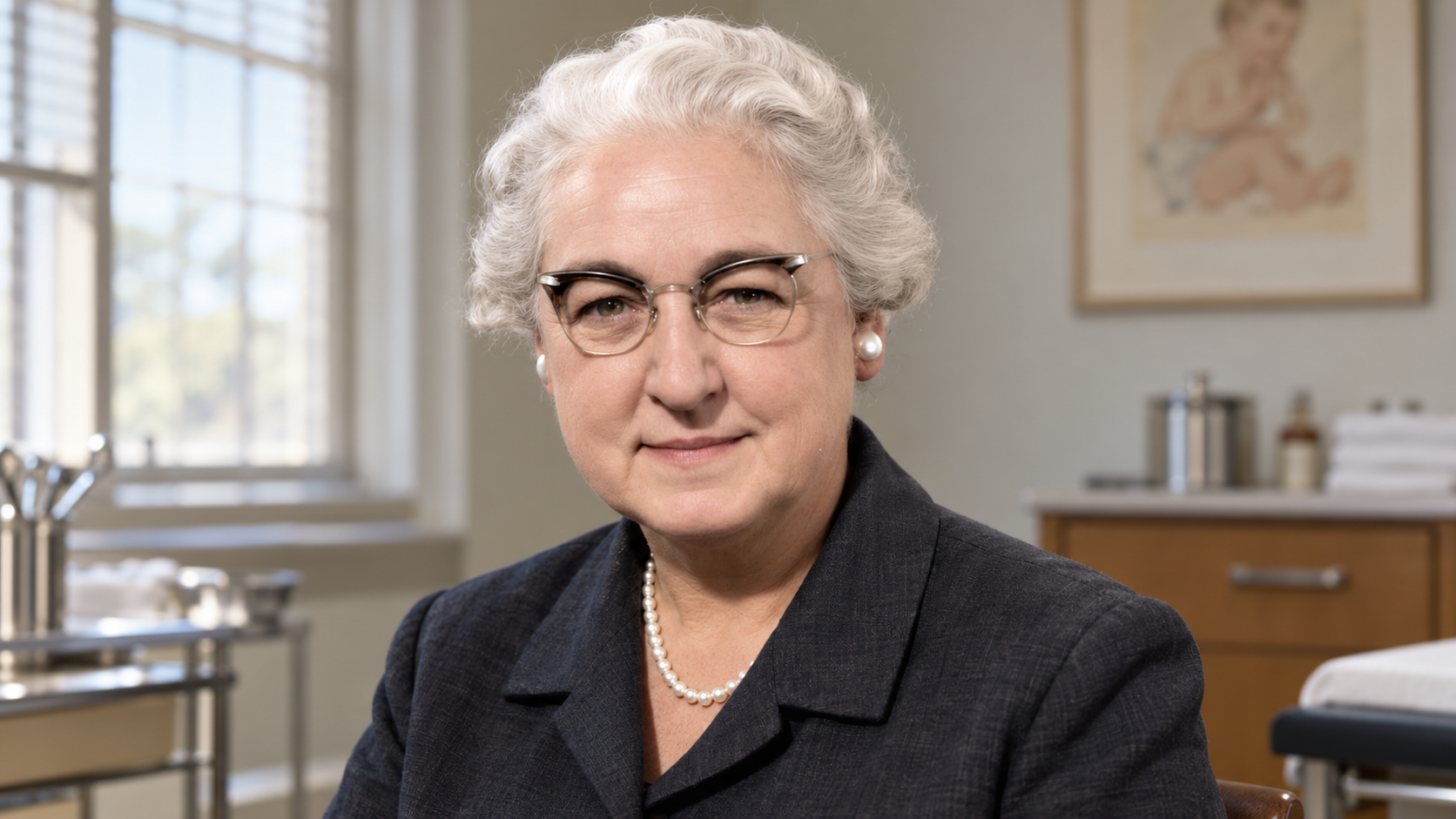
“Nobody, but nobody, is going to stop breathing on me.”
Virginia Apgar’s emphatic statement about breathing is preserved in the biographical accounts of Columbia University and Johns Hopkins University. Columbia prints it with a period, while Johns Hopkins uses an exclamation mark; the wording is the same. These accounts document a professional motto, without establishing a precise first occasion on which she said it. Apgar was an anesthesiologist whose work extended into maternal and child health. She is especially associated with the systematic assessment of newborns that bears her name. Read in that professional setting, the sentence expresses vigilance and a determination to notice danger promptly. Its confidence should not be mistaken for a literal promise that one clinician can prevent every death. The value of the line lies in the responsibility it declares: a vulnerable person’s condition deserves focused attention, even amid the competing demands of a busy clinical setting.
Apgar’s contribution to newborn assessment gives that attitude a concrete form. The score described by Johns Hopkins considers heart rate, breathing, muscle tone, reflex response, and color. A structured assessment turns concern into a set of observations that can be communicated, rather than leaving a newborn’s condition to an unspoken impression. The distinction is important. A professional may care deeply and still overlook a change if there is no reliable way to look for it. A shared method can help a team notice, describe, and respond to what is happening. The quotation therefore pairs naturally with a discussion of dependable observation. The historical measure cannot replace current clinical protocols or guide parents in making treatment decisions from a score. The historical achievement concerns organizing professional attention, not making a short measure answer every question about an infant’s future health.
The motto also raises a question about the relationship between personal commitment and teamwork. Its first-person voice is memorable, but modern care depends on people sharing information and knowing when to request help. An observer who recognizes a problem needs a response system that can act on that knowledge. For a general reader, the enduring lesson is that reassuring language becomes meaningful when it is connected to attentive practice, communication, and appropriate expertise. It is possible to admire Apgar’s determination while acknowledging the limits of any person’s control over illness. That balance protects the quotation from becoming an unfair standard against which every difficult outcome is judged. It also keeps its energy directed toward preparation and responsiveness. The sentence captures an insistence that a patient will not be casually overlooked; the fuller story shows how a clinician can give that insistence an organized, teachable form. Its February place in this collection celebrates that perspective without claiming an anniversary of the original remark.
Columbia and Johns Hopkins preserve Apgar’s motto with matching words and different final punctuation. This post follows Columbia’s period.
The sources do not identify the first occasion on which she used the line. No year is invented for the title.
The sentence expresses vigilance in a clinical career associated with anesthesia and newborn assessment. Its emphatic tone is a commitment, not a guarantee of survival.
The Apgar score organizes observations of a newborn’s immediate condition. A historical discussion of it does not replace professional assessment or current care protocols.
The story connects careful observation with a method that colleagues can share. That connection gives the motto more substance than confidence alone.
A reliable response also depends on teamwork and resources. Personal determination is one part of a wider system of care.
Explore more "Quotes of The Day"
Discover more notable quotes from influential voices across politics, science, business, technology, sports, and culture. Each quote offers insight into how ideas, beliefs, and decisions shape the world around us.