

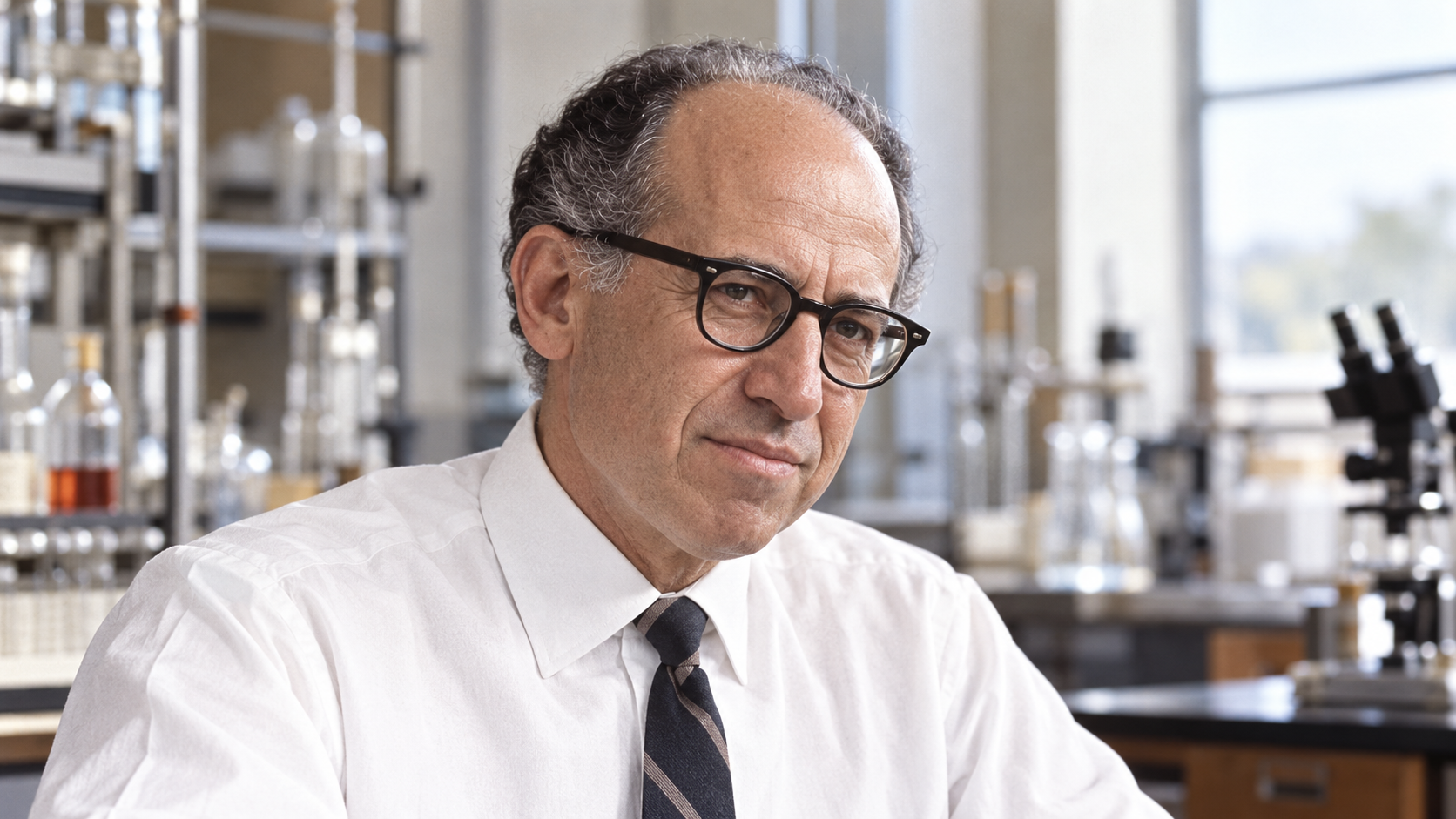
“There is no patent. Could you patent the sun?”
Jonas Salk gave this answer when broadcaster Edward R. Murrow asked who owned the patent on the polio vaccine. The exchange took place in the 1955 television interview associated with the announcement of the vaccine’s successful testing. Before the two sentences featured here, Salk identified the people as its owners in a moral sense. His comparison with the sun made the answer memorable by placing a medical achievement beside something that benefits everyone. It was a public statement about ownership and common benefit, delivered at a moment of enormous interest in polio prevention. The words should be preserved as an answer in that exchange, rather than detached into a general legal rule. A television comparison cannot explain every question about patentability, research funding, or the development of later medicines. It can, however, frame an enduring question about whom a scientific accomplishment is meant to serve.
The force of the comparison comes from its simplicity. People do not normally think of sunlight as an exclusive possession whose value should be reserved for one owner. Salk used that intuition to speak about a vaccine whose importance lay in preventing disease. Scientific discovery, though, is created through labor, institutions, materials, testing, and cooperation. Comparing its benefit to the sun does not erase those practical requirements. Nor does the absence of a patent by itself establish that everyone can receive an intervention whenever they need it. Production, distribution, trained staff, and public confidence still matter. These distinctions make the quotation more useful, because they move the discussion beyond admiration of a single sentence. The question of public benefit concerns the whole path from a research result to a person actually receiving effective care. An announcement of success is a beginning of that responsibility, rather than its completion.
For readers today, the exchange offers a starting point for thinking about access without pretending to settle every dispute over intellectual property. A fair discussion can ask how research is supported, how benefits are shared, and what prevents an effective intervention from reaching the people who need it. Different technologies and health systems may present different answers. Salk’s words provide an ethical emphasis on the public purpose of medicine, not an economic formula that applies unchanged to every case. They also remind us that a celebrated achievement involves many contributors, even when one person becomes its public face. Keeping those contributors and the intended beneficiaries in view helps prevent a heroic story from obscuring the work of implementation. The lasting appeal of the quotation is its invitation to judge medical progress by more than discovery or prestige. Progress must also be considered in relation to the lives it can protect and the arrangements that allow its benefits to be shared.
Murrow asked Salk about the polio vaccine’s patent in the 1955 CBS interview. The featured sentences follow Salk’s statement that the people were its owners.
The Salk Institute preserves the famous rhetorical question, while the American Chemical Society discussion records the fuller exchange.
The sun comparison emphasizes public benefit. It does not establish a universal legal claim about which inventions can be patented.
Popular stories about enormous profits supposedly rejected by Salk can obscure the history. This post makes no unsupported financial claim.
Access involves manufacturing and distribution as well as ownership. An effective discovery must reach people before its promise becomes a practical benefit.
The assigned date is February 8. The documented interview belongs to April 12, 1955.
Explore more "Quotes of The Day"
Discover more notable quotes from influential voices across politics, science, business, technology, sports, and culture. Each quote offers insight into how ideas, beliefs, and decisions shape the world around us.