

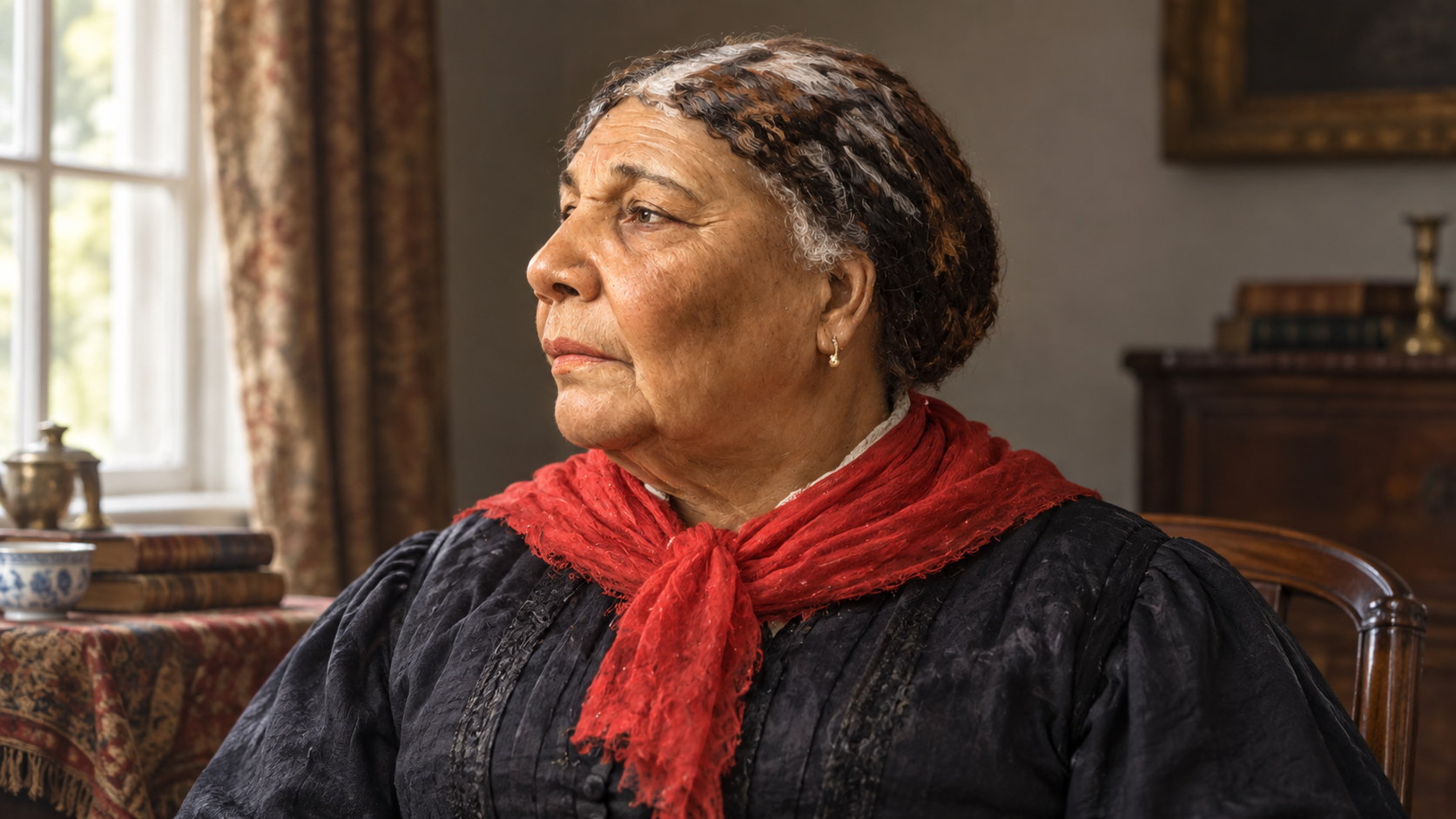
“I had from early youth a yearning for medical knowledge and practice which has never deserted me.”
Mary Seacole begins her 1857 memoir by explaining where her interest in caring for sick people came from. Growing up in Jamaica, she learned through the example of her mother, whom she describes as a respected practitioner and keeper of a boarding house. The selected words appear within this account of childhood curiosity, observation, and increasingly serious practice. Their force comes from continuity: the desire to learn did not disappear when the work became difficult. Wonderful Adventures of Mrs. Seacole in Many Lands later follows her travels and her efforts to assist people during the Crimean War. Reading the opening alongside that later history reveals a woman presenting her competence as something developed over time. The passage is her own retrospective account, not a clinical evaluation of her treatments. It deserves attention as testimony about a vocation, while the medical methods described elsewhere remain part of nineteenth-century history.
The sentence joins knowledge to practice, placing learning beside the work of helping actual people. Curiosity alone would leave the reader with an appealing ambition; practice gives that ambition a demanding setting. Seacole’s account also makes her mother’s experience central, inviting readers to notice forms of knowledge that do not begin in a university lecture room. That observation should not be stretched into the claim that experience makes every treatment effective. Contemporary medicine evaluates benefits and harms through methods that were unavailable to her. The more durable point concerns whose learning receives recognition and how an interest becomes disciplined work. Someone starting a healthcare career today might recognize the movement from watching others to asking better questions and accepting responsibility. This is a present-day comparison, not a claim that Seacole followed a modern training pathway. Her memoir gives a particular historical voice to the desire to become useful through sustained attention and effort.
Seacole’s phrasing can encourage a broader discussion of belonging in healthcare. Accounts of a profession often emphasize institutions and celebrated discoveries, while overlooking people whose routes to care were shaped by migration, exclusion, family teaching, or independent enterprise. Her story makes those routes visible without requiring readers to erase differences between past and present standards. It also cautions against reducing a complicated life to an uncomplicated motivational slogan. A lasting desire to help still needs resources, trustworthy instruction, and opportunities to put learning into action. For readers outside a medical profession, the line can support a modest habit: remain interested in how care works and be willing to learn from people whose experience differs from one’s own. That habit does not confer clinical expertise, but it can improve the questions brought to an encounter. Seacole’s opening claim matters because it treats the wish to understand medicine as a commitment carried across a lifetime, rather than a momentary enthusiasm.
The words come from the first chapter of Seacole’s 1857 autobiography, in a sentence describing her early interest in medicine.
She places her mother’s practical example at the beginning of that story. The memoir is a personal historical account.
Knowledge and practice appear together, emphasizing a desire that develops through activity as well as observation.
Historical experience does not establish that every treatment in the memoir meets present standards of effectiveness.
Seacole’s account invites attention to people whose contributions developed outside familiar institutional routes.
The February date organizes this collection; it does not identify an anniversary of the memoir’s publication.
Explore more "Quotes of The Day"
Discover more notable quotes from influential voices across politics, science, business, technology, sports, and culture. Each quote offers insight into how ideas, beliefs, and decisions shape the world around us.