

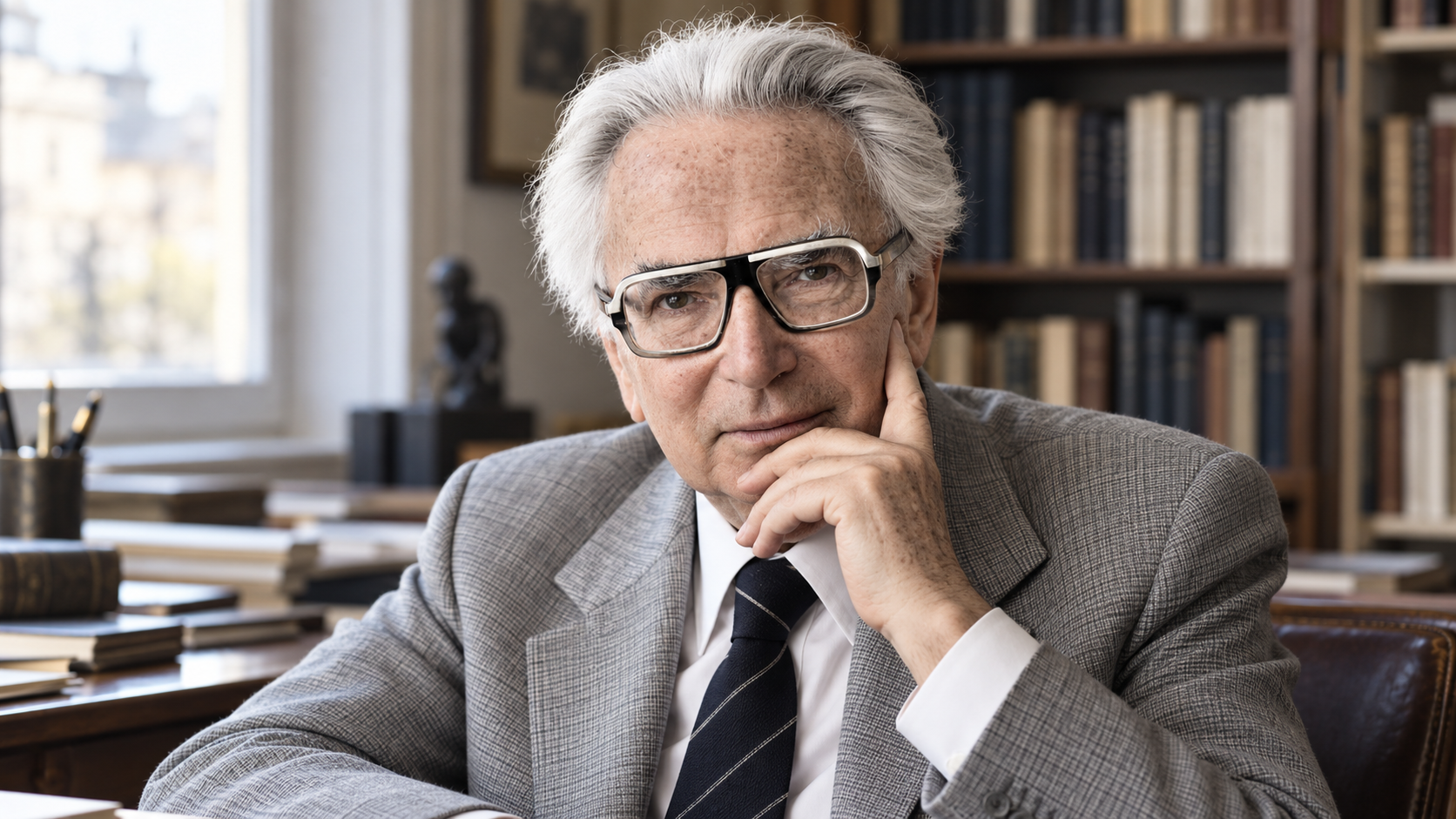
“we are challenged to change ourselves.”
Viktor Frankl’s words appear here at the end of a sentence in the English edition of Man’s Search for Meaning. The surrounding condition is essential: he is considering situations that a person can no longer change, and the original passage includes an example involving incurable disease. Brief versions circulating elsewhere often remove that example. Selecting only the closing clause keeps its words intact, while this explanation restores the limitation that gives them their meaning. Frankl, a psychiatrist associated with logotherapy, writes about possibilities for meaning within circumstances that impose severe constraints. The passage addresses a response to what cannot be altered; it does not tell readers to accept every avoidable difficulty. Its relevance to health therefore depends on distinguishing a genuine limit from a problem that might still be treated, relieved, challenged, or changed. Without that distinction, an account of agency can become an unfair demand placed on someone already facing illness.
Changing oneself can sound like an instruction to feel differently on command. A more careful reading leaves room for grief, anger, fear, and uncertainty, none of which simply disappear through an act of resolve. The possibilities a person experiences may be small, uneven, and dependent on support. Someone might reconsider a priority, ask for companionship, or find language for a difficult conversation; those examples illustrate possible responses rather than requirements drawn from the quoted clause. They do not imply that the person controls the illness or that a particular attitude will determine its course. Frankl’s idea is useful when it opens a space for choice without exaggerating how large that space is. It becomes harmful when another person uses it to judge whether someone is coping correctly. Meaning belongs to the person living the experience, and a professional or relative should be cautious about assigning it from outside. Respect for that distinction preserves the humane possibility within a demanding sentence.
In healthcare, the quote can support conversations about what remains important when plans change or options become limited. Those conversations should accompany appropriate efforts to address symptoms, practical needs, and available treatment, rather than take their place. They should also permit a person to say that a proposed interpretation does not fit. Frankl’s writing supplies a perspective to consider, not a universal test of character or a guarantee of recovery. Readers who find the thought helpful can hold it alongside their own circumstances and values, without assuming that everyone must respond in the same way. Those who offer care can use it as a reminder to notice remaining opportunities for agency while acknowledging losses and constraints. The most responsible application is patient and specific, attentive to what can be changed and what cannot. Understood with its original condition, the clause speaks to a limited but meaningful possibility for response. It does not make suffering a duty or place responsibility for disease on the person enduring it.
This is a closing clause from a longer sentence in the English text of Man’s Search for Meaning.
The original sentence concerns circumstances that can no longer be changed and includes an example of incurable disease.
Frankl considers a possibility for personal response within genuine constraints, rather than a reason to accept avoidable harm.
The passage does not claim that attitude cures disease or that distress reflects a failure of character.
A discussion of remaining choices should respect the person’s own values and willingness to explore meaning.
Care still includes addressing symptoms, practical support, and appropriate treatment. Reflection cannot replace those responsibilities.
Explore more "Quotes of The Day"
Discover more notable quotes from influential voices across politics, science, business, technology, sports, and culture. Each quote offers insight into how ideas, beliefs, and decisions shape the world around us.