

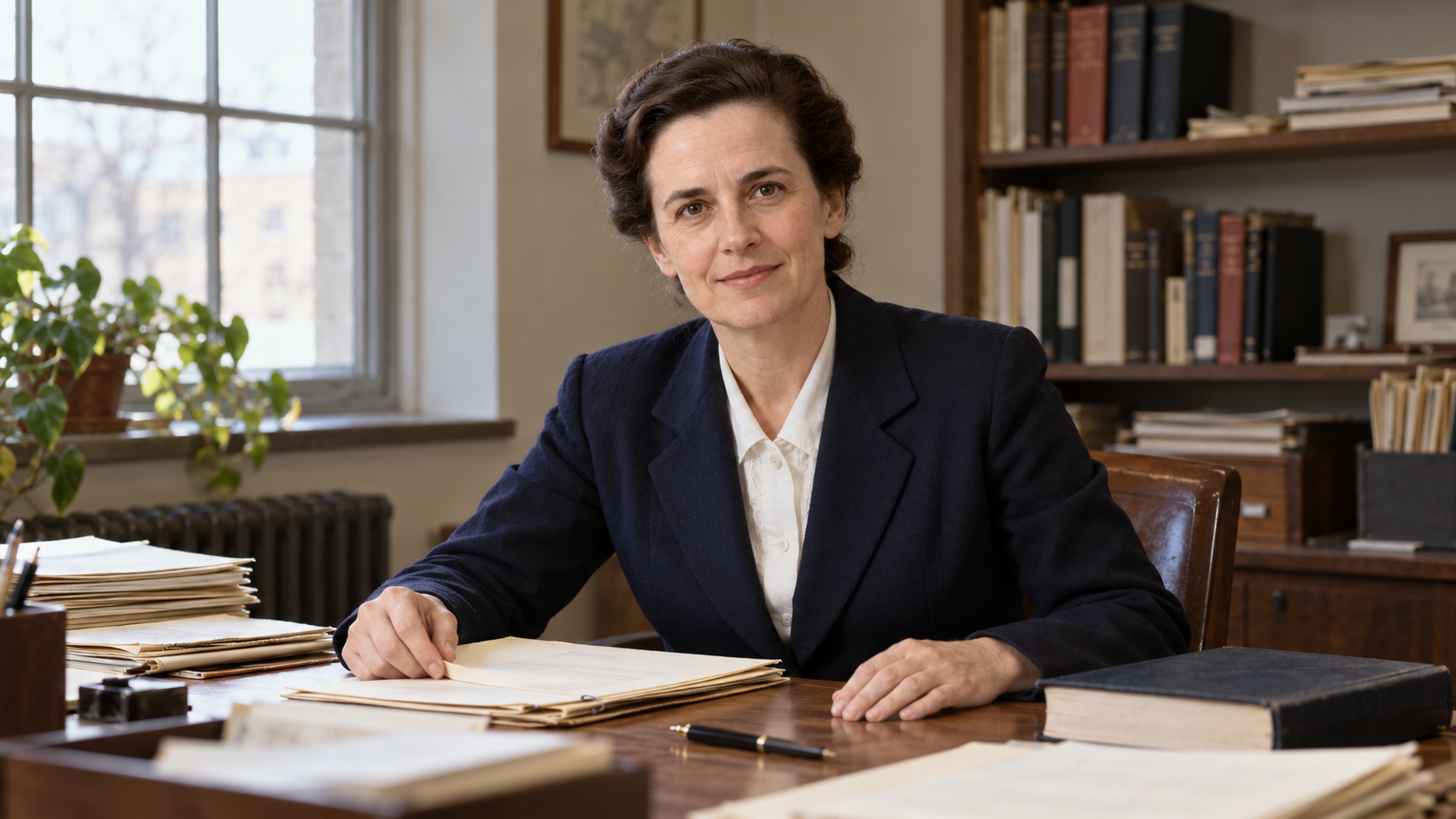
“I was the newest person there and pretty green”
Frances Oldham Kelsey described her arrival at the Food and Drug Administration with disarming modesty. In her Autobiographical Reflections, she recalled receiving the application for thalidomide soon after joining the agency in 1960. The featured words are a clause from that recollection, explaining why her supervisors expected the assignment to be straightforward. They reveal something striking about a famous episode in medical history: a person can be new to a workplace without surrendering the responsibility to ask difficult questions. Kelsey already had extensive scientific and medical training. Her account describes concerns raised by colleagues as well as her own requests for better evidence. The FDA withheld commercial approval, although the drug did reach some Americans through investigational distribution. Remembering that distinction preserves both the importance of her work and the reality of people who were harmed. The story concerns careful review amid uncertainty, rather than a flawless rescue known in advance.
A newcomer’s questions can be easy for an organization to underestimate. They may sound elementary because they revisit a step that experienced colleagues have learned to pass over quickly. Sometimes the explanation is sound and simply needs to be made clear. Sometimes the question exposes an assumption that familiarity has protected from examination. In a health setting, the difference matters to people who may never enter the meeting where a decision is made. Consider an ordinary review of a proposed service change. A recently hired colleague asks how the team knows that a reassuring summary includes the people most likely to encounter difficulties. The question does not prove that the plan is unsafe. It does require the group to explain its basis, identify gaps, and decide who will follow them up. Seniority can provide valuable experience, but it cannot replace that explanation. A useful workplace makes room for a reasonable question before it knows whether the answer will be convenient.
Kelsey’s recollection also invites a broader view of courage. Asking for evidence is easier to celebrate afterward than to support during a delayed decision, when pressure and impatience are still present. Institutions demonstrate their values through what they do at that stage: whether they protect a reviewer’s ability to raise concerns, give colleagues enough time to assess them, and keep responsibility clear. A newcomer should not have to become a lone hero to perform a professional duty. Nor should an experienced person have to pretend that every question has already been answered. The strongest response combines individual judgment with a setting in which concerns can be heard and tested fairly. For readers, this short recollection gives modesty a practical meaning. Acknowledging unfamiliarity can coexist with expertise and resolve. Public health benefits when people distinguish what they know from what they are being asked to assume, and when an organization treats that distinction as part of the work.
Kelsey’s recollection describes her early FDA assignment in 1960. Her modest wording concerned a new workplace role, alongside substantial scientific and medical preparation.
The quotation is an exact clause from her autobiographical account. It introduces a case in which a supposedly straightforward review required persistent questions.
An unfamiliar colleague may ask about an assumption that others no longer notice. The question deserves an explanation rather than dismissal based on seniority.
A concern does not establish a conclusion by itself. It creates a responsibility to assess the evidence, identify gaps, and follow up fairly.
Institutions reveal their standards while a decision remains difficult. Reviewers need time, clear responsibility, and the ability to raise concerns under pressure.
Kelsey’s legacy is compatible with a shared account of professional responsibility. Protecting health should not depend on a newcomer becoming a solitary hero.
Explore more "Quotes of The Day"
Discover more notable quotes from influential voices across politics, science, business, technology, sports, and culture. Each quote offers insight into how ideas, beliefs, and decisions shape the world around us.