

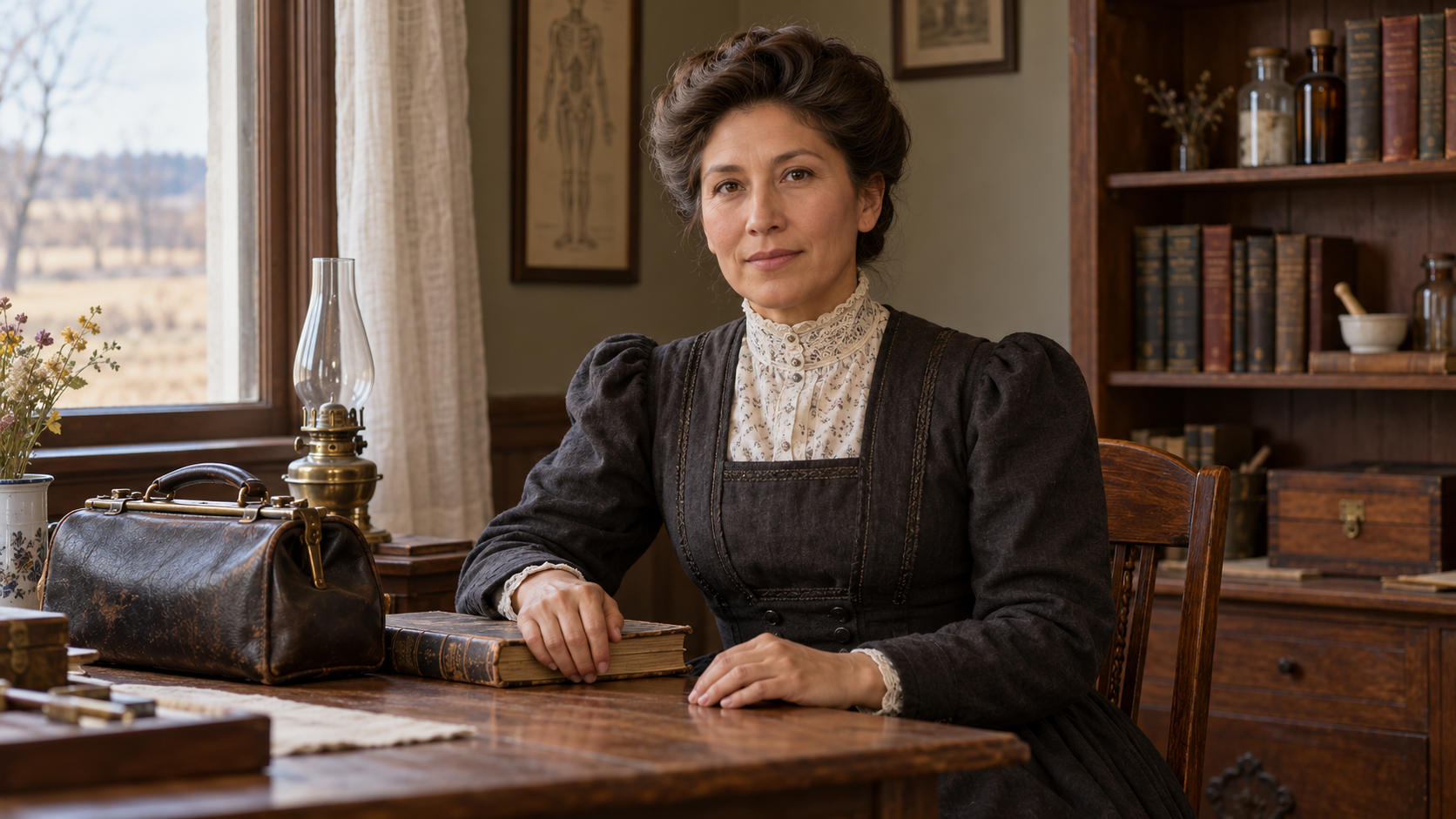
“My office hours are any and all hours of the day and night.”
Susan La Flesche Picotte’s description of her office hours makes availability sound like a promise to a community. The Omaha physician returned to Nebraska after graduating from Woman’s Medical College of Pennsylvania in 1889, becoming the first American Indian woman in the United States to earn a medical degree. Her work included house calls and a private practice serving Native and white patients. A PBS American Masters documentary places the featured sentence alongside an account of a lantern in her window, guiding people toward care at night. The same words appear in a Nebraska Medical Association booklet honoring her hospital and its mission. The sentence evokes a practical reality: illness does not arrive according to a convenient timetable. In a place where distance and weather could make seeking help difficult, knowing that a physician would answer was itself an important part of access. Her commitment was personal, local, and deeply connected to the people she served.
Availability has several dimensions that a posted schedule cannot fully describe. A service may technically exist while remaining difficult to reach, hard to understand, or unfamiliar to people who need it. Consider a family trying to find help after an ordinary workday. They may need clear information about where to turn, a way to ask a question in a language they understand, and reassurance that someone will listen without treating their circumstances as an inconvenience. These illustrative concerns help explain access; they do not describe a documented encounter from Picotte’s practice. They help explain why access involves relationships as well as buildings. A trusted person can make a confusing system more approachable; a dependable arrangement can make that relationship less fragile. The relevant question is whether someone facing a need can find a workable route to assistance. Each unnecessary obstacle adds another demand at a moment when attention and energy may already be strained.
Picotte’s dedication also raises a question about how communities sustain those who care for them. Honoring an extraordinary physician should encourage support for the work, rather than an expectation that every clinician remain endlessly available alone. Her efforts to establish a hospital in Walthill, which opened in 1913, point toward the importance of a lasting place for care. Today, the broader principle can be expressed through shared responsibility: dependable coverage, understandable information, useful connections between services, and respect for the people carrying out the work. Rest and support help make an institution’s promise credible over time. The lantern in the documentary offers an especially clear image of what that promise can mean. Someone in distress needs to know where help can be found. The practical task is to make that signal reliable, through arrangements strong enough to welcome the next person without exhausting the last person who answered. Accessible care depends on commitment, and commitment deserves a structure that allows it to continue.
Picotte’s words describe care that could be sought beyond a convenient timetable. The historical accounts connect that promise with her practice in Nebraska.
A visible route to assistance can matter greatly when distance, weather, or uncertainty makes seeking care difficult. Access begins with knowing where to turn.
Services can exist without being easy to reach or understand. Clear information, respectful communication, and trusted relationships help people approach them.
The useful question is whether a person facing a need can find a workable path to help. Unnecessary obstacles add burdens at an already demanding moment.
Picotte’s dedication deserves recognition alongside the importance of enduring institutions. Her Walthill hospital opened in 1913.
Reliable access requires shared arrangements and support for clinicians. A community’s promise should be strong enough to continue without relying on one person’s exhaustion.
Explore more "Quotes of The Day"
Discover more notable quotes from influential voices across politics, science, business, technology, sports, and culture. Each quote offers insight into how ideas, beliefs, and decisions shape the world around us.