

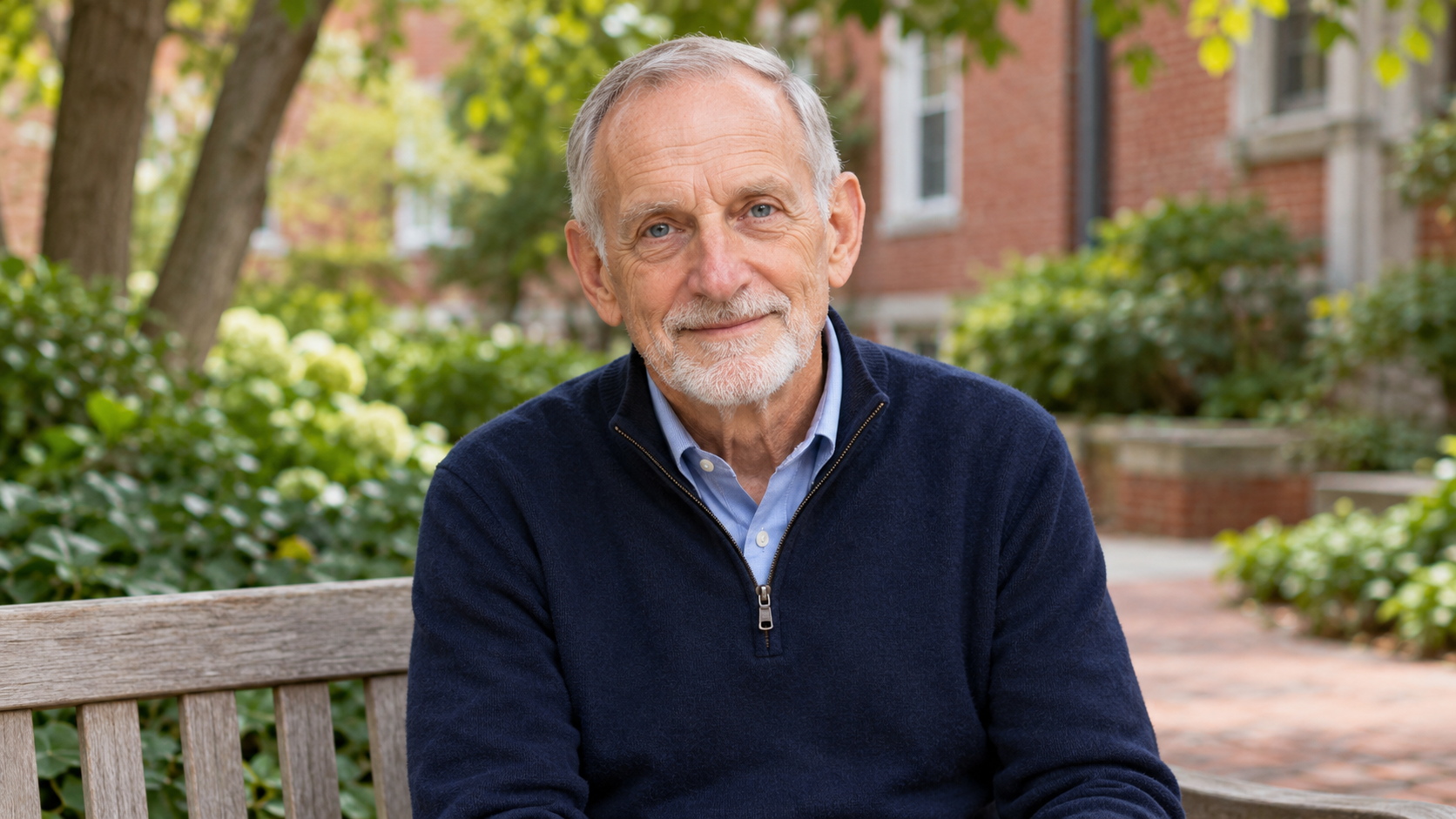
“Our social life is a living system, and it needs maintenance too.”
Robert Waldinger used this image in a Harvard Gazette interview published on February 10, 2023. Discussing his book The Good Life, written with Marc Schulz, the psychiatrist described a form of attention he called social fitness. His comparison with a living system suggests that relationships develop through repeated contact rather than remaining fixed once they have been established. Waldinger directs the Harvard Study of Adult Development, which follows people over time to examine health, relationships and well-being. In this interview he was reflecting on what that work has taught him about human connection. The quotation moves from a broad research subject to a familiar practical question: how do we care for the ties that make up everyday life? Its date identifies the interview, while May 11 is the entry’s position in this daily series.
Maintenance often brings to mind equipment, repairs and chores. Applied to relationships, it asks for something more responsive: noticing another person, making time and recognizing when an old pattern of contact has changed. This is an interpretation of Waldinger’s metaphor, rather than a prescription for a particular amount of social activity. His interview emphasizes that people differ in how many connections they want and that meaningful contact can arise in several settings. A close friend, a relative or a familiar colleague may each have a distinct place in someone’s life. In his earlier Harvard Health account of the study, published in May 2017, Waldinger also described associations between social support, ways of managing stress and later well-being. Longitudinal research can reveal patterns across lives, but those patterns do not guarantee a specific health outcome for an individual. Relationships also vary in quality; more contact is not automatically better if it makes someone feel unsafe or diminished.
The living-system image is useful because it allows for change without treating every change as failure. A friendship may take a different shape after a move, retirement, caregiving responsibility or illness. Sustaining it can require a new rhythm, while forming another connection may begin with something small and ordinary. These examples extend the quotation’s meaning; they are not promises about what any one action will accomplish. People also face obstacles to connection that cannot be solved through personal determination alone, including limited time, accessibility barriers and circumstances that make contact difficult. Thinking about maintenance can bring such conditions into view rather than assigning blame to someone who feels isolated. Waldinger’s words invite attention to a part of well-being that is easy to take for granted. A social life is made of people whose needs, availability and circumstances evolve, and caring for it involves noticing that movement over time.
In his 2023 Gazette interview, Waldinger compared tending relationships with maintaining physical fitness. The selected sentence emphasizes that a social life continues to change.
The comparison concerns ongoing attention. It does not specify a required number of friends or a universal schedule for social activity.
The Harvard Study of Adult Development follows people across years to examine relationships alongside health and well-being. Waldinger discusses its findings in both the 2023 interview and a 2017 Harvard Health account.
Such research identifies patterns and associations over time. It cannot guarantee that a particular relationship or action will prevent illness.
The quotation can encourage thoughtful attention without requiring someone to sustain contact that is harmful. The article distinguishes the quality of connection from simply increasing its quantity.
Circumstances and personal needs may change. A useful interpretation leaves room for boundaries, new patterns of contact and support that makes connection more accessible.
Explore more "Quotes of The Day"
Discover more notable quotes from influential voices across politics, science, business, technology, sports, and culture. Each quote offers insight into how ideas, beliefs, and decisions shape the world around us.