

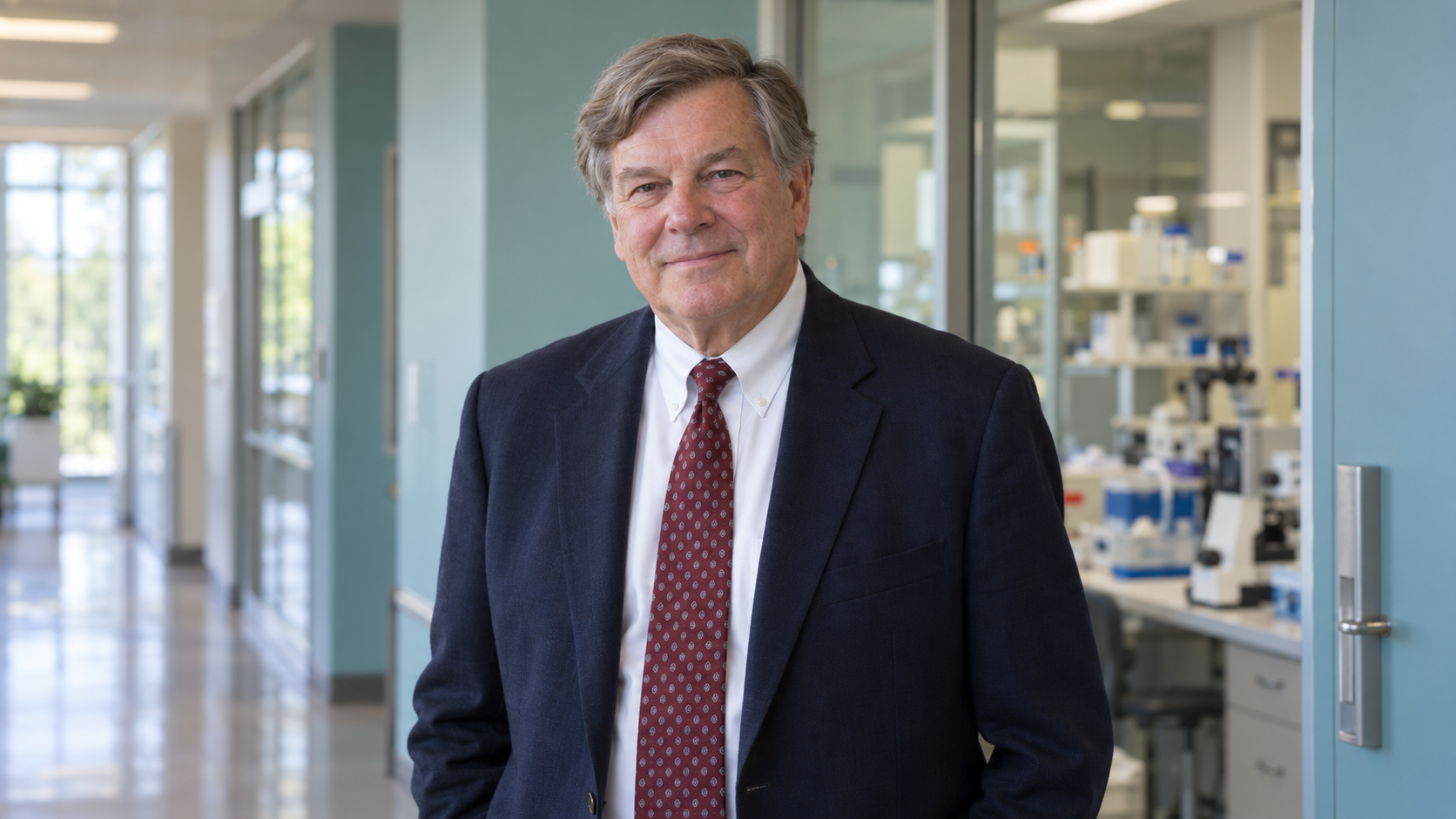
“But I think that real medical research always starts at the bedside.”
An unanswered question in patient care can travel a long way before an explanation emerges. In April 2007, Michael S. Brown described that journey to Nobelprize.org interviewer Adam Smith at the University of Texas Southwestern Medical Center. He challenged an account of research that begins only with a laboratory discovery and ends with its application to medicine. Brown emphasized a route starting with clinical observation, moving into basic investigation, and returning to the people whose illness prompted the question. His wording expresses a strong personal view of medical inquiry. That perspective need not exclude discoveries originating in other circumstances. Its force comes from redirecting attention toward the encounter that identifies a problem worth investigating. The May 16 selection uses that reflection to consider how patient care and experimental science can remain connected across different settings and times.
Brown’s collaboration with Joseph L. Goldstein gives the idea a concrete foundation. UT Southwestern’s account of their early careers describes the clinical work undertaken during their NIH training, where severe inherited abnormalities of cholesterol presented questions that existing understanding could not resolve. The researchers later pursued those questions together in Dallas. Their investigations of cholesterol regulation earned the 1985 Nobel Prize. The institution’s own interviews also present the partnership as an ongoing conversation, sustained through different forms of training and a shared laboratory. This history shows why a clinical puzzle needs more than recognition: it requires methods capable of distinguishing among explanations. At the same time, laboratory precision gains a particular purpose when researchers understand the human difficulty that motivated it. The relationship between the settings is a continuing exchange, with each supplying information that the other cannot fully produce alone.
The quotation invites readers to ask what gets lost when the steps in that exchange are separated. A patient’s experience can disappear behind an abstract research target; an important basic finding can remain disconnected from the question it might eventually address. Restoring the connection does not mean promising an immediate treatment. Research may take years, change direction, or reveal that an appealing hypothesis was mistaken. Nor does it turn a clinician’s impression into proof. Observations must be tested, and a scientifically convincing explanation must still be assessed in the circumstances where it will be used. Brown’s account makes room for the people who notice a problem, those who investigate its mechanisms, and those who evaluate its implications for care. Remembering the starting point can keep a project’s purpose visible while the evidence develops. That is the enduring value of his bedside image: it joins curiosity with responsibility to the lives behind the question.
The wording appears in the April 2007 interview with Adam Smith in Dallas. The same Nobel page includes a separate 2012 conversation, so distinguishing the two dates matters.
Brown was discussing translational research. He wanted to emphasize the clinical observation that can precede a basic discovery, as well as the later movement toward clinical use.
UT Southwestern traces part of Brown and Goldstein’s scientific motivation to patients with severe inherited cholesterol abnormalities encountered during their NIH years. Their later work examined the mechanisms behind cholesterol regulation.
The account links clinical questions with laboratory investigation. It does not suggest that the researchers immediately found a treatment at the first encounter or that every patient with elevated cholesterol has the same condition.
An observation can identify a compelling problem without settling its cause. Competing explanations require methods that can be examined and results that withstand scrutiny.
Brown’s statement highlights a productive relationship among clinical care, investigation, and later assessment. The article treats it as his perspective on that relationship, rather than a rule that invalidates other paths to discovery.
Explore more "Quotes of The Day"
Discover more notable quotes from influential voices across politics, science, business, technology, sports, and culture. Each quote offers insight into how ideas, beliefs, and decisions shape the world around us.