

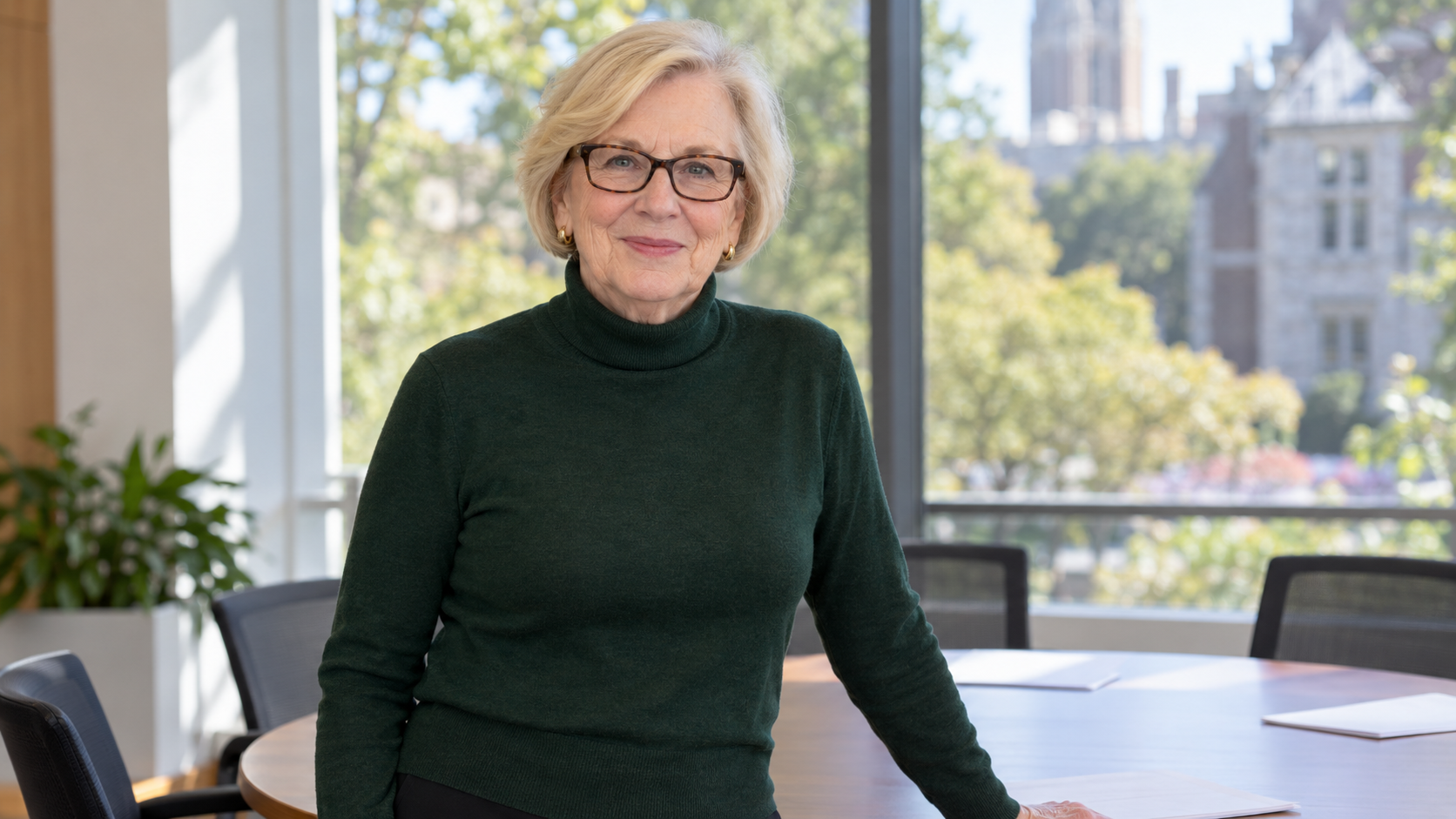
“We owe nurses and ourselves better health care resources.”
Gratitude for nurses has practical implications when a shift leaves too little time to provide the care people need. Linda H. Aiken made that connection in an opinion piece first published on August 14, 2021, and later reproduced by Penn Nursing Magazine. Reflecting on the pandemic, she argued that admiration should lead to better conditions for the workforce. The sentence selected for May 18 joins nurses and the public in the same obligation. It frames resources as part of a shared interest in dependable care, rather than a reward offered only after exceptional sacrifice. Her argument arose in a particular period of strain, but it also asks a broader question: what does appreciation mean when the people being thanked return to an environment that makes their work unnecessarily difficult? The quotation invites attention to the decisions that shape that environment.
Aiken’s research career supplies a foundation for that question. Penn’s faculty account describes investigations into staffing, education, work environments, and patient outcomes. A National Library of Medicine oral history records her movement from nursing into sociology and health services research, with an interest in examining how institutions function. Those perspectives bring features of care into view that a single encounter may conceal. The number of available colleagues, the organization of responsibilities, and the ability to contribute professional judgment can affect what happens during a working day. Research does not make all institutions identical, and an association observed in a study must be understood within its design. It does, however, offer ways to examine patterns beyond an isolated story. That is why discussions of care quality need the experience of staff and patients as well as methods capable of assessing organizational conditions.
The word resources can seem abstract until it is connected with an ordinary task. A question needs an answer, a change needs to be noticed, or a plan needs to be explained clearly. Someone must have the time, preparation, and support to do that work. Aiken’s statement asks readers to consider those necessities when judging whether a system values care. Praise can express respect, but it cannot by itself create a workable schedule or a supportive professional environment. The implications extend to leaders deciding how services are organized and to communities asking what standards they should expect. This entry does not present the 2021 policy discussion as a description of every current law or facility. It preserves the central ethical challenge: caring for the workforce and caring for patients are connected responsibilities. A health service demonstrates that connection through the conditions it makes possible, long after public applause has faded.
Penn Nursing’s Fall 2021 magazine reproduces her opinion piece and identifies its original publication in the New York Times on August 14. The post’s May date is a calendar selection.
She was reflecting on nursing work during the pandemic and arguing against returning to inadequate working conditions. The quotation should be understood within that argument.
Aiken studied relationships among nursing organization, staffing, education, and outcomes. Her Penn profile and the NLM oral history describe a career combining clinical experience with social research.
That background directs attention to institutional patterns. The article does not transfer a particular study’s numerical finding to every hospital or assume that a single organizational change guarantees an outcome.
Respect becomes consequential when it influences how work is arranged and supported. Time to attend to a patient and opportunities to exercise professional judgment depend partly on those arrangements.
Aiken’s sentence places the public and the workforce within one obligation. It encourages scrutiny of the conditions that make care possible, while leaving specific present-day policy claims to current evidence.
Explore more "Quotes of The Day"
Discover more notable quotes from influential voices across politics, science, business, technology, sports, and culture. Each quote offers insight into how ideas, beliefs, and decisions shape the world around us.