

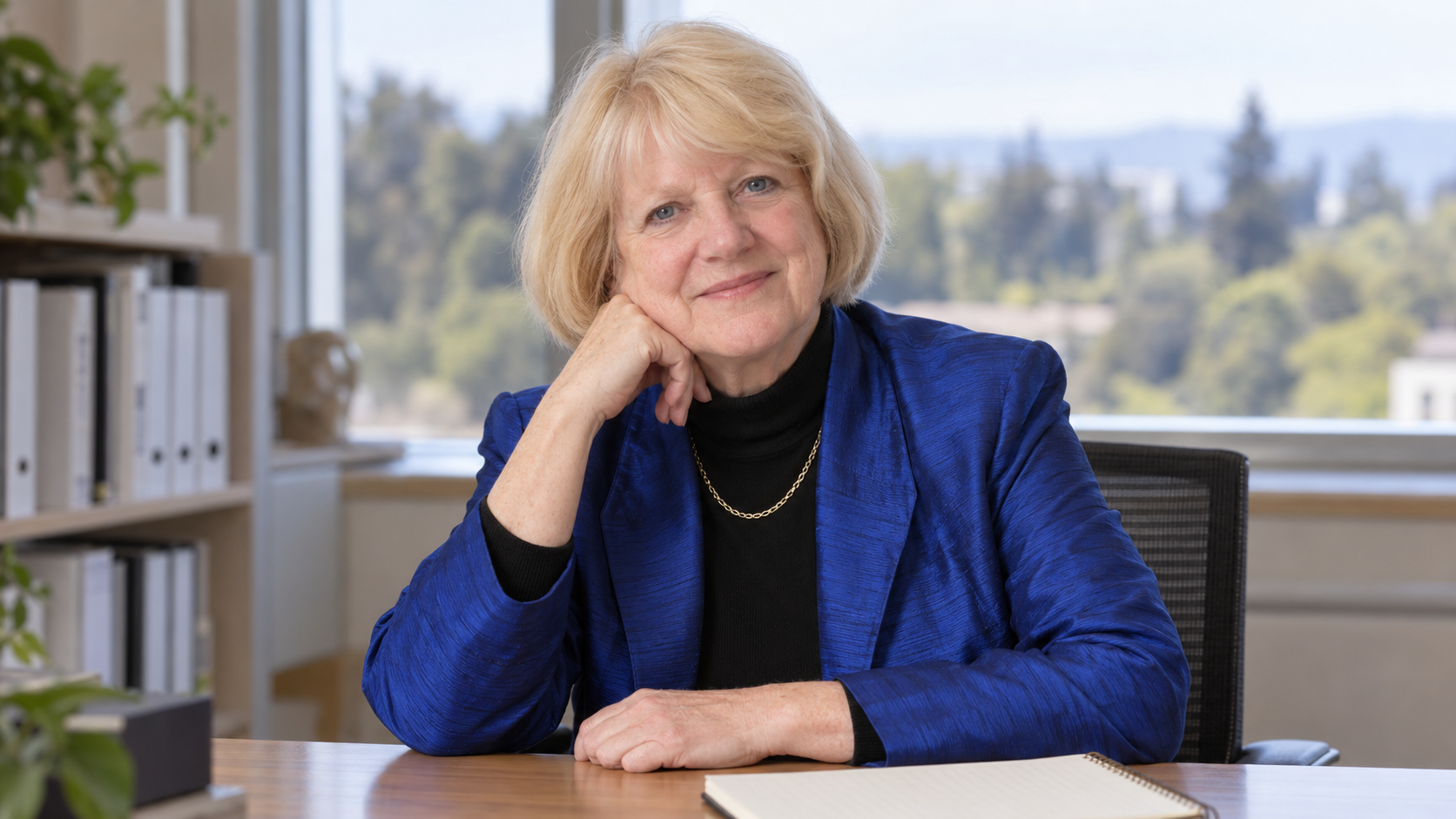
“It is work for a greater good, yet appeals to our curiosity and to our pleasure with puzzles solved.”
The pleasure of solving a difficult problem can belong alongside a commitment to helping others. Mary-Claire King joined those motivations in her acceptance remarks for the 2014 Lasker~Koshland Award for Special Achievement in Medical Science. Speaking about the culture of science, she described genetics as a field that welcomed imagination and offered satisfaction when a puzzle yielded to investigation. The featured sentence connects that satisfaction with useful work. It challenges the assumption that a serious purpose requires the absence of enjoyment. In this May 19 entry, King’s reflection opens a discussion of what keeps researchers engaged through uncertainty. Curiosity can sustain attention when an answer takes time, while a larger purpose can keep the investigation connected with the people whose lives it may affect. Neither motivation replaces the need for convincing evidence; together they can give that demanding work meaning.
Her career makes the connection tangible. A University of Washington account describes how King used her background in statistics and evolutionary genetics to examine inherited susceptibility to breast cancer. In 1990, her group identified a region of chromosome 17 containing the gene they named BRCA1. That mapping achievement preceded the gene’s later isolation by another team, a distinction that matters when telling the discovery story accurately. The Lasker Foundation also describes her use of genetic approaches to help identify missing people and reconnect families. The questions differed, yet each required careful inference from biological information. Those histories demonstrate that a scientific method can serve several human concerns without making those concerns interchangeable. A health question asks for understanding of risk or disease; an identification problem asks for evidence about relationships. Both require discipline about what the available information can establish.
King’s remark also gives readers a reason to value the less visible parts of research. A solved puzzle is memorable, but the path toward it may involve inconclusive results, revised methods, and a long period without public recognition. A later Lasker profile describes her determination to present a well-supported account rather than rush a claim into view. That example helps distinguish confidence earned through investigation from confidence used to cover uncertainty. The joy in discovery does not exempt anyone from careful interpretation or ethical responsibility. Genetic knowledge can raise personal questions, and a general quotation cannot decide which tests or clinical choices are appropriate for an individual. What it can do is illuminate a form of motivation: enjoyment in understanding the world, joined with attention to what that understanding is for. The sentence leaves us with a generous view of useful science, in which intellectual delight and concern for others can strengthen the same endeavor.
She was reflecting on belonging to a scientific community and on the pleasure of working in genetics. The selected sentence connects an intellectual puzzle with a purpose beyond the researcher.
The remarks accompany the 2014 Lasker award. This series uses May 19 as a reading date, not as the anniversary of the speech.
King’s group mapped a chromosome region containing BRCA1 in 1990. The gene was isolated subsequently by another research team. Treating those stages separately preserves the contributions involved.
That history concerns inherited susceptibility and research methods. It leaves decisions about testing and prevention to an assessment of each individual’s circumstances.
Curiosity supplies reasons to keep asking questions, including when an experiment is disappointing. Responsibility asks what the evidence supports and how the knowledge may affect other people.
King’s examples invite attention to both motives. Finding a satisfying explanation and using it carefully remain connected tasks, with appropriate scrutiny of the claim and its implications.
Explore more "Quotes of The Day"
Discover more notable quotes from influential voices across politics, science, business, technology, sports, and culture. Each quote offers insight into how ideas, beliefs, and decisions shape the world around us.