

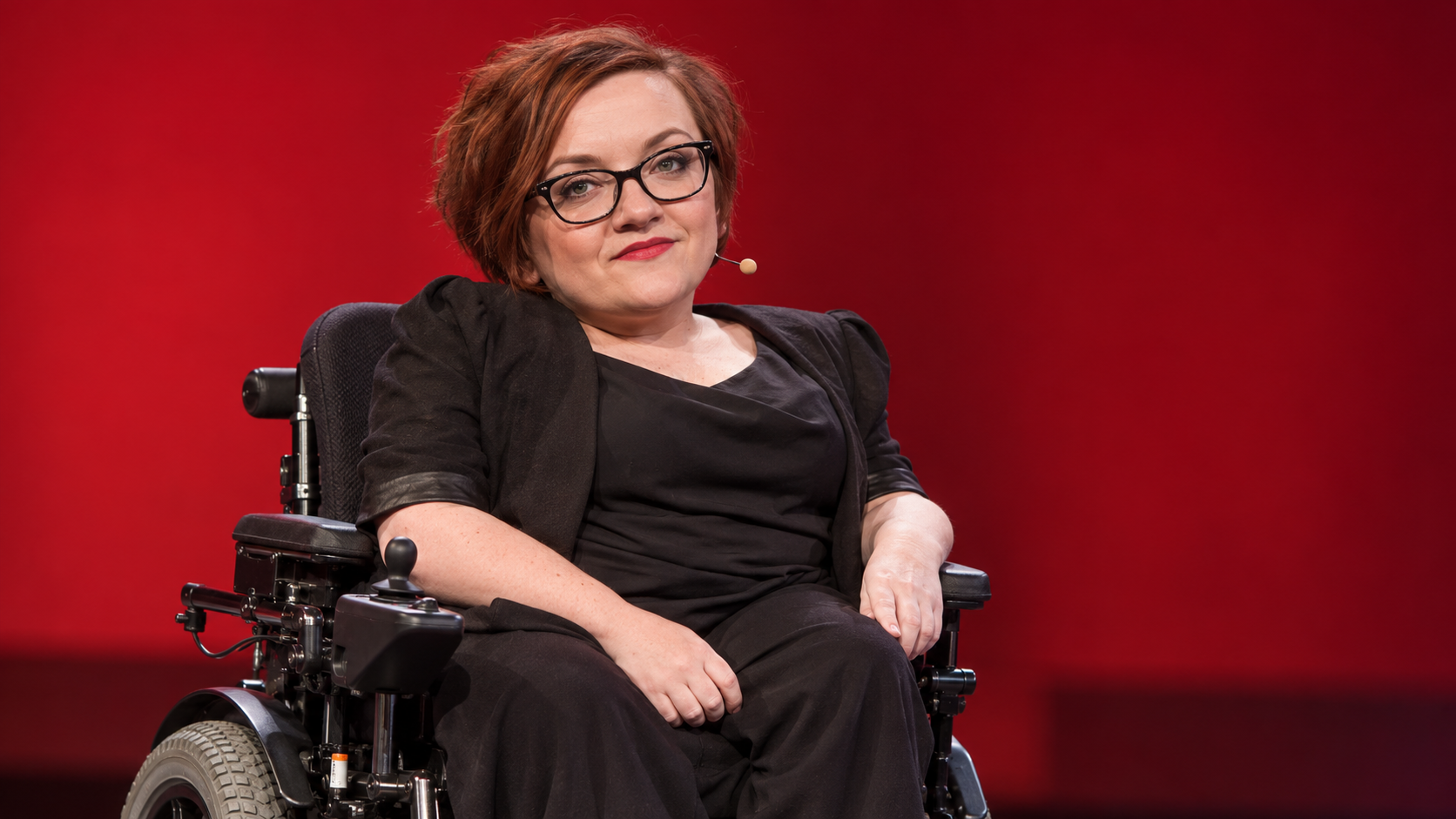
“I am here to tell you that we have been lied to about disability.”
Stella Young said this near the start of her 2014 TEDxSydney talk, “I’m not your inspiration, thank you very much.” The Australian journalist and comedian had just described being treated as inspirational for ordinary acts such as going to school or getting out of bed. The lie she named was the belief that disability is inherently a terrible fate and that living with it makes someone exceptional. That story turns disabled people into objects used to motivate nondisabled audiences, a pattern Young called “inspiration porn.” Her talk did not deny effort, achievement, or difficulty. It asked audiences to recognize disabled people as teachers, professionals, friends, critics, and ordinary members of the community rather than moral props. Young’s humor was part of the method: laughter exposed how absurdly low expectations had become while keeping disabled experience under her own narrative control.
Young grounded her argument in the social model of disability: people are often disabled more by inaccessible environments and low expectations than by a diagnosis alone. That model changes the question from “How did you overcome your body?” to “What barrier did the world put in your way?” It also explains why a positive attitude cannot turn stairs into a ramp or make captions appear. Still, disabled people do not all describe disability in the same terms, and bodies can involve pain or support needs that social change does not erase. The value of Young’s critique is that it exposes a public narrative that hides solvable barriers behind sentimental praise. Her final distinction was between being treated as exceptional for existing and being recognized for questioning the assumptions that create exceptionality.
For health communication, the talk offers a demanding editorial standard. Does a story let a disabled person speak about the issue at hand, or use their image to trigger gratitude in someone else? Does it describe an accommodation as ordinary access or as extraordinary generosity? Are achievement and expertise recognized without presenting disability itself as the accomplishment? Clinicians and institutions can ask similar questions about expectations for work, parenting, sexuality, independence, and decision making. Respectful representation is not a ban on admiration. It means admiring what a person actually did and understanding the conditions around it. Young’s sentence remains sharp because the lie is culturally comfortable. Replacing it requires more than nicer language; it requires access, equal expectations, and room for disabled people to define their own lives. Editors can apply that distinction by checking headlines, captions, fundraising language, and image selection for a story structure that turns access needs into spectacle.
Disability is often presented as tragedy, while ordinary disabled lives are framed as inspirational spectacle.
That story serves nondisabled feelings and obscures disabled people’s actual identities and work.
Young used the social model to show how design and low expectations create avoidable disability.
The model can coexist with honest accounts of pain, impairment, and individual support needs.
Let disabled people define the subject, describe access plainly, and credit real expertise or achievement.
Avoid using a person’s existence as a lesson designed to make another audience feel fortunate.
Explore more "Quotes of The Day"
Discover more notable quotes from influential voices across politics, science, business, technology, sports, and culture. Each quote offers insight into how ideas, beliefs, and decisions shape the world around us.