

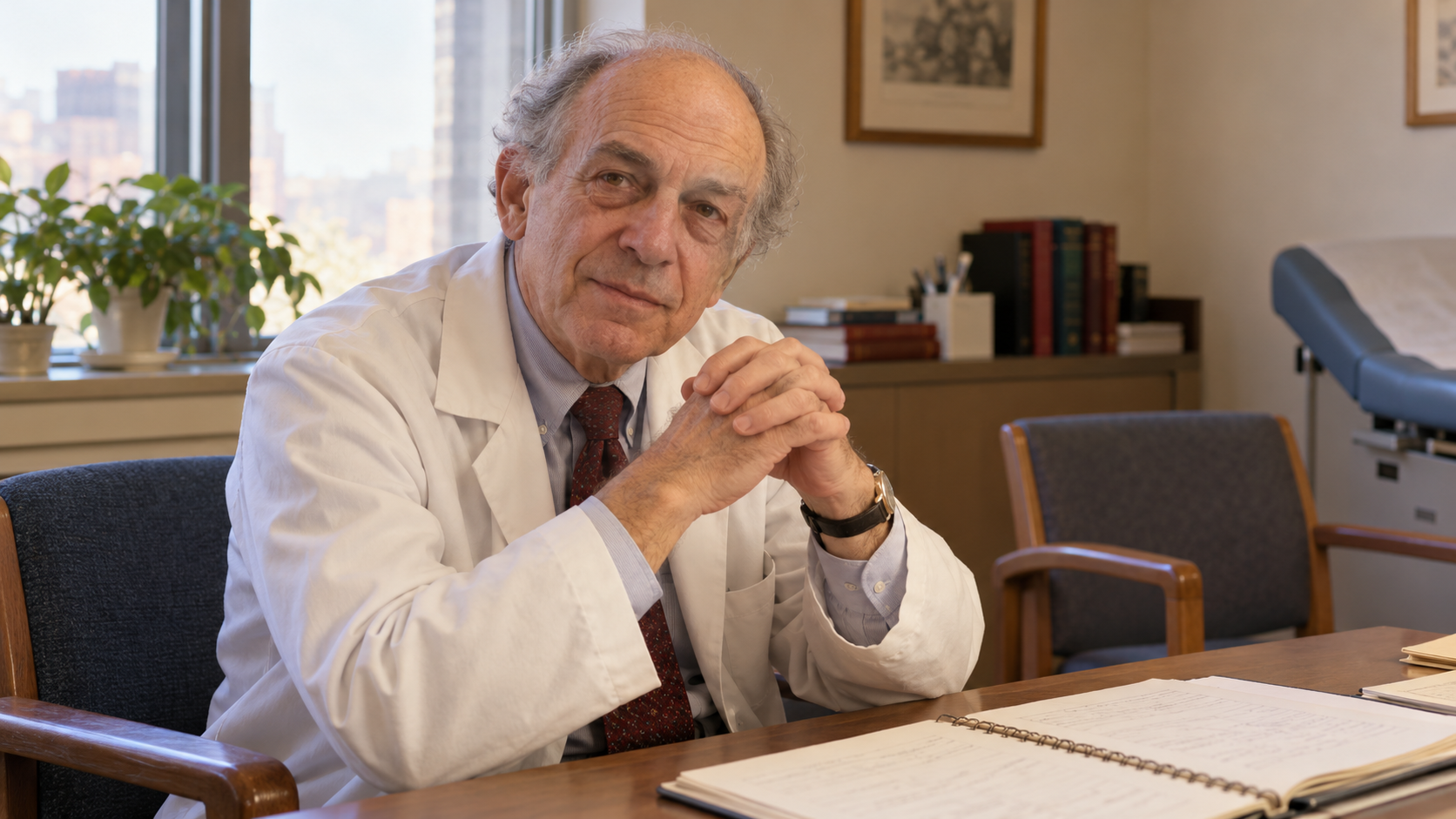
“The relief of suffering and the cure of disease must be seen as twin obligations of a medical profession that is truly dedicated to the care of the sick.”
Eric Cassell wrote this sentence in his 1982 New England Journal of Medicine article “The Nature of Suffering and the Goals of Medicine.” He argued that bodies have diseases while persons experience suffering. A laboratory value or an anatomical lesion may identify a disorder, but suffering arises when illness threatens a person’s identity, roles, relationships, future, or sense of control. By calling relief and cure “twin obligations,” Cassell refused a hierarchy in which technical success counted as real medicine and attention to distress appeared optional. The physician’s work had to include both the mechanism of disease and the life being disrupted by it. Cassell also argued that suffering can occur when a threat extends to the person as a whole, which is why identical symptoms may carry very different meanings for different patients.
The distinction does not place cure and comfort in competition. Treating a disease can relieve suffering, and careful attention to suffering can improve diagnosis, communication, and the fit of a treatment plan. Problems arise when cure is impossible or when an intervention changes a biological measure while imposing burdens the patient finds intolerable. Suffering is also not purely subjective in the sense of being beyond inquiry. Clinicians can ask what feels threatened, what the person fears, what functions matter most, and what support is available. Those questions require humility because no professional can infer a person’s experience from the diagnosis alone. A musician facing loss of hand function, a parent fearing dependence, and a worker worried about income may need distinct information and support despite sharing a diagnosis.
Cassell’s formulation remains a practical guide for chronic illness, intensive treatment, disability, serious diagnosis, and ordinary primary care. A team can measure symptoms, explain uncertainty, involve palliative expertise early, support caregivers, and revisit goals as circumstances change. Relief may come through effective disease treatment, pain or symptom control, counseling, rehabilitation, spiritual care, social support, or a change in how care is delivered. Not all suffering can be removed, and medicine should not claim authority over every hardship in a person’s life. The obligation is to notice suffering, take it seriously, and respond within the team’s competence while connecting other help when needed. A profession dedicated to the sick is accountable for what disease does and for what the experience of disease does to a person. Recording those priorities in the care plan helps the team recognize whether treatment is protecting what the patient values or merely improving a measure in isolation.
Cassell distinguished pathology from the threats illness can pose to identity, roles, relationships, and future.
Both forms of knowledge are needed to understand what care is trying to accomplish.
Treating disease often reduces suffering, while listening to suffering can improve diagnosis and treatment fit.
Conflict arises when a biological gain brings burdens that do not match the patient’s goals.
Measure symptoms, explain uncertainty, ask what matters, involve appropriate specialists, and revisit goals over time.
Medicine cannot remove every hardship, but it can notice suffering and connect people with competent help.
Explore more "Quotes of The Day"
Discover more notable quotes from influential voices across politics, science, business, technology, sports, and culture. Each quote offers insight into how ideas, beliefs, and decisions shape the world around us.