

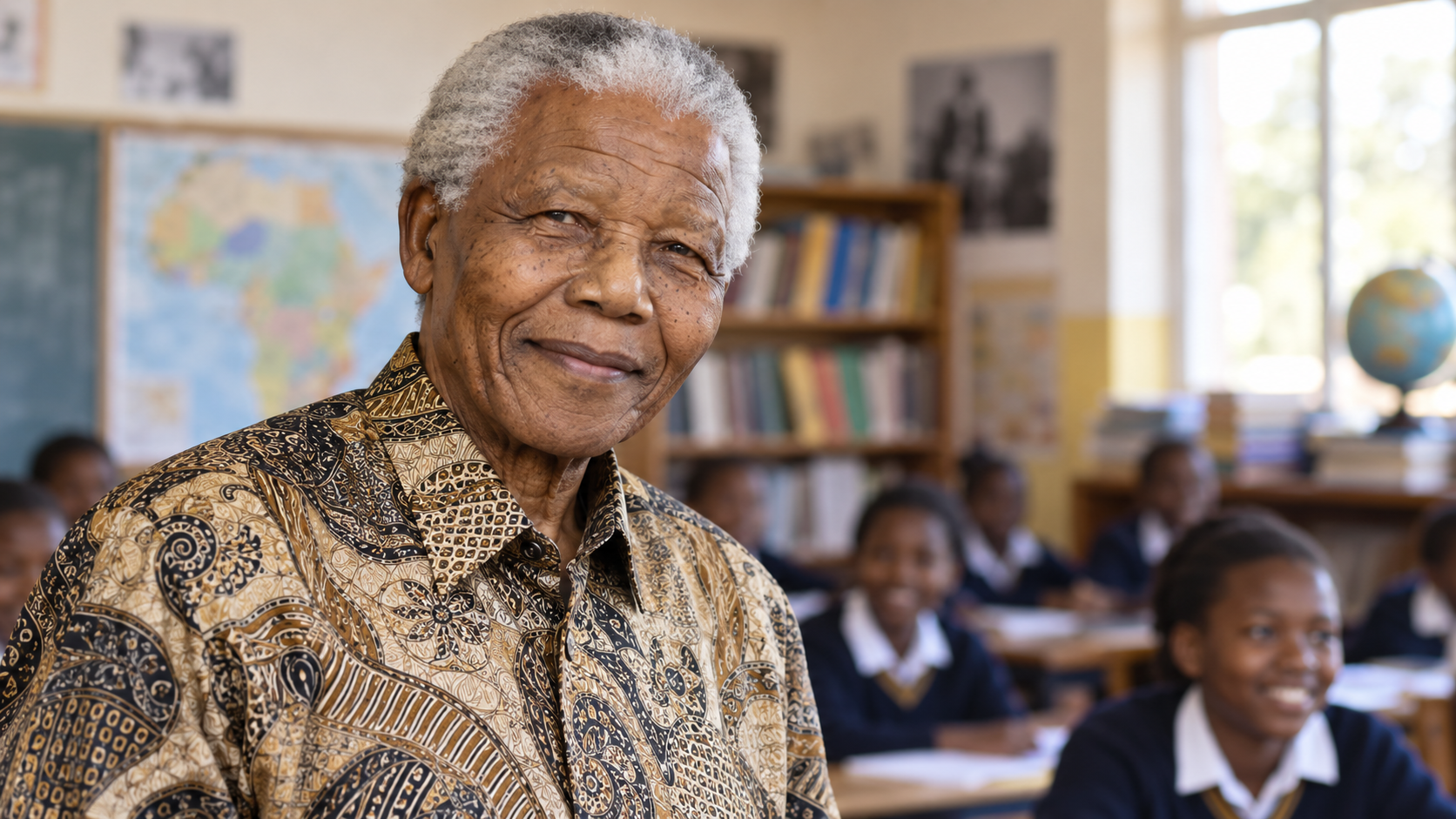
“Education is the most powerful weapon we can use to change the world.”
Nelson Mandela used this wording at the July 16, 2003 launch of South Africa’s Mindset Network, an educational initiative designed to widen access to learning. The setting is important. Mandela was not speaking about education as a decorative credential or private advantage. He was supporting infrastructure intended to reach schools and learners who had been denied equal resources under apartheid. In that context, “weapon” is a metaphor for organized power directed toward peaceful reconstruction.
Education changes the world by changing what people can understand, imagine, and do together. Literacy opens records and laws; scientific knowledge improves health and technology; history reveals how present institutions were built; discussion teaches people to test claims and encounter perspectives beyond their own. Learning can expand a person’s economic choices, but Mandela’s plural “we” also points toward public capacity—the ability of communities to solve problems rather than wait for solutions to arrive from elsewhere.
The metaphor needs limits. Education is not neutral, and schooling can reproduce inequality through exclusion, biased curricula, unsafe classrooms, or unequal funding. Knowledge alone does not guarantee wisdom or justice; educated people can use expertise to exploit as well as serve. Change also requires rights, material resources, trustworthy institutions, and opportunities to apply what has been learned. The quote is strongest when education means accessible, critical, humane learning rather than mere enrollment or test performance.
Mandela’s line still matters because rapid technological change can make education seem like a phase completed in youth. A practical response is to treat learning as a shared civic habit. Choose one issue that affects your household or neighborhood, find a credible source, and discuss what the evidence changes about your next decision. Teach a skill, support a library, mentor a learner, or make information easier to access. Education becomes powerful when it travels—when knowledge increases another person’s ability to participate, question, create, and shape the conditions of common life. The method matters as much as the subject. Make room for questions, explain how a claim was checked, and acknowledge what remains uncertain. Invite the learner to use the knowledge rather than only repeat it. When people can locate evidence, compare interpretations, and teach the result to someone else, education becomes less dependent on authority and more capable of surviving misinformation, changing technology, and the arrival of new problems. That independence is a form of power: it turns recipients of information into participants who can test, adapt, and create knowledge.
Mandela delivered the line at the 2003 launch of the Mindset Network, which aimed to expand educational access in South Africa.
The post-apartheid setting made education a tool of peaceful reconstruction and wider participation, not merely individual advancement.
Education can reproduce inequality when access, funding, safety, or curricula are unjust. Knowledge is powerful, but it is not automatically humane.
Learning must be joined to rights, resources, and opportunities to act if it is to change material conditions.
Technological and social change make lifelong learning essential for informed work, citizenship, and everyday decisions.
Learn one useful fact from a credible source, then share or apply it in a way that expands someone else’s agency.
Explore more "Quotes of The Day"
Continue exploring how writers, thinkers, artists, and advocates have described the choices that shape an everyday life.