

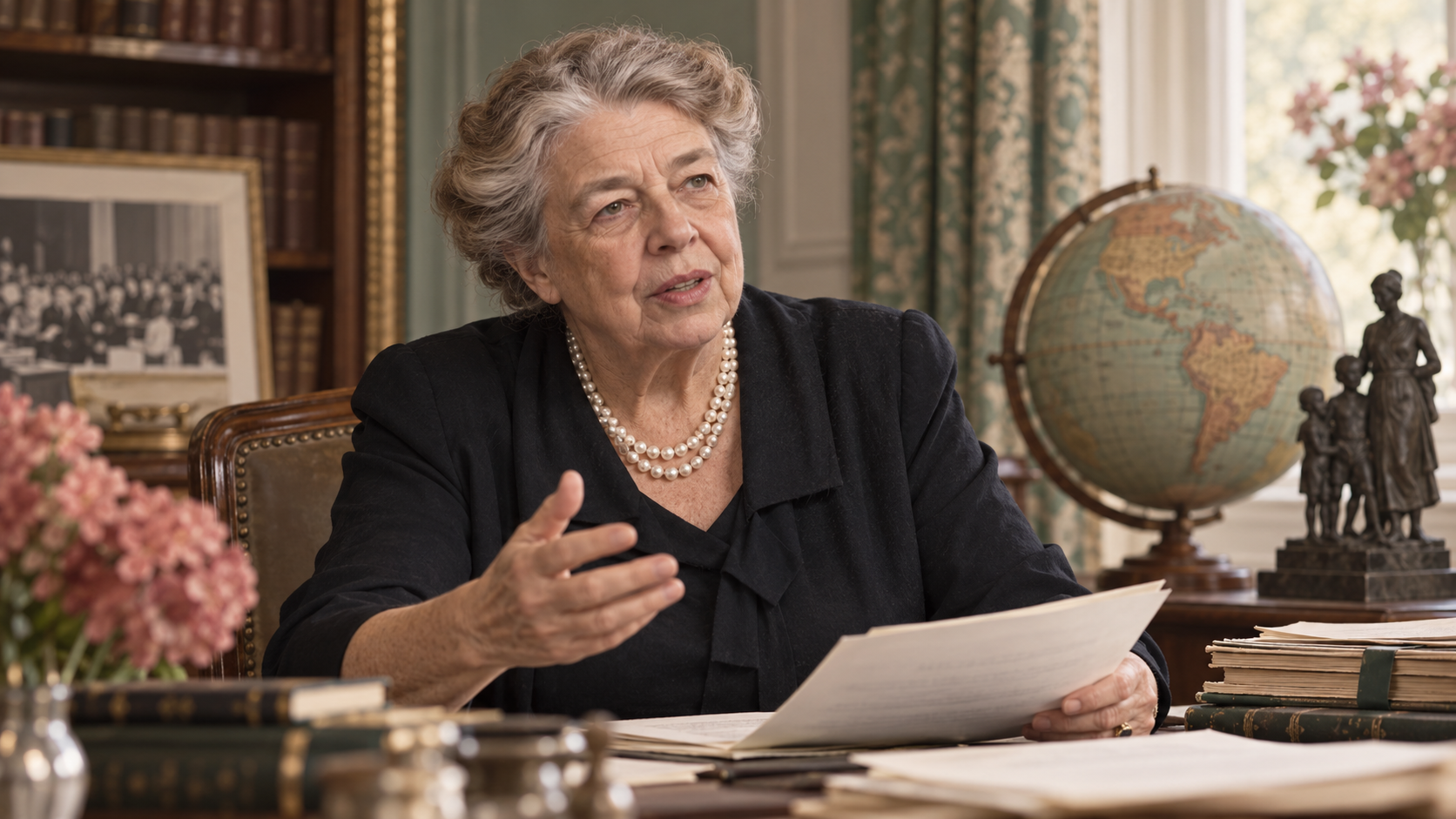
“You gain strength, courage and confidence by every experience in which you really stop to look fear in the face.”
Eleanor Roosevelt wrote this sentence in You Learn by Living, published in 1960. It appears in the chapter “Fear—the Great Enemy,” where she describes courage as something developed through experience rather than granted at birth. The surrounding passage says that after facing fear, a person can remember, “I lived through this horror,” and meet the next challenge with evidence of survival. Roosevelt’s own public life had required repeated movement beyond shyness, criticism, grief, and political hostility.
Looking fear in the face means naming it accurately enough to act. Vague dread expands; a specific fear can be examined for likelihood, preparation, and the first manageable step. Each completed step leaves a memory that confidence can draw on later. Courage in this sense is not the absence of physical sensation or doubt. It is the growing ability to move while fear is present and to recognize that discomfort does not automatically predict incapacity.
The sentence can be misused if it becomes a demand to confront every fear immediately or alone. Exposure should be proportionate, especially when trauma, panic, abuse, or physical danger is involved. Support, professional treatment, planning, and retreat can be courageous choices. Some fears accurately signal that a boundary or safer route is needed. Roosevelt’s lesson is about learning from survivable challenges, not proving worth through unnecessary risk or treating a setback as moral failure.
The idea matters because avoidance can shrink a life gradually while offering short-term relief. Choose one fear that blocks something important and reduce the encounter to a safe, observable step: draft the message, rehearse the conversation, visit the place with support, or ask the first question. Before beginning, define what success means without requiring calm or perfection. Afterward, record what happened, what helped, and what you would change. Confidence grows from this evidence more reliably than from reassurance alone. Roosevelt’s sentence turns courage into a history a person can build. Each honest encounter becomes proof not that fear has vanished, but that fear can be faced with judgment, support, and a capacity that strengthens through use. Borrow support without treating it as evidence that the achievement is not yours. A companion, coach, therapist, checklist, or practiced script can make a challenge safe enough to attempt. As capacity grows, support may change rather than disappear. Courage is not measured by isolation; it is measured by the willingness to meet reality and use all available resources wisely.
Roosevelt published the line in the chapter “Fear—the Great Enemy” of her 1960 book You Learn by Living.
She presents courage and confidence as capacities developed through experiences that provide evidence of survival and learning.
Facing fear should be proportionate and safe; trauma, panic, abuse, and physical danger may require support, treatment, or withdrawal.
Courage does not require feeling calm or succeeding perfectly. A carefully chosen step can count even when fear remains.
Avoidance can provide immediate relief while gradually reducing opportunities, relationships, and confidence.
Choose one safe step toward something important, define success as completing the step, and record what the experience taught you.
Explore more "Quotes of The Day"
Continue exploring how writers, thinkers, artists, and advocates have described the choices that shape an everyday life.