

“Extraordinary claims require extraordinary evidence.”
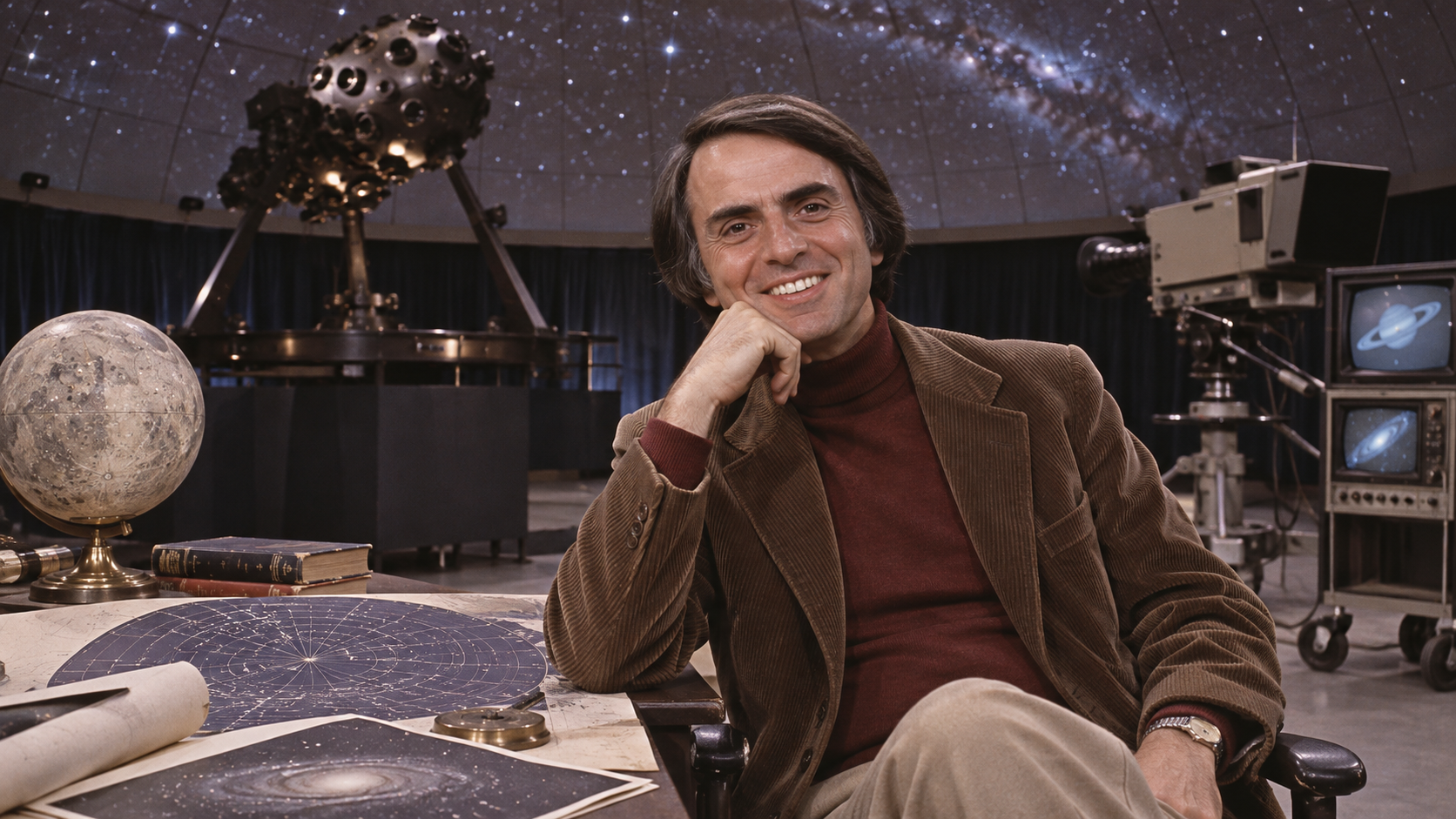
Carl Sagan popularized this standard in the 1980 television series Cosmos while explaining how to evaluate dramatic claims about the universe and paranormal phenomena. He welcomed wonder, but refused to treat excitement as proof. The more a claim conflicts with well-supported knowledge, the stronger and more independently testable its evidence must be.
The sentence is a rule of proportion, not a ban on surprising ideas. Evidence should match the claim’s consequence, novelty, and distance from established fact. A routine statement may need a reliable record; an allegation that overturns scientific consensus or accuses someone of grave misconduct demands multiple sources, transparent methods, and careful attempts at falsification.
Newsrooms can apply Sagan’s principle to viral video, anonymous tips, health scares, election claims, and alleged technological breakthroughs. Speed and novelty create pressure to publish before verification is complete. A disciplined editor asks what would count as decisive evidence, what alternative explanations remain, and whether the headline signals uncertainty as clearly as the article does.
The standard also protects open inquiry. Skepticism is strongest when it is evenhanded: institutions, officials, experts, influencers, and dissidents all face the same demand for evidence. Sagan’s legacy is a public culture in which curiosity and doubt cooperate, and where confidence grows from verifiable support rather than volume or repetition.
Carl Sagan popularized this standard in the 1980 television series Cosmos while explaining how to evaluate dramatic claims about the universe and paranormal phenomena. He welcomed wonder, but refused to treat excitement as proof. The more a claim conflicts with well-supported knowledge, the stronger and more independently testable its evidence must be.
The sentence is a rule of proportion, not a ban on surprising ideas. Evidence should match the claim’s consequence, novelty, and distance from established fact. A routine statement may need a reliable record; an allegation that overturns scientific consensus or accuses someone of grave misconduct demands multiple sources, transparent methods, and careful attempts at falsification.
The standard also protects open inquiry. Skepticism is strongest when it is evenhanded: institutions, officials, experts, influencers, and dissidents all face the same demand for evidence. Sagan’s legacy is a public culture in which curiosity and doubt cooperate, and where confidence grows from verifiable support rather than volume or repetition.
Explore more "Quotes of The Day"
Discover more notable quotes from influential voices across politics, science, business, technology, sports, and culture. Each quote offers insight into how ideas, beliefs, and decisions shape the world around us.