

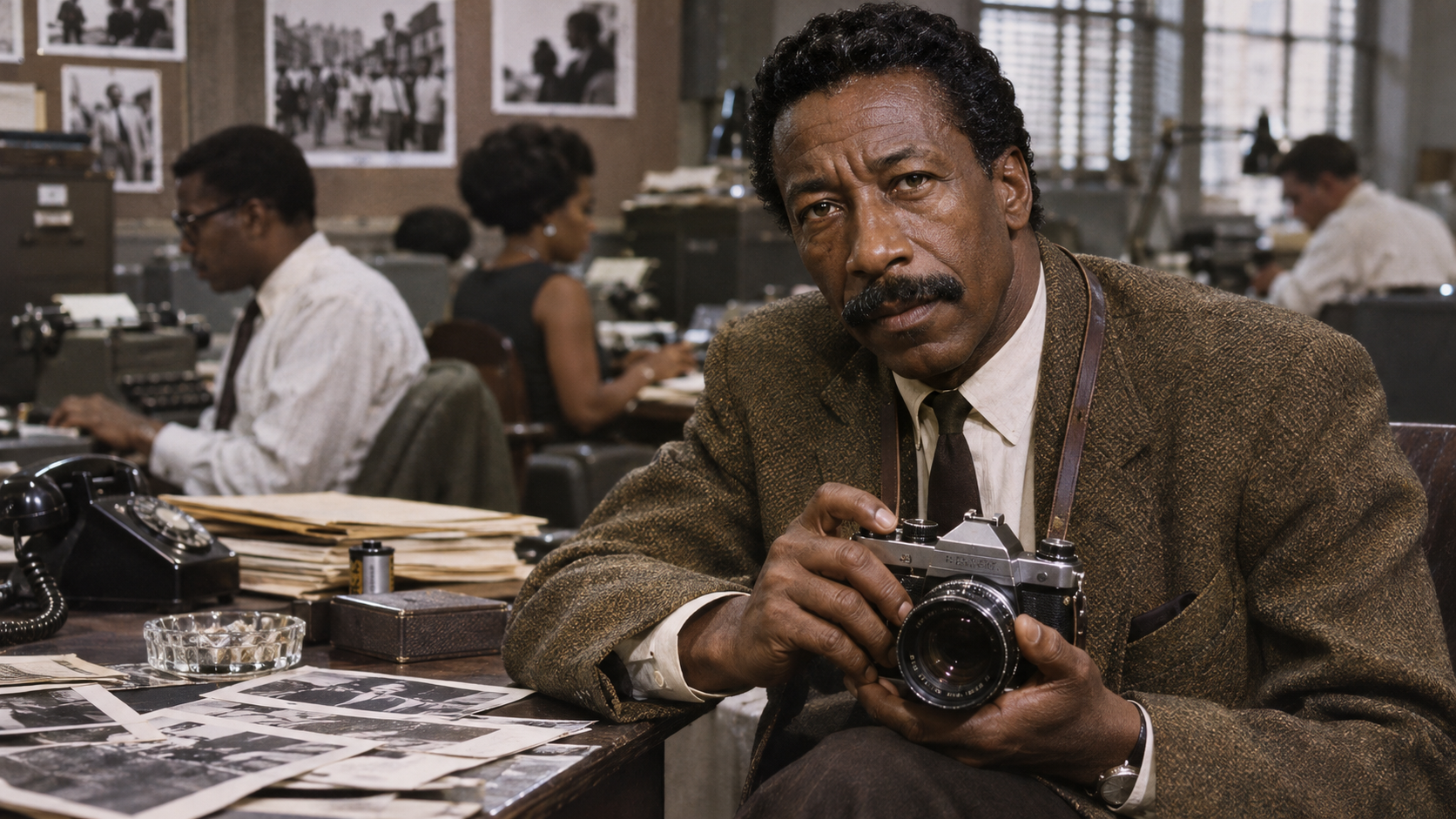
“I saw that the camera could be a weapon against poverty, against racism, against all sorts of social wrongs.”
Gordon Parks used photography, film, writing, and music to document lives that mainstream institutions often ignored or reduced to stereotypes. Looking back on his early work, he described the camera as a weapon against poverty, racism, and social wrongs. The metaphor named his purpose: images could confront indifference by making structural injustice visible and personal.
Parks did not treat the camera as neutral equipment. Framing, access, sequence, and publication all shape what an audience understands. A picture can expose inequality, but it can also reproduce humiliation if subjects are shown without dignity or context. The power of visual evidence therefore carries a corresponding obligation to be accurate, humane, and specific.
His approach offers a standard for documentary journalism. Enter communities with patience, learn the conditions behind a scene, caption images precisely, and resist simplifying people into symbols. The strongest work allows subjects to retain complexity while connecting individual experience to policy, history, and institutions.
Images now move instantly and can be altered or detached from their origins. Parks’s idea remains urgent, but the modern “weapon” must be governed by verification and transparency. Visual journalism serves justice when it reveals what power would prefer unseen and gives audiences enough context to act without misleading them.
Gordon Parks used photography, film, writing, and music to document lives that mainstream institutions often ignored or reduced to stereotypes. Looking back on his early work, he described the camera as a weapon against poverty, racism, and social wrongs. The metaphor named his purpose: images could confront indifference by making structural injustice visible and personal.
Parks did not treat the camera as neutral equipment. Framing, access, sequence, and publication all shape what an audience understands. A picture can expose inequality, but it can also reproduce humiliation if subjects are shown without dignity or context. The power of visual evidence therefore carries a corresponding obligation to be accurate, humane, and specific.
Images now move instantly and can be altered or detached from their origins. Parks’s idea remains urgent, but the modern “weapon” must be governed by verification and transparency. Visual journalism serves justice when it reveals what power would prefer unseen and gives audiences enough context to act without misleading them.
Explore more "Quotes of The Day"
Discover more notable quotes from influential voices across politics, science, business, technology, sports, and culture. Each quote offers insight into how ideas, beliefs, and decisions shape the world around us.