

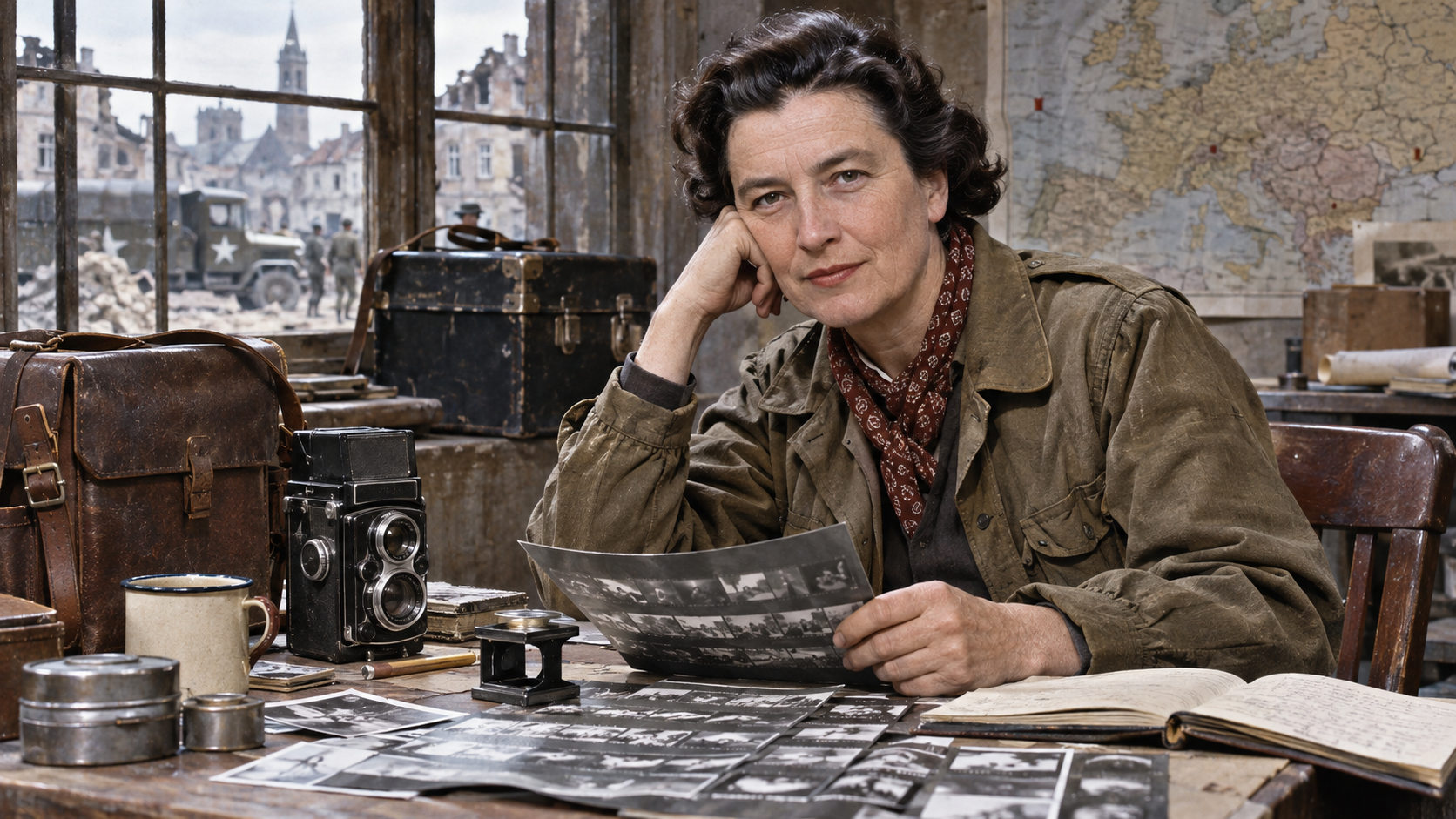
“I go forth alone, try to get the truth and then bring it back and try to make others face it and do something about it.”
Therese Bonney photographed civilians and children caught in Europe’s wartime upheaval, then brought those images to American audiences through exhibitions and publications. Her words describe reporting as a difficult journey from witness to public responsibility: find what is happening, return with evidence, and refuse to let distant suffering remain abstract.
The line joins truth-seeking to consequence. Facts do not automatically produce attention or action; they must be documented, explained, and placed before people who may prefer not to see them. Bonney’s mission also raises a lasting ethical question: how can journalists show suffering forcefully without using vulnerable people merely as instruments of persuasion?
Conflict reporting requires more than bravery. It demands careful identification, chronology, translation, security judgment, and sensitivity to trauma. Photographs must be captioned accurately, and emotional claims must remain anchored to verifiable circumstances. The goal is not to manufacture outrage but to make preventable harm impossible to dismiss.
Bonney’s appeal remains relevant when crises compete for attention and graphic images circulate without context. Responsible witnesses preserve provenance, protect subjects when exposure creates danger, and connect individual scenes to decisions and systems. Journalism succeeds when seeing leads to informed accountability rather than momentary shock.
Therese Bonney photographed civilians and children caught in Europe’s wartime upheaval, then brought those images to American audiences through exhibitions and publications. Her words describe reporting as a difficult journey from witness to public responsibility: find what is happening, return with evidence, and refuse to let distant suffering remain abstract.
The line joins truth-seeking to consequence. Facts do not automatically produce attention or action; they must be documented, explained, and placed before people who may prefer not to see them. Bonney’s mission also raises a lasting ethical question: how can journalists show suffering forcefully without using vulnerable people merely as instruments of persuasion?
Bonney’s appeal remains relevant when crises compete for attention and graphic images circulate without context. Responsible witnesses preserve provenance, protect subjects when exposure creates danger, and connect individual scenes to decisions and systems. Journalism succeeds when seeing leads to informed accountability rather than momentary shock.
Explore more "Quotes of The Day"
Discover more notable quotes from influential voices across politics, science, business, technology, sports, and culture. Each quote offers insight into how ideas, beliefs, and decisions shape the world around us.