

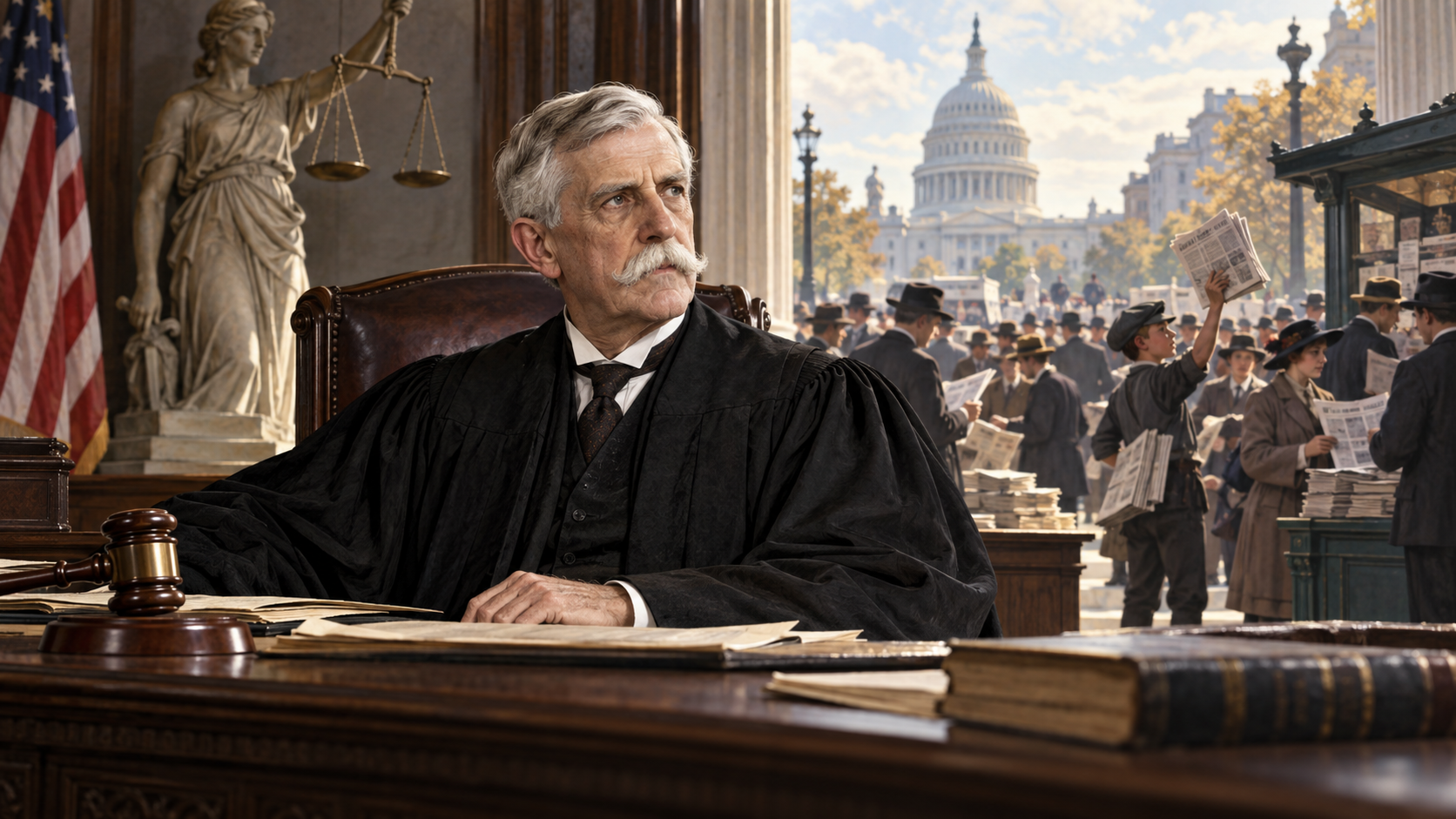
“The best test of truth is the power of the thought to get itself accepted in the competition of the market.”
Justice Oliver Wendell Holmes Jr. wrote this line in his dissent from the Supreme Court’s 1919 decision in Abrams v. United States. The defendants had distributed leaflets criticizing American military intervention in Russia and were convicted under wartime speech restrictions. Holmes, joined by Justice Louis Brandeis, argued that the publications did not create the immediate danger needed to justify punishment. His reference to a competition of ideas became the foundation of the later “marketplace of ideas” metaphor, although Holmes did not use that exact phrase. The dissent emerged from a case about government power during a period of intense political repression.
The metaphor is influential and incomplete. Actual markets do not guarantee that the best product wins, and public communication does not guarantee that the truest claim receives the widest distribution. Money, state power, platform design, repetition, intimidation, and unequal access can shape which ideas are heard. Falsehood may be emotionally attractive and rapidly profitable. Holmes’s deeper point was that government certainty is dangerous when used to criminalize dissent. For journalism, open competition must be supplemented by verification, source protection, correction, and attention to how information power is distributed.
The quotation remains relevant when officials invoke security to restrict reporting or when platforms defend every information outcome as the result of free choice. A healthy public sphere requires room for criticism, but it also requires institutions capable of establishing facts. News organizations contribute by testing claims before amplifying them, explaining conflicts of interest, and giving readers access to primary evidence. The line should therefore prompt two questions at once: Is dissent free to enter public debate, and is the competition structured so evidence can be recognized? Freedom from censorship is indispensable, but it is the beginning of the search for truth, not a guarantee of its victory.
Holmes’s market metaphor has shaped free-speech debate, but journalism should not assume that ideas compete on equal terms. Wealth, state power, distribution systems, harassment, and platform design can amplify some claims while burying others; repetition can create familiarity without producing truth. Reporters therefore need more than a tally of which message appears to be winning. They should investigate who financed its circulation, which gatekeepers promoted it, whether coordinated behavior distorted attention, and what evidence supports the claim itself. At the same time, suppressing an argument solely because it is unpopular can prevent error from being exposed through open challenge. The continuing value of Holmes’s dissent lies in protecting contestation while recognizing that acceptance is not verification. A rigorous newsroom keeps the arena open, but it also explains the arena’s structure. Readers should be able to see both the merits of an idea and the mechanisms that made it visible, profitable, or politically powerful.
Holmes dissented after the Court upheld convictions for antiwar leaflets under the Espionage Act. He argued that unpopular political expression deserved protection unless it posed the kind of immediate danger the law could legitimately address.
Ideas do not compete on equal terms. Wealth, coercion, algorithms, and repetition can reward falsehood. The metaphor supports freedom from official suppression but does not eliminate the need for verification or fair access.
Journalism helps make open debate more than a contest of volume. Evidence, corrections, and scrutiny of information power allow readers to judge claims that are formally free but unequally promoted.
Explore more "Quotes of The Day"
Discover more notable quotes from influential voices across politics, science, business, technology, sports, and culture. Each quote offers insight into how ideas, beliefs, and decisions shape the world around us.