

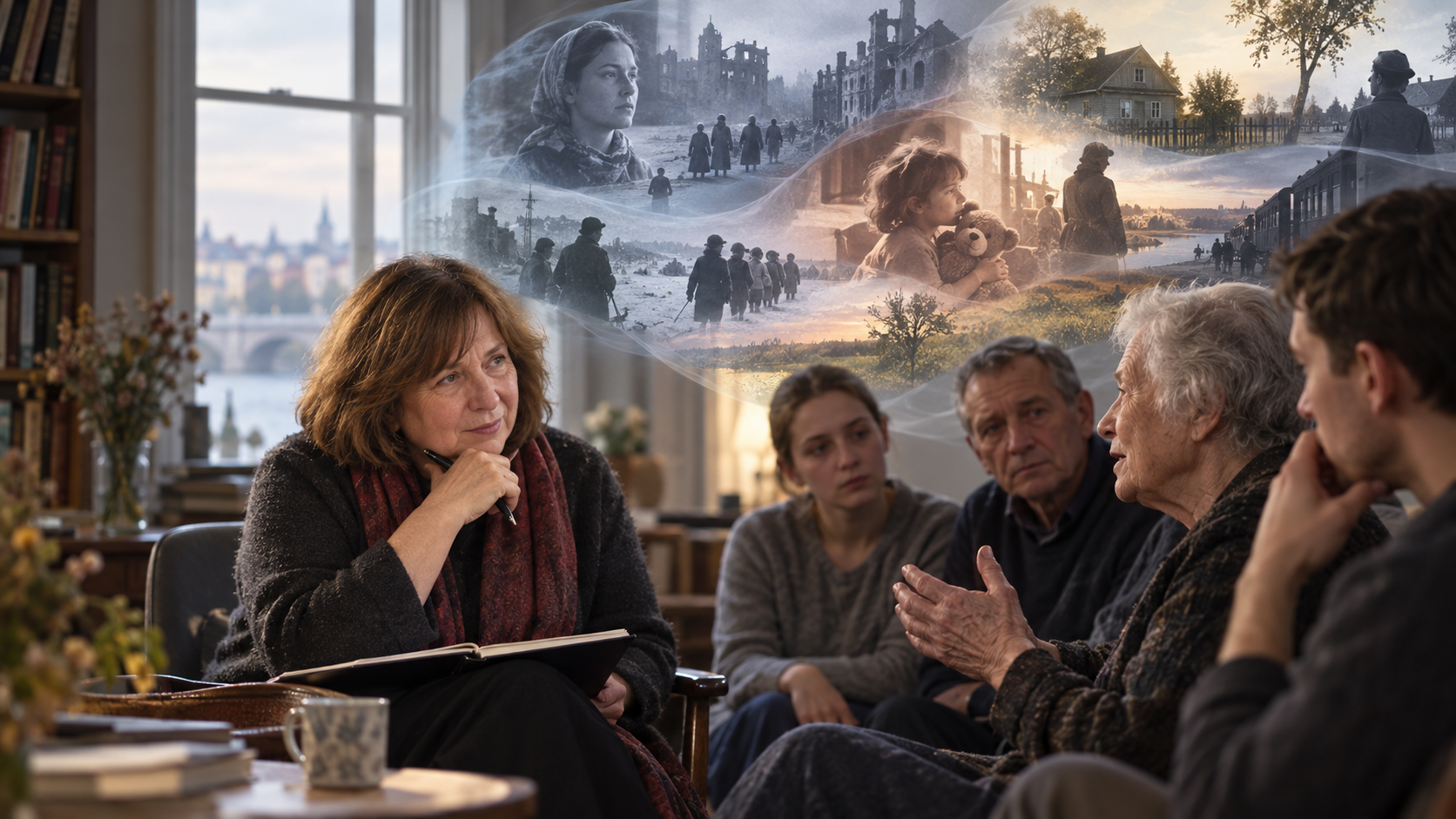
“I don’t just record a dry history of facts and events, I’m writing a history of human feelings.”
Svetlana Alexievich described her method in her 2015 Nobel Lecture after decades of building books from many individual voices. Her subjects included World War II, the Soviet war in Afghanistan, the Chernobyl disaster, and the collapse of the Soviet Union. Rather than write conventional chronological histories, she assembled edited testimony to reveal how large events entered memory, language, family life, and private fear. The quotation distinguishes emotional history from a bare sequence of dates without claiming that feelings replace facts.
Testimony presents difficult questions for journalism. Memory can be incomplete, contradictory, and reshaped over time. A person’s experience is real evidence of what they perceived and endured, but it may not establish every external fact. Reporters should corroborate where possible, preserve the speaker’s meaning, and explain editing or translation. At the same time, official records can be dry because institutions omit experiences that do not fit their categories. Numbers can establish scale while voices reveal consequences the categories conceal.
News coverage of disaster, war, economic change, and public policy often moves on once an event is no longer breaking. Alexievich’s work demonstrates the value of returning later and listening across many lives. That approach can reveal long-term health effects, fractured communities, moral injury, and changing memory. Ethical oral history avoids treating pain as decoration and gives participants context and dignity. An accurate public record needs both event and experience: facts tell society what happened, while carefully handled testimony shows what happened to people.
Alexievich’s “history of human feelings” describes a form of testimony that complements, rather than replaces, documentary fact. Memory reveals fear, grief, loyalty, shame, and contradiction that official records rarely capture, but recollection can change over time and should not be treated as a flawless transcript. Journalists working with oral history can preserve both values by recording when and where an interview occurred, comparing accounts with available documents, and keeping uncertainty visible instead of forcing every voice into one chronology. They should also resist selecting only the most dramatic testimony or editing away contradictions that reveal how people make sense of experience. The quotation remains relevant in coverage of war, disaster, displacement, and political rupture, where statistics establish scale but cannot explain how events enter private life. A trustworthy account lets feeling illuminate the consequences of history while maintaining a clear boundary between remembered experience, independently verified event, and later interpretation. That boundary strengthens, rather than diminishes, the witness’s voice.
Alexievich developed documentary books from hundreds of interviews, arranging voices into a history of emotions as well as public events.
Feelings are evidence of experience, not proof of every external claim. Corroboration, transparent editing, translation, and respect for contradiction remain necessary.
Follow-up reporting and oral history reveal consequences that event-driven news and administrative data often miss.
Explore more "Quotes of The Day"
Discover more notable quotes from influential voices across politics, science, business, technology, sports, and culture. Each quote offers insight into how ideas, beliefs, and decisions shape the world around us.