

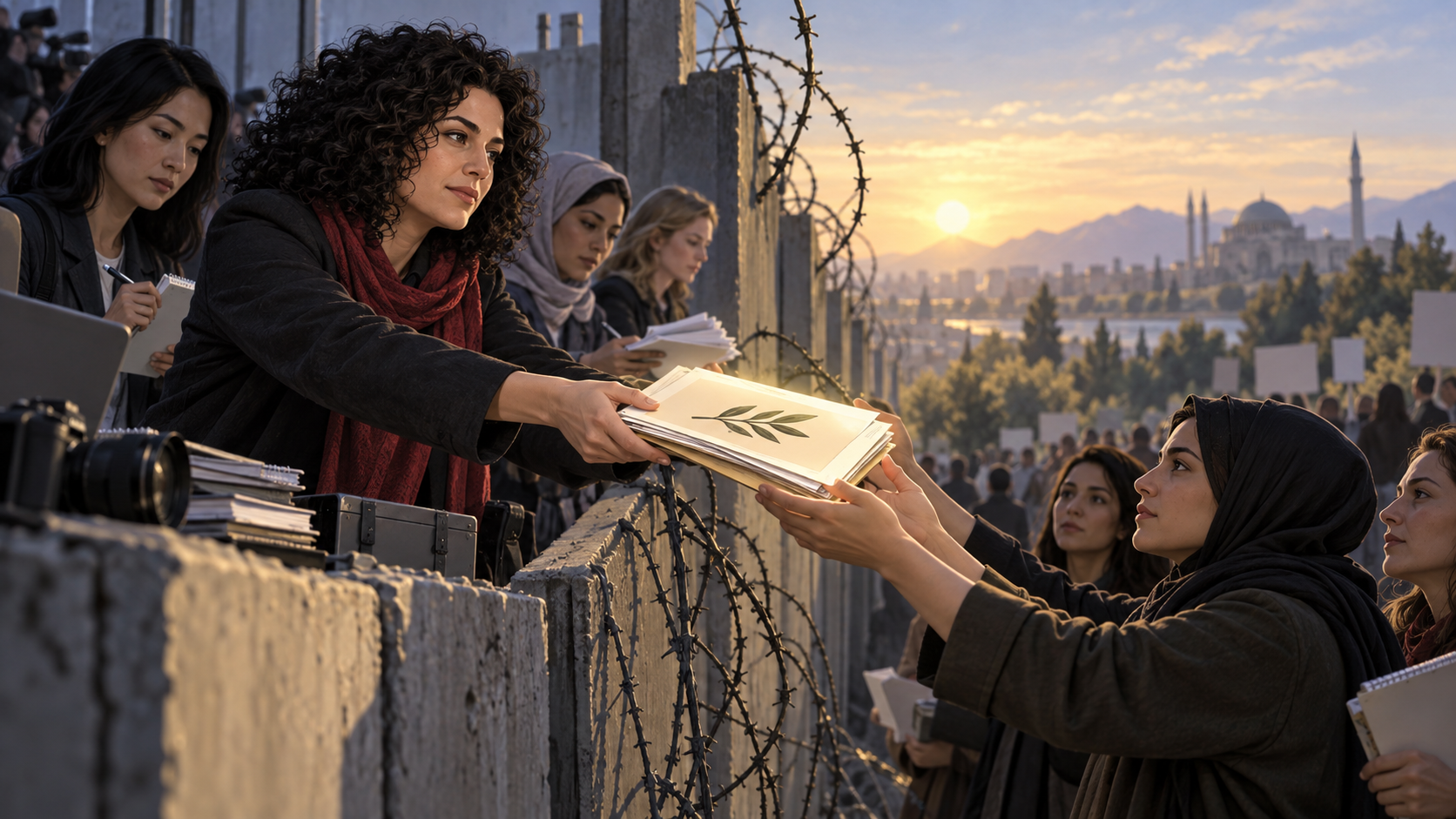
“Victory is not easy, but it is certain.”
Mohammadi’s Nobel lecture, delivered by her children while she remained imprisoned in Iran, described the Woman, Life, Freedom movement, compulsory hijab, detention, and the long struggle for democratic rights. The quotation belongs to a specific dispute, not a general slogan. The original source—Narges Mohammadi, Nobel Peace Prize lecture, 2023—anchors the wording and prevents a memorable line from floating free of the argument around it. A responsible account begins there, then distinguishes the historical record from later uses of the quotation.
The line expresses strategic confidence developed under sustained repression. In news coverage, its significance lies in the institutional conditions around it: imprisonment, censorship, organized protest, and documentation by people facing direct risk. Read in that setting, it becomes a method for examining public claims. That approach asks who had access to information, which institution made the consequential decision, and what evidence an independent reader could inspect. It also keeps a quotation from doing more work than the underlying facts can support.
Certainty about eventual justice is a moral conviction, not a forecast with a timetable. Reporting should not turn it into a prediction or minimize the costs, internal disagreements, and setbacks within a movement. Its value comes from the problem it names and the discipline it demands. Newsrooms should test the appealing interpretation as seriously as the hostile one, seek knowledgeable disagreement, and state uncertainty in proportion to the record. Precision is especially important when a short sentence has become famous enough to circulate without its source.
Authoritarian governments can restrict domestic reporting while testimony, video, and legal records move across borders. Verification remains essential because false material can endanger people and discredit genuine evidence. Journalists should name sources when safe, authenticate digital files, explain gaps, track detainees over time, and keep attention on the demands articulated by local participants. A present-day reading is strongest when the comparison stays evidence-led. A useful follow-up would revisit the underlying records after the immediate controversy has passed, compare promised action with measurable results, and make corrections or unresolved questions easy to find. For Narges Mohammadi, the principle gains force from the circumstances in which it was expressed; for a contemporary reader, it gains value only when reporting supplies comparable specificity. That continuing record matters because accountability is rarely settled by a single headline. Editors should therefore preserve links between the claim, the evidence that supports it, credible challenges, and later developments that confirm or revise the first account. Public understanding improves when claims stay connected to chronology, responsible institutions, primary evidence, and the people who live with the consequences. The quotation then serves as an opening for inquiry instead of a substitute for it.
Mohammadi’s Nobel lecture, delivered by her children while she remained imprisoned in Iran, described the Woman, Life, Freedom movement, compulsory hijab, detention, and the long struggle for democratic rights. The source is Narges Mohammadi, Nobel Peace Prize lecture, 2023.
The line expresses strategic confidence developed under sustained repression. In news coverage, its significance lies in the institutional conditions around it: imprisonment, censorship, organized protest, and documentation by people facing direct risk. Certainty about eventual justice is a moral conviction, not a forecast with a timetable. Reporting should not turn it into a prediction or minimize the costs, internal disagreements, and setbacks within a movement.
Authoritarian governments can restrict domestic reporting while testimony, video, and legal records move across borders. Verification remains essential because false material can endanger people and discredit genuine evidence. Journalists should name sources when safe, authenticate digital files, explain gaps, track detainees over time, and keep attention on the demands articulated by local participants.
Explore more "Quotes of The Day"
Discover more notable quotes from influential voices across politics, science, business, technology, sports, and culture. Each quote offers insight into how ideas, beliefs, and decisions shape the world around us.