

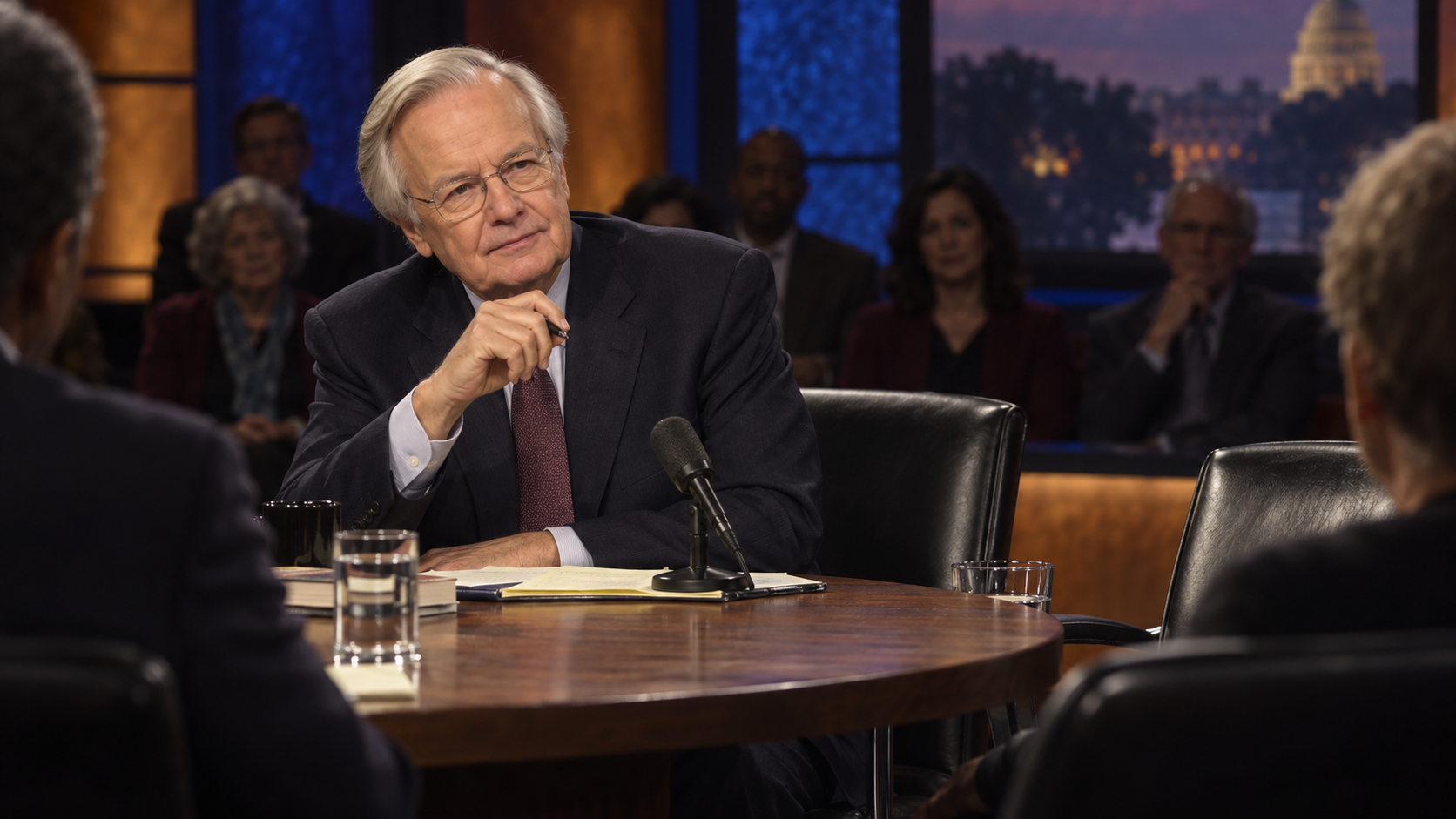
“We threw the conversation of democracy open to all comers.”
Bill Moyers used this sentence in a 2005 address about journalism, public media, and his experience hosting NOW. He was describing a program that invited activists, scholars, religious leaders, conservatives, liberals, artists, and people rarely given sustained television time. The phrase treated democratic conversation as something broader than a familiar panel of professional antagonists. Opening the discussion meant allowing different experiences and arguments to meet in public, with enough time for ideas to be examined instead of reduced to a rehearsed collision.
For news organizations, inclusion is both a sourcing practice and an editorial responsibility. Reporters should look beyond official spokespeople and the most available commentators, seek people directly affected by policy, and make room for expertise rooted in practice as well as credentials. Formats matter. A rushed segment rewards interruption and certainty; a longer interview can reveal assumptions, evidence, and change of mind. Digital publishing offers room for transcripts, source notes, and follow-up questions that broadcast schedules once excluded.
Opening a conversation to all comers cannot mean granting every claim equal credibility or every speaker unlimited reach. Newsrooms must consider relevance, evidence, safety, and whether an appearance will illuminate an issue or merely amplify abuse. Diversity of viewpoint is not a substitute for factual standards. Nor is a guest list evidence that a program has covered a community well. Editors should examine who sets the agenda, who receives patient questioning, whose mistakes are corrected on air, and which voices appear only when conflict is useful.
The quote remains important as local journalism contracts and online debate fragments into communities that rarely encounter one another’s strongest arguments. Public-interest reporting can rebuild common space by explaining stakes, naming disagreements accurately, and asking participants to respond to evidence rather than caricatures. It should also report what happened after the conversation: which claims held up, what policy moved, and who remained unheard. Community listening sessions, callouts, and source audits can reveal gaps, provided they supplement rather than replace independent reporting. Publishing what the newsroom learned from those exercises makes participation more than a branding exercise. Measuring success by new sources, corrected assumptions, and sustained coverage is more meaningful than counting comments alone. It turns listening into an editorial practice with observable consequences. Moyers’s formulation works best as an editorial challenge, not a boast. A democratic conversation is genuinely open when access broadens, standards remain visible, and listening changes what the public is able to understand.
Moyers used the line in a 2005 media-reform address while describing the wide range of guests and ideas presented on NOW. He linked public broadcasting with democratic encounter.
Open conversation does not require false equivalence or unlimited amplification. Relevance, evidence, safety, fair questioning, and transparency about editorial choices still matter.
Long-form interviews, transcripts, source notes, and follow-up reporting can create shared civic space when audiences and local news ecosystems are increasingly fragmented.
Explore more "Quotes of The Day"
Discover more notable quotes from influential voices across politics, science, business, technology, sports, and culture. Each quote offers insight into how ideas, beliefs, and decisions shape the world around us.