

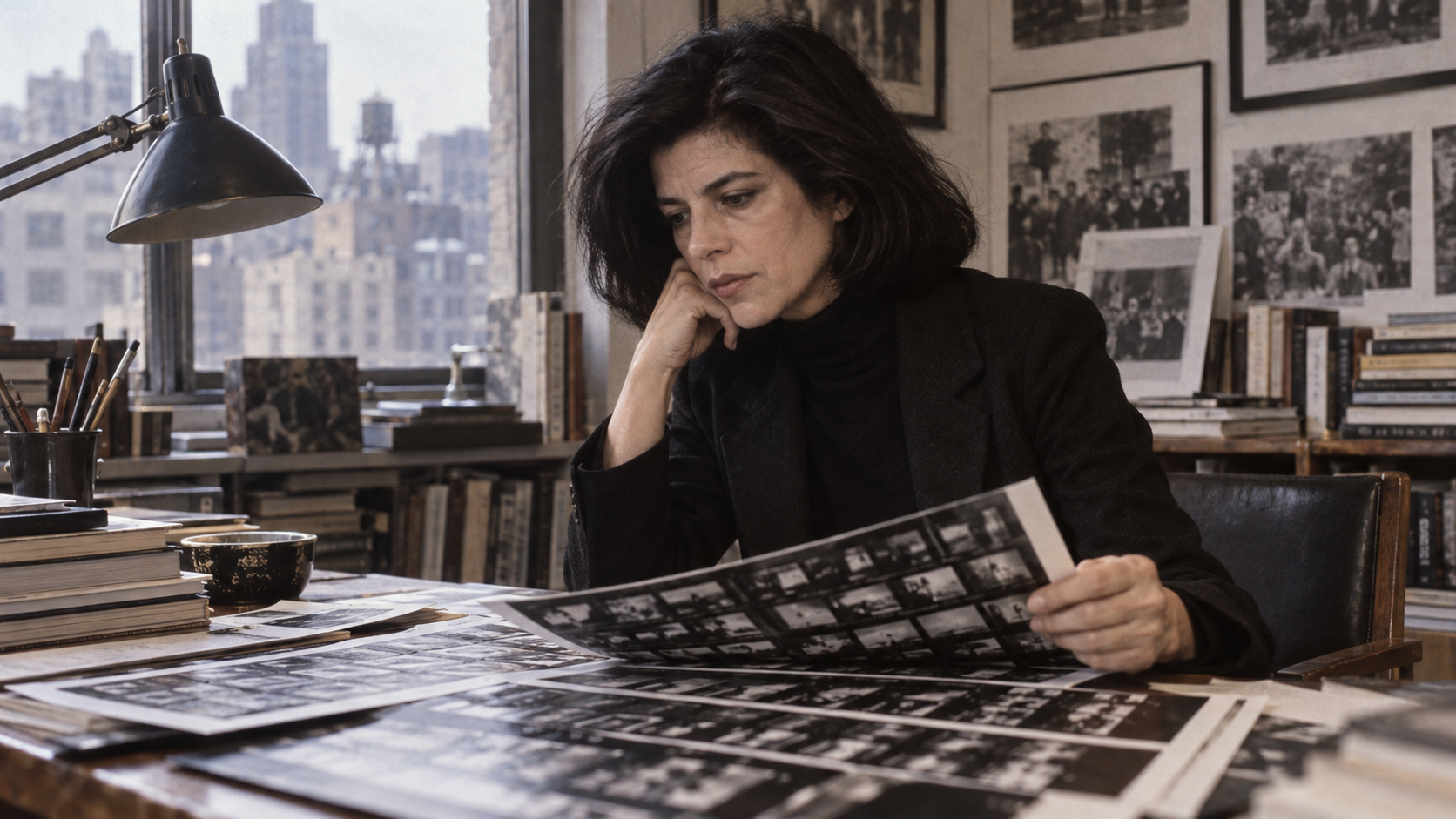
“Photographs furnish evidence.”
Susan Sontag wrote “Photographs furnish evidence” in On Photography, published in 1977 after its essays first appeared in The New York Review of Books. She was describing the special authority modern societies grant to camera records. A photograph can incriminate, identify, preserve, and make a distant event feel undeniable. Yet Sontag immediately complicated that authority: an image may distort even when it records something that existed. For journalism, her sentence names both a resource and a burden. Pictures can substantiate reporting, but their persuasive force makes careful verification more important, not less.
Responsible visual reporting begins before publication. A newsroom should establish who made the image, when and where it was captured, whether the file is original, and what happened immediately before and after the frame. Captions must separate what is visible from what a source claims. Editors should retain metadata when safe, seek corroborating footage or witnesses, and label handouts, reconstructions, composites, and illustrations. If cropping changes the apparent meaning, the audience deserves an explanation. These practices do not weaken a photograph’s impact; they give readers a defensible basis for understanding why it matters.
The quote can be misunderstood as a promise that seeing is the same as knowing. A photograph does not automatically reveal motive, causation, scale, or representativeness. A genuine frame from one location may be falsely described as another, and a real moment may be presented as typical when it is exceptional. Images of suffering also raise questions of dignity, consent, and unequal exposure. News value does not erase the humanity of the people depicted. Editors must weigh public interest, potential harm, identification risks, and the possibility that repeated shocking images can numb rather than inform.
Digital manipulation and generative imagery make Sontag’s formulation newly urgent. Verification now includes source tracing, frame-by-frame review, geolocation, weather and shadow checks, and communication with the photographer. Technical detection tools can help, but they should not be treated as oracles. Provenance and independent reporting remain essential. When certainty is unavailable, newsrooms should state what is known, what is inferred, and what cannot yet be authenticated. They should preserve correction histories and explain how a visual judgment changed, especially when an image has already circulated widely. Publishing the verification method can teach audiences how evidence is weighed without inviting harassment of vulnerable sources. Sontag’s enduring lesson is that photographs enter public life as evidence only through context, judgment, and accountability. The image may command attention; journalism must earn the conclusion.
The sentence appears in On Photography (1977), developed from essays Sontag published in The New York Review of Books. She explored why camera records are treated as proof while remaining vulnerable to framing and interpretation.
A real photograph can still mislead through a false caption, selective crop, missing sequence, or unsupported inference. Verification should address provenance, place, time, authorship, and context.
Generative imagery raises the stakes, but no detector replaces reporting. Original files, corroboration, transparent labels, and clear statements of uncertainty remain the strongest safeguards.
Explore more "Quotes of The Day"
Discover more notable quotes from influential voices across politics, science, business, technology, sports, and culture. Each quote offers insight into how ideas, beliefs, and decisions shape the world around us.