

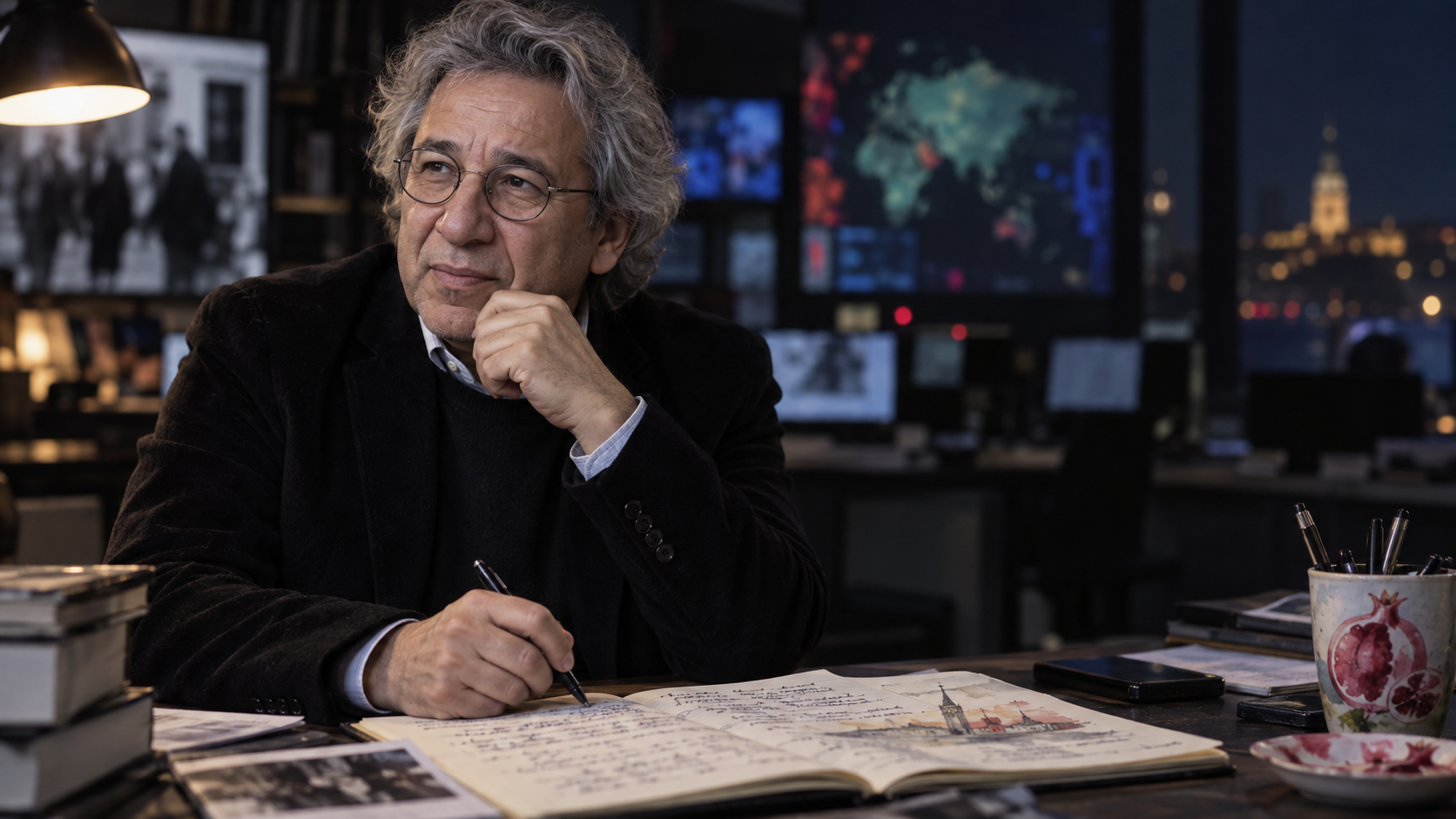
“I wanted to prove that color can exist even in the darkest of places.”
Turkish journalist Can Dündar spoke this line in his 2016 Committee to Protect Journalists award address after describing solitary confinement. Arrested over Cumhuriyet’s reporting on alleged weapons shipments to Syria, he found computers, phones, typewriters, soil, flowers, and even colored pens forbidden in prison. Dündar pressed fruit to make paint and secretly sent drawings beyond the cell. Color became more than decoration. It represented difference in information, identity, and expression against an authoritarian effort to make public life uniform. His sentence captures how imagination can preserve agency when institutions try to narrow both a journalist’s world and the range of truths a society may see.
The metaphor also describes the democratic value of plural journalism. A healthy information system includes competing investigations, regional perspectives, minority voices, satire, commentary, and evidence that challenges official narratives. Variety alone, however, does not establish truth. Reporters still must authenticate documents, corroborate claims, understand what a source could know, and seek a response from those accused. Editorial independence allows different facts and interpretations to enter public debate; verification gives audiences reasons to trust them. Color without method can become noise, while method without freedom can be reduced to the single picture power permits.
Dündar’s experience shows the risks attached to reporting that governments label secret, disloyal, or dangerous. Newsrooms considering such material need a defined public-interest test, careful source protection, secure document handling, legal review, and language that does not overstate what the evidence proves. Collaboration can protect continuity if a reporter is detained or forced into exile. Editors should preserve original records and prepare to explain their methods publicly, because authorities may attack the legitimacy of the process rather than answer the substance. These measures do not eliminate repression, but they make it harder to erase the reporting or isolate the journalist.
The image of color in darkness remains powerful because censorship often begins by shrinking acceptable difference. Officials may not ban every publication; they can use arrests, ownership pressure, licensing, lawsuits, or fear until newsrooms reproduce the same safe account. Resistance therefore includes supporting independent outlets, continuing the work of jailed colleagues, preserving archives, and ensuring that exiled reporters can still reach audiences at home. Dündar’s handmade colors did not change the walls around him, but they rejected the prison’s claim to control every form of expression. Journalism makes the same refusal when it documents suppressed facts with care and keeps public debate open to more than one authorized story. Its durability depends on courageous individuals, but also on institutions willing to defend pluralism with evidence, security, legal support, and sustained attention.
Dündar used the line in his 2016 CPJ speech after explaining how he made paint from fruit in prison when colored pens, soil, flowers, and communication tools were forbidden.
Color represents pluralism, but journalistic variety still needs authentication, corroboration, right of reply, and transparent limits on what the available evidence can prove.
Secure document handling, legal review, collaboration, archive preservation, and support for jailed or exiled reporters help prevent repression from erasing an investigation.
Explore more "Quotes of The Day"
Discover more notable quotes from influential voices across politics, science, business, technology, sports, and culture. Each quote offers insight into how ideas, beliefs, and decisions shape the world around us.