

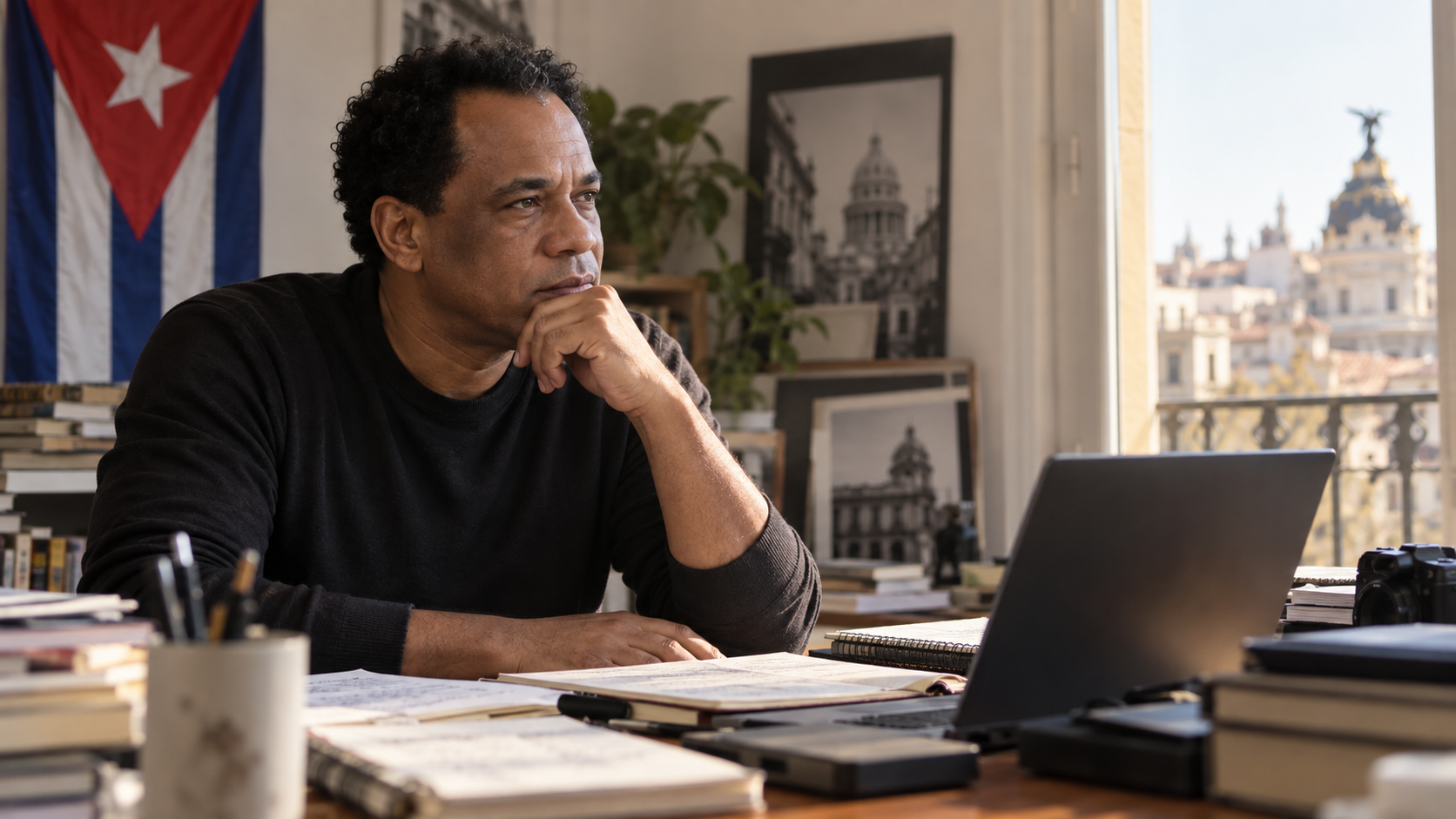
“We Cuban journalists will not be silent. There is no possible way to leave us without our voice.”
Afro-Cuban journalist Abraham Jiménez Enoa made this declaration at CPJ’s 2022 press-freedom ceremony. A co-founder of the narrative magazine El Estornudo, he had faced interrogation, blocked internet access, threats against his family, travel restrictions, and harassment that eventually forced him into exile. Jiménez described a media system in which major outlets are controlled by the ruling party and independent reporting can be treated as criminal conduct. Against that structure, voice means more than personal expression. It is the capacity to record realities that state media excludes and to keep those experiences within the nation’s historical memory.
Preserving memory requires journalistic method. Reporters must identify original documents, compare official accounts with witnesses, establish dates and locations, and separate what they directly know from what sources allege. Narrative writing can make hidden lives vivid, but scene, dialogue, and detail still need verification. Corrections should remain visible, and archives should preserve both the finished article and the supporting material when source safety allows. These practices make it harder for authorities to dismiss independent work as rumor and help future researchers understand how a society experienced events in real time.
Exile changes the conditions of reporting without ending the responsibility. A journalist outside the country may gain physical safety and access to international platforms while losing direct observation and exposing people at home to greater danger. Secure communication, careful metadata handling, renewed consent, and collaboration with reporters inside the country become essential. Editors should be transparent about what could not be independently confirmed and avoid treating exile as either proof of bias or a guarantee of authority. Distance creates limitations, but it can also protect an archive and keep prohibited questions in public circulation.
Jiménez’s statement remains relevant wherever governments try to erase events by controlling access, terminology, or publication. A voice survives through networks: local sources, diaspora reporters, independent editors, translators, legal advocates, and readers who preserve and share verified work. News organizations can support that network by mirroring endangered archives, compensating local contributors fairly, and continuing investigations when one reporter is detained or expelled. Refusing silence is not simply speaking louder. It is building a durable record that can withstand intimidation and later be tested against additional evidence. Journalism protects historical memory when it documents both extraordinary repression and ordinary life, ensuring that a country’s story cannot be reduced to the version authorized by those in power. Translation and contextual notes can carry that record across borders without flattening the distinct experience that produced it.
Jiménez spoke the line in his 2022 CPJ address after describing the criminalization of independent reporting in Cuba and the exile forced by sustained state harassment.
Voice becomes durable through verified documents, corroborated testimony, transparent uncertainty, visible corrections, and archives that preserve evidence without exposing vulnerable sources.
Exiled and local journalists need secure collaboration, fair credit, protected records, and continued publication so expulsion cannot remove difficult facts from national memory.
Explore more "Quotes of The Day"
Discover more notable quotes from influential voices across politics, science, business, technology, sports, and culture. Each quote offers insight into how ideas, beliefs, and decisions shape the world around us.