

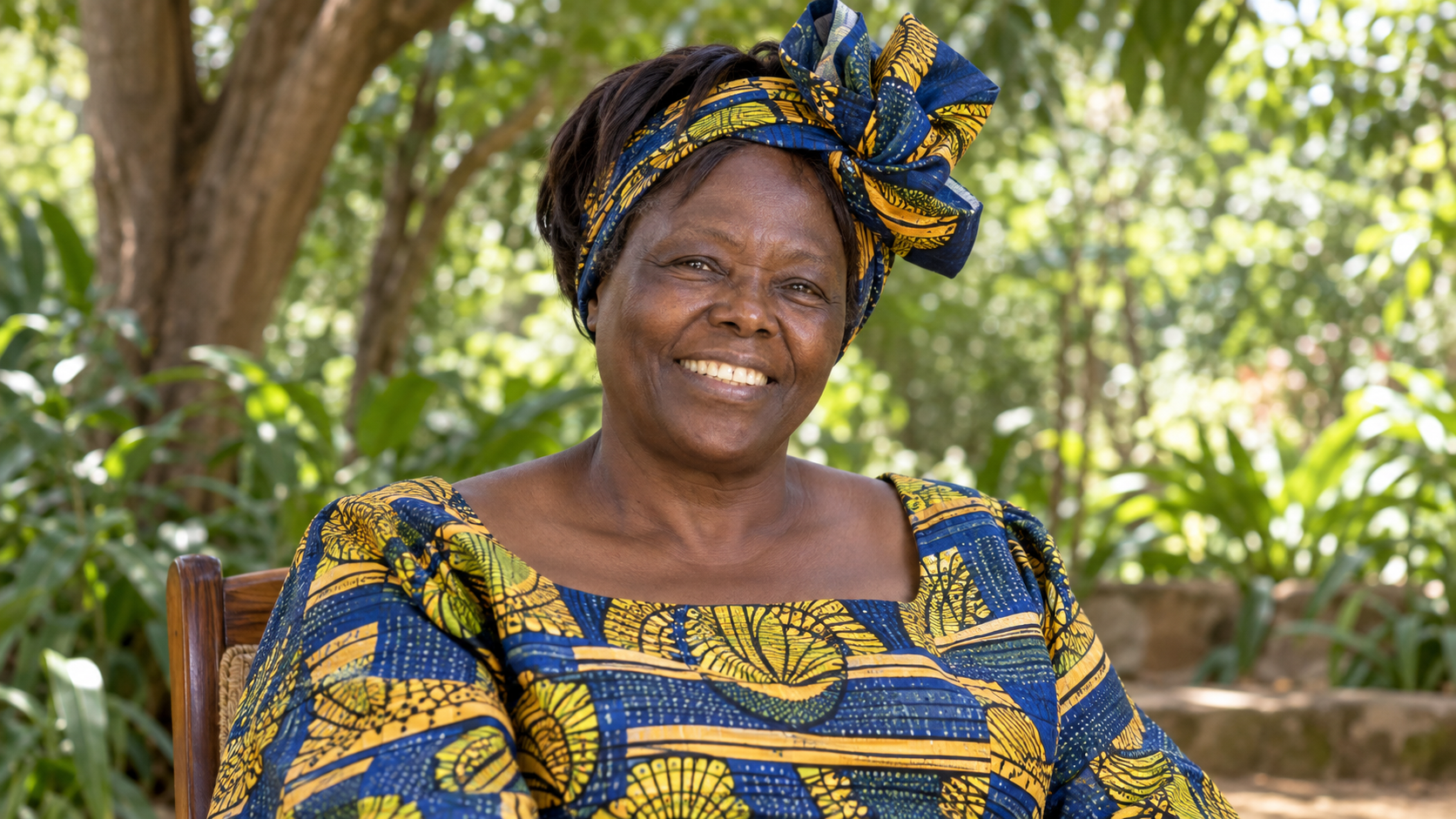
“I have always believed that solutions to most of our problems must come from us.”
Wangari Maathai made this statement in her Nobel lecture in Oslo on December 10, 2004. The Kenyan environmental and democracy advocate was discussing work that connected tree planting with the conditions of public life. The Green Belt Movement had begun in 1977 in response to needs identified by rural women, including fuel, water, food, and income. Her lecture explained how practical environmental work led participants to examine decisions affecting their resources and rights. The featured sentence emphasizes initiative by people living with a problem. In its surrounding passage, that initiative accompanies a call for democratic government, respect for human rights, and protection of the environment.
The phrase must come from us gives communities a role in identifying problems as well as solving them. A program can deliver a useful resource while leaving the people who depend on it with little influence over its priorities. Maathai’s statement asks readers to consider a different relationship: knowledge of local conditions becomes a source of public authority rather than an obstacle for outsiders to overcome. This is especially relevant when a seemingly technical decision concerns shared land or water. Selecting a remedy involves choices about access, responsibility, and who bears the cost. Citizen participation helps expose those choices instead of allowing them to disappear inside a claim of expertise.
The sentence should not be turned into an argument against every form of outside assistance. Maathai addressed an international audience and recognized cooperation among individuals and institutions. Her emphasis was on agency, not isolation. Nor did she suggest that community effort excused governments from their responsibilities. The lecture connected environmental governance with democratic space and described citizens holding leaders accountable. Tree planting offered a concrete form of action, but it was not a universal substitute for public policy. The qualifier most also matters: it keeps the statement from claiming that every problem can be resolved locally or without resources beyond the community’s control. Her formulation leaves room for different scales of responsibility.
A useful way to carry the idea into political debate is to ask who defines success. A project may count completed activities while residents judge whether their daily lives have improved and whether they can influence what happens next. Those measures need not conflict, but they require a conversation about priorities and evidence. People closest to a difficulty can offer knowledge that distant officials lack; they can also disagree with one another and need fair ways to resolve those differences. Maathai’s quotation therefore points toward participation with accountability. It encourages initiative while preserving the need to examine results, question leaders, and build institutions through which local experience can inform decisions that reach beyond one neighborhood.
Maathai delivered the Nobel lecture in Oslo on December 10, 2004.
She described how rural women’s practical needs helped shape the Green Belt Movement from 1977.
The statement emphasizes community agency without ruling out international cooperation.
Her argument also requires accountable government and democratic space; it does not transfer every public obligation to volunteers.
Environmental decisions can also determine who controls resources and participates in public life.
A project’s activity count should be considered alongside residents’ assessments of access, influence, and lasting benefit.
Explore more "Quotes of The Day"
Discover more notable quotes from influential voices across politics, science, business, technology, sports, and culture. Each quote offers insight into how ideas, beliefs, and decisions shape the world around us.