

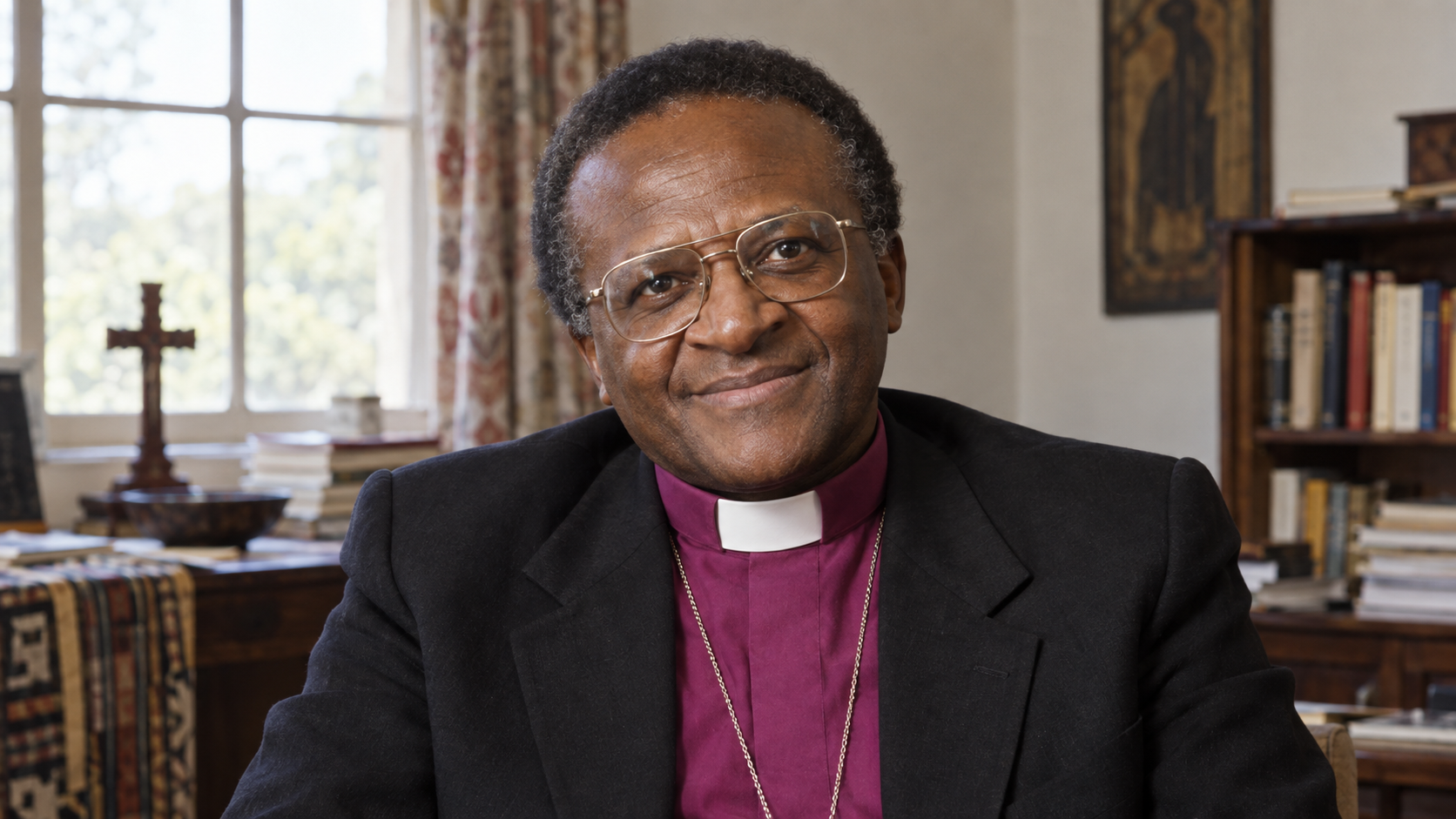
“There is no peace because there is no justice.”
Desmond Tutu used this sentence in his Nobel lecture in Oslo on December 11, 1984. The South African Anglican bishop was explaining why apartheid could not provide a just and secure public order. His subject included the legal and social restrictions imposed on Black South Africans, rather than an abstract disagreement about the meaning of peace. The surrounding passage located the problem in southern Africa and insisted that justice had to be enjoyed by all its inhabitants. Read in that setting, the sentence challenges the idea that a government can establish peace while preserving systematic exclusion. Its cause-and-effect structure expresses Tutu’s moral and political judgment about that society.
The quotation draws attention to what a claim of stability leaves out. A state may describe order in terms of quiet streets or obedience to authority, while people living under its rules experience insecurity in their homes, work, and political participation. Those experiences are part of the assessment, even when they are inconvenient for an official account. Tutu’s formulation makes the treatment of people central to the question of peace. It asks whether institutions offer protection on fair terms and whether those affected have ways to challenge their treatment. The absence of open confrontation can provide evidence about one condition without establishing the legitimacy of the entire public arrangement.
Tutu’s words also require careful limits. The sentence is not a complete theory explaining every conflict, and it does not identify one remedy suitable for every political dispute. Claims of injustice still need evidence and a clear account of what should change. His religious vocabulary and opposition to apartheid shaped the argument, so the original setting should remain visible rather than being dissolved into a general motivational message. The quotation likewise does not make violence a justified response to any unfairness. Its force lies in rejecting complacency about an oppressive system and in requiring a more demanding account of peace than enforced submission can offer. Moral urgency does not remove the need to evaluate methods.
For a reader considering present-day political claims, the statement provides a question rather than a ready-made verdict. When officials promise order, who receives security and who is expected to bear the costs? When a reform promises justice, does it create fair procedures and protections that people can actually use? These questions connect public language with institutional choices. They also help distinguish a durable settlement from a temporary suppression of grievances. People can disagree about a policy while still accepting that those living under it deserve equal consideration. Tutu’s quotation remains significant because it makes that consideration part of the meaning of peace, placing the quality of public relationships alongside the visible reduction of conflict.
The Nobel lecture was delivered on December 11, 1984, and addressed apartheid South Africa.
The featured sentence follows Tutu’s statement that southern Africa lacked peace.
Justice concerns the treatment and rights of all inhabitants, rather than an official declaration of order.
The quotation expresses a moral argument and does not prove that any proposed remedy will succeed.
Readers can examine whose security an institution protects and whose burdens it overlooks.
A lasting settlement requires ways to address grievances fairly, as well as an end to immediate confrontation.
Explore more "Quotes of The Day"
Discover more notable quotes from influential voices across politics, science, business, technology, sports, and culture. Each quote offers insight into how ideas, beliefs, and decisions shape the world around us.