

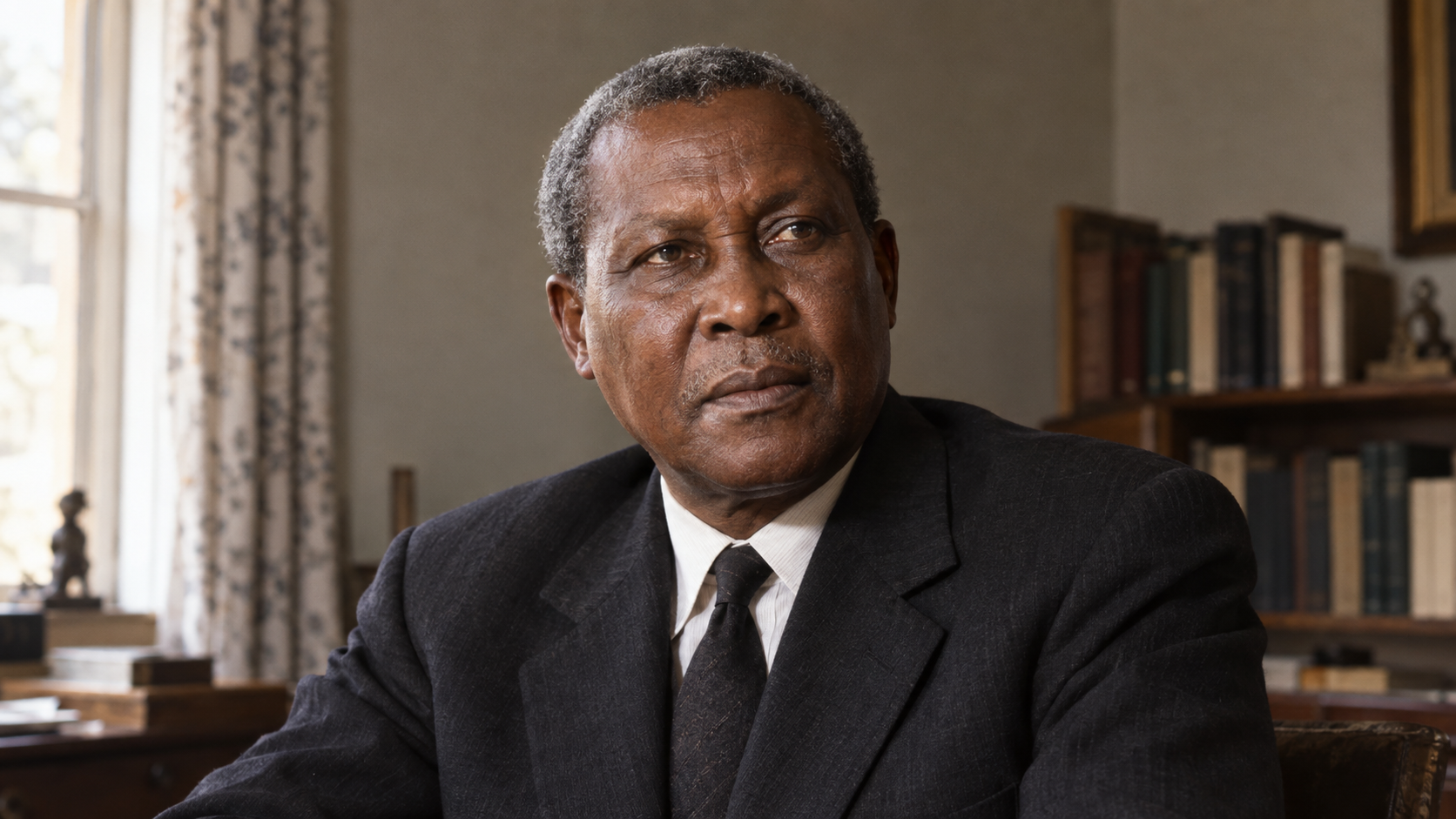
“Our freedom we must make ourselves.”
Outside support matters, but the people seeking freedom remain participants in making it. Albert Lutuli expressed that conviction in his Nobel lecture, Africa and Freedom, delivered in Oslo on December 11, 1961. The sentence follows an acknowledgment of international support in the struggle against apartheid. It therefore belongs to an argument that values solidarity while retaining the agency of those living under an oppressive system. Reading it as a demand for isolation would miss that relationship. The words identify a responsibility and a capacity within the movement, rather than suggesting that help from others has no place in the work.
Lutuli’s Nobel Peace Prize was awarded for 1960, although his lecture was delivered in 1961. The post’s year follows the speech itself. A leader of the African National Congress, he spoke about freedom in South Africa and the wider transformation taking place across the continent. His vision included political participation and equal rights rather than an exchange of one form of domination for another. The address described hopes, duties, and obstacles from its own historical moment. It was not a report of a freedom already secured. That unfinished setting gives the sentence its urgency and keeps its aspiration distinct from a later outcome.
Agency becomes easy to praise in the abstract and harder to respect in practice. Supporters may assume that their resources give them the right to decide another community’s priorities. Institutions may consult people while offering no meaningful influence over the result. The quotation draws attention to that imbalance. Assistance can become more useful when it expands people’s ability to organize, deliberate, and make decisions about their own circumstances. Such participation does not guarantee agreement among everyone involved. It creates space for disagreement to belong to the community’s political life, rather than making outsiders the final authority over its future.
The line also asks what happens after a broad demand for freedom is accepted. Rights require institutions, accountable leadership, and habits of participation that can survive disappointment and conflict. A victory announced in public is only one stage in that work. The people affected need usable ways to challenge decisions, protect their neighbors, and hold their representatives to promises. Lutuli’s sentence is valuable because it places freedom within a continuing practice of shared responsibility. Solidarity can strengthen that practice, but it should increase the room for people to act on their own behalf. A lasting political settlement must preserve their voice in shaping what freedom means in everyday life.
Lutuli delivered Africa and Freedom on December 11, 1961. His Nobel Peace Prize was awarded for 1960.
The sentence follows acknowledgment of international support. The surrounding passage combines solidarity with responsibility within the movement.
Freedom requires the agency of the people seeking it. Support should expand their capacity to shape their circumstances.
The line is not an argument for isolation or a claim that outside assistance is unnecessary.
Assess whether assistance gives affected people meaningful influence over priorities, decisions, and accountability.
Political freedom must remain usable after a settlement, through participation and ways to challenge those exercising power.
Explore more "Quotes of The Day"
Discover more notable quotes from influential voices across politics, science, business, technology, sports, and culture. Each quote offers insight into how ideas, beliefs, and decisions shape the world around us.