

“We must depend in large measure on the impartiality of those who teach.”
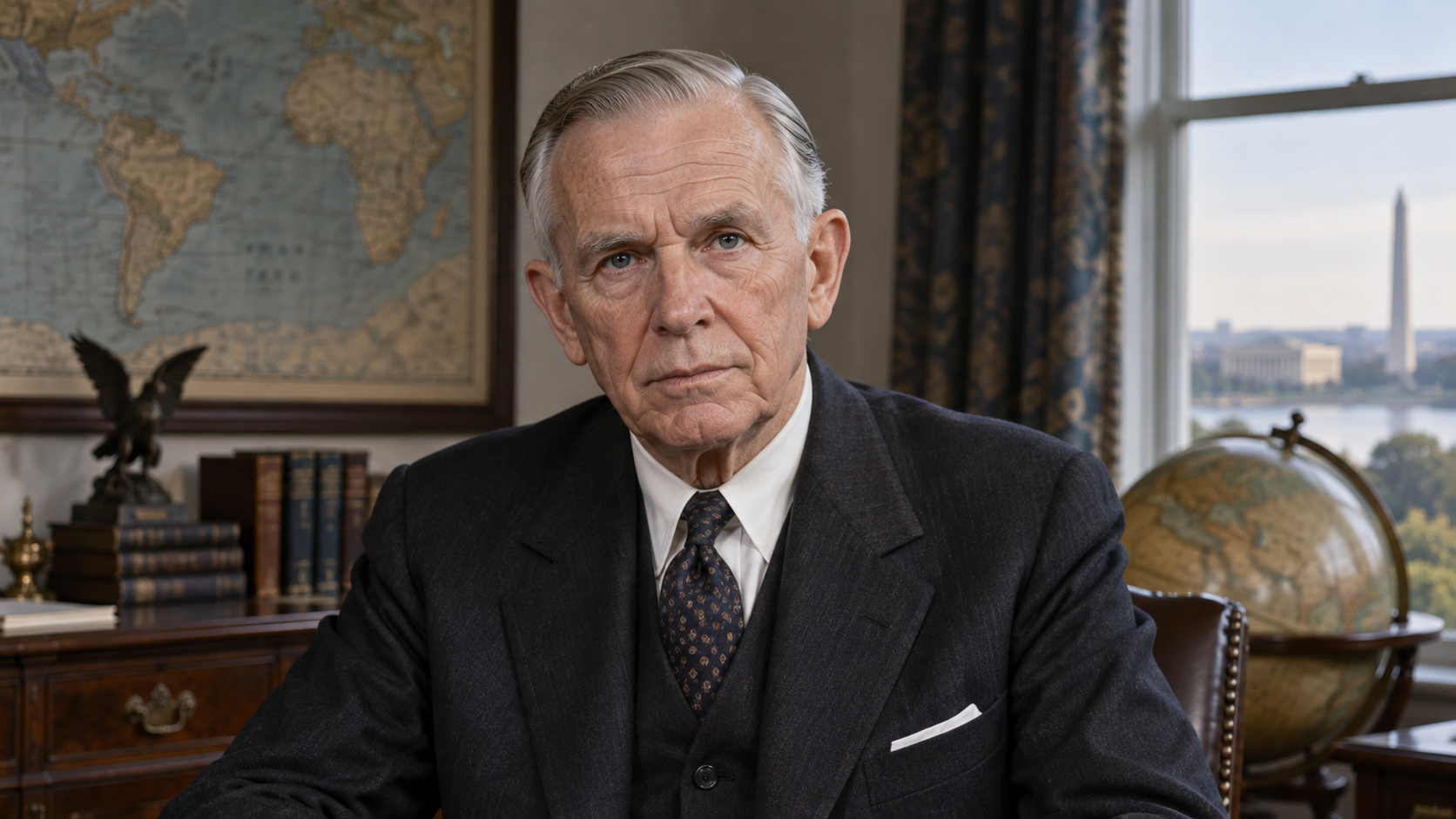
George C. Marshall delivered his Nobel lecture in Oslo in 1953 with the experience of war, diplomacy, and European reconstruction behind him. The former American secretary of state argued that lasting peace required a public capable of understanding the economic and political problems that divided nations. His appeal to impartial teaching belonged to that wider argument. Military preparedness might answer an immediate danger, but it could not by itself create the knowledge needed for durable cooperation. Marshall therefore placed a responsibility on educators: help citizens understand difficult international questions without reducing them to national vanity, inherited suspicion, or a convenient political slogan.
The word impartiality does demanding work here. A teacher cannot make every argument equally sound, and refusing to distinguish evidence from falsehood would undermine education. Impartial teaching instead asks that judgments remain open to examination: explain the available evidence, acknowledge what is uncertain, and show why one interpretation is stronger than another. Applied to politics, that method gives students room to disagree without treating disagreement as proof of disloyalty. It also resists the temptation to present a nation's interests as automatically identical with justice. Learning becomes a preparation for responsible choice rather than an exercise in repeating the preferred answer.
Marshall's argument also exposes a tension between civic education and political power. Governments often want schools to strengthen national solidarity, particularly during a crisis. Yet understanding another country's fears or economic pressures can look suspicious to people who equate sympathy with surrender. The answer is not to remove values from teaching. Students need to understand both the importance of freedom and the consequences of coercion. What matters is whether an instructor supplies reasons that can be questioned. A classroom that permits inquiry can strengthen democratic confidence because citizens learn how to assess a policy instead of depending entirely on the authority proposing it.
For readers today, the quotation offers a useful standard for judging how public knowledge is produced. A lesson, a news report, or a policy explanation should make its reasoning visible and distinguish documented facts from persuasion. That does not guarantee agreement, and knowledge alone cannot overcome every struggle for power. It can, however, improve the quality of the choices available. Marshall's emphasis asks citizens to expect more than patriotic reassurance from the institutions that teach them. Peace requires people who can recognize complexity, test claims, and consider consequences beyond their own immediate interests. The impartial educator helps create those habits one argument at a time.
The line comes from Marshall's 1953 Nobel lecture, where education formed part of a broader account of the conditions for peace. It was a political argument about public understanding rather than a classroom instruction manual.
His experience in reconstruction gave the appeal a practical dimension: citizens needed to understand why conditions abroad could affect security and prosperity at home.
Impartiality means exposing the basis for a judgment and considering competing evidence fairly. It does not require a teacher to treat an unsupported assertion as equal to a documented fact.
The concern is that education can become an instrument of unquestioning loyalty. Marshall's standard gives students the tools to evaluate loyalty's demands for themselves.
The quotation remains useful whenever schools or public institutions face pressure to supply politically convenient answers. Its test is whether inquiry remains possible.
A better-informed public cannot ensure peace by itself. It can scrutinize the assumptions behind policies and make manipulation more difficult.
Explore more "Quotes of The Day"
Discover more notable quotes from influential voices across politics, science, business, technology, sports, and culture. Each quote offers insight into how ideas, beliefs, and decisions shape the world around us.