

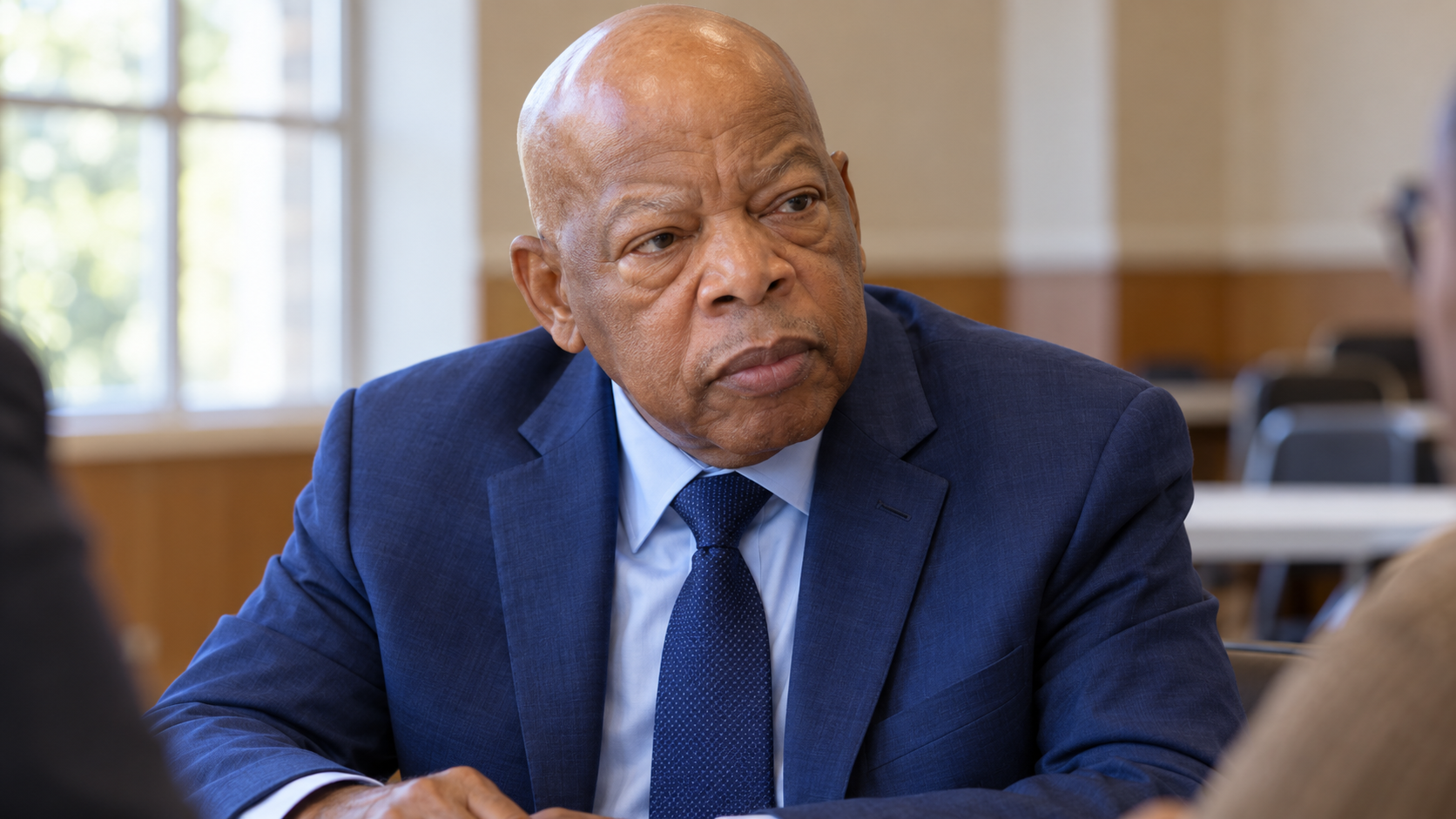
“Democracy is not a state.”
John Lewis wrote this sentence in his final essay, published on July 30, 2020, after his death earlier that month. The civil rights leader and congressman addressed people taking part in demonstrations against racial injustice. He connected their determination with his own early experiences and urged readers to learn from history, vote, and use peaceful methods to seek change. Immediately after the featured sentence, he described democracy as something people do and placed responsibility on successive generations. Read in that setting, the brief statement challenges the assumption that a democratic system, once established, will automatically continue to deliver its promises.
The word state can suggest a condition that has already been reached: a country possesses elections, a constitution, and public institutions, so its democratic work appears complete. Lewis directs attention toward the habits that keep those arrangements meaningful. A right printed on paper needs people who can exercise it, officials who respect it, and neighbors who notice when someone is excluded. This does not make constitutional rules unimportant. It explains why their operation depends on conduct. A system can retain its familiar names while losing the practical opportunities for participation that give those names substance in the first place.
His emphasis also changes how political responsibility is distributed. Citizens need not wait for a celebrated leader to begin asking whether a meeting is accessible, a decision is explained, or a complaint receives a fair hearing. Small acts of participation can expose a larger pattern, especially when people compare experiences across neighborhoods and generations. At the same time, participation alone is no guarantee of fairness: a loud crowd can overlook a quieter minority. Lewis’s wider commitment to nonviolence and human dignity supplies an important standard for evaluating civic action. The method should respect people as well as pursue a desired result.
The sentence offers a useful starting point for examining democratic life between elections. Readers can ask which routines make power answerable: accurate public information, open deliberation, effective opportunities to vote, and procedures for correcting mistakes. They can also ask who bears the cost of maintaining those routines and whether participation is possible for people with limited time or resources. Treating democracy as continuing work encourages attention to such practical details. Lewis leaves a demanding inheritance rather than a certificate of completion. Each generation receives institutions shaped by earlier struggles and must decide, through its own choices, what those institutions will mean for the next.
Lewis’s final essay appeared in The New York Times on July 30, 2020. It responded to demonstrations for racial justice and linked the moment with lessons from the civil rights movement. The displayed sentence is the opening of his concluding discussion of democracy.
His surrounding argument joins participation with voting, historical learning, and nonviolent action. Those connections matter: the statement is a call to ongoing civic responsibility, not a dismissal of elections or an invitation to abandon democratic institutions.
A democratic label cannot guarantee democratic conduct. The sentence asks readers to judge the opportunities people actually possess to influence decisions and protect their rights. Its brevity moves attention from an institution’s name toward the practices that sustain it.
The final essay expresses Lewis’s own appeal. Claims about a universal contemporary response would require separate evidence. A further concern is that participation can be unequal; access to time, information, and a safe public voice affects whose contribution is heard.
Between elections, people can attend meetings, seek explanations, organize peacefully, and support neighbors facing exclusion. These activities can connect formal rights with the everyday conditions needed to use them.
The intergenerational theme also makes maintenance a political achievement. Protecting a fair procedure may attract less attention than a dramatic campaign, yet its value becomes visible when a person can challenge power without losing dignity or access.
Explore more "Quotes of The Day"
Discover more notable quotes from influential voices across politics, science, business, technology, sports, and culture. Each quote offers insight into how ideas, beliefs, and decisions shape the world around us.