

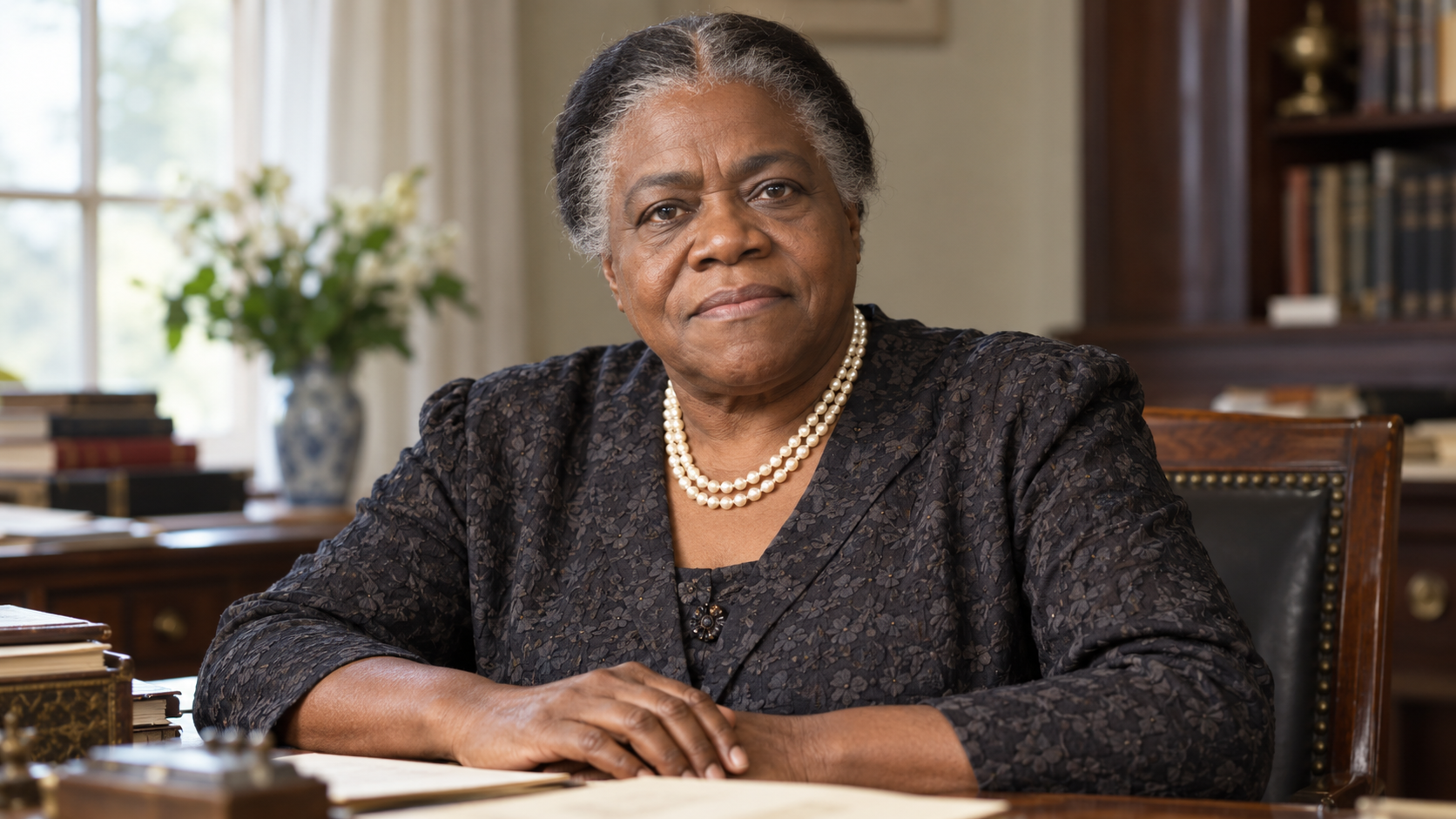
“I leave you a thirst for education.”
Mary McLeod Bethune included this bequest in her Last Will and Testament, published in Ebony in August 1955 after her death. The educator and civil rights leader described a legacy made from experience and principles, rather than a large collection of possessions. Education was one element alongside hope, dignity, responsibility, and the careful use of power. In the passage surrounding the quotation, she connected learning with opportunities to participate in democracy and with the preparation of future generations. The line therefore concerns more than individual advancement. It places knowledge within a larger effort to make equality practical for people confronting racial exclusion.
A thirst is a continuing desire, not a credential that can be placed on a wall and forgotten. Bethune’s choice of image makes curiosity part of the inheritance itself. A person can receive information without gaining the desire to examine it; a person can finish a course without believing that further questions are welcome. Civic education becomes stronger when it cultivates both the ability and the inclination to investigate. That includes asking how public choices are made, whose experience has been omitted, and whether the evidence offered for a claim actually supports it. Such habits can outlast a particular classroom or institution.
The political significance becomes clear when access to learning is uneven. People asked to participate in public affairs need opportunities to understand the choices before them, yet those opportunities can depend on money, geography, language, or the expectations placed upon a child. Celebrating curiosity while neglecting these barriers risks making education sound like a purely personal responsibility. A fuller response pairs encouragement with the conditions that let encouragement bear fruit: welcoming schools, usable libraries, patient instruction, and room to ask difficult questions. This interpretation follows the civic direction of Bethune’s bequest while recognizing that enthusiasm cannot substitute for resources and fair treatment.
Her words invite readers to consider what a community passes to those who will govern it next. An educational inheritance can include books and buildings, but also confidence that learning belongs to everyone and that public claims may be questioned. Adults communicate that confidence through their response to uncertainty: they can admit what they do not know and help younger people find reliable ways to learn. The democratic value lies in preparing participants who can exercise judgment rather than simply repeat an authority’s answer. Bethune’s bequest remains demanding because a thirst needs continuing nourishment, especially where opportunity has historically been withheld.
Bethune’s testament was published in Ebony in August 1955. Her university preserves the full text, and the Smithsonian quotes this educational bequest in its account of her life and legacy. The date identifies the testament’s publication.
The document describes an ethical and civic inheritance. Education appears among responsibilities concerning racial dignity, democratic power, mutual confidence, and young people. That wider setting keeps the featured line connected to equality and public life.
The image of thirst emphasizes a lasting desire to learn. It can be read as an invitation to cultivate questions and judgment, rather than to treat a completed qualification as the end of intellectual development.
A concern follows from the same interpretation: encouragement is insufficient when institutions deny access. Readers can distinguish a personal appetite for learning from the material and social opportunities needed to satisfy it. Neither should excuse neglect of the other.
Public discussion benefits when participants can examine evidence and recognize uncertainty. Libraries, schools, and community learning spaces can help turn the inheritance Bethune describes into a shared civic capacity.
Her bequest also points toward the conduct of teachers, officials, and families. Taking a young person’s question seriously can teach that judgment matters. That practice can prepare future participants to evaluate power without assuming that only established authorities are entitled to think.
Explore more "Quotes of The Day"
Discover more notable quotes from influential voices across politics, science, business, technology, sports, and culture. Each quote offers insight into how ideas, beliefs, and decisions shape the world around us.