

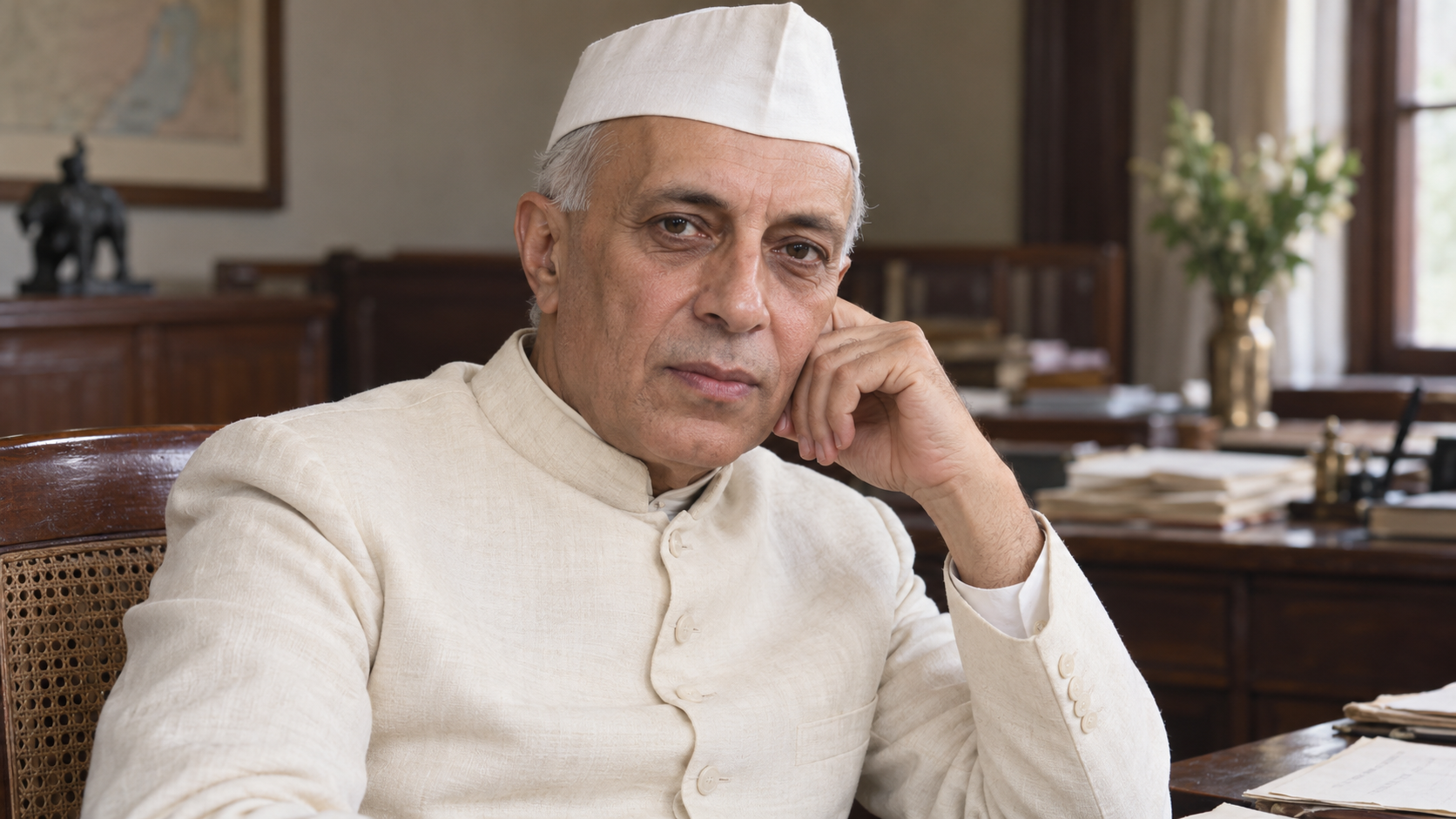
“Freedom and power bring responsibility.”
Jawaharlal Nehru delivered his Tryst with Destiny address to India’s Constituent Assembly in New Delhi on the night of 14–15 August 1947, as British rule ended and independence began. The speech’s most famous passages celebrated a nation awakening to freedom. This shorter sentence changed the emphasis from achievement to obligation. Nehru immediately applied it to the Assembly, describing it as a sovereign body representing India’s people. The leaders who had demanded self-government now had to exercise it. Independence gave their decisions a new authority, but it also removed the excuse that the hardest choices belonged entirely to a distant colonial government.
The surrounding speech makes that responsibility concrete. Nehru spoke about poverty, ignorance, disease, and unequal opportunity, identifying service to ordinary people as the purpose of national freedom. He acknowledged suffering and difficult work rather than presenting the transfer of power as a completed social transformation. His audience was therefore being asked to distinguish sovereignty from success. A government could possess the right to decide while still failing the people affected by its decisions. Constitutional authority would matter through the schools, livelihoods, health, and opportunities it helped make possible. In that setting, responsibility meant a continuing burden of public service, not simply the ceremonial dignity of holding office.
The sentence also joins two ideas that political argument sometimes separates. Freedom protects people against domination, while power enables institutions to act. Nehru did not suggest that one made the other unnecessary. A new state needed the capacity to govern, and its representatives needed limits and purposes worthy of the freedom they celebrated. The line supplies no ready answer about how much authority a government should have, which economic policy it should choose, or how competing interests should be reconciled. Those remained matters for political judgment. Its force lies in making the exercise of authority answerable to people’s lives. An appeal to independence cannot, by itself, justify every decision made in independence’s name.
For readers of politics, this passage offers a useful way to examine the moment after a movement wins. Campaigns can unite people around removing an obstacle; governing requires choices about resources, institutions, and conflicting claims. Celebration may be justified without becoming a substitute for scrutiny. A practical application of Nehru’s idea is to ask what a promised freedom allows people to do, who remains unable to benefit, and which officeholders must explain the gap. That is a present-day reading of the speech, rather than a policy checklist Nehru supplied. It preserves his central shift in perspective: the possession of national power begins a task of service whose results must reach beyond the leaders who inherit it.
Nehru’s address accompanied India’s transition to independence in August 1947. He directed this sentence specifically toward the Constituent Assembly and the authority it would exercise on the people’s behalf.
His account of public service included reducing poverty, illness, and unequal opportunity. The speech placed those unfinished tasks beside the celebration of freedom.
The line connects legitimate authority with obligations toward the people affected by it. Sovereignty changes who can decide; responsibility concerns the purpose and consequences of those decisions.
It does not prescribe a particular economic system or make every action of an independent government legitimate. The surrounding emphasis on service gives the phrase a more demanding meaning than loyalty to officeholders.
The passage helps explain why winning independence and building effective democratic institutions are related but distinct achievements. A transfer of power cannot complete every social change it promises.
Readers can apply the idea by examining whether political victories produce wider opportunity and accountable decisions. That application follows the speech’s concern for ordinary people without claiming that Nehru answered every later policy dispute.
Explore more "Quotes of The Day"
Discover more notable quotes from influential voices across politics, science, business, technology, sports, and culture. Each quote offers insight into how ideas, beliefs, and decisions shape the world around us.