

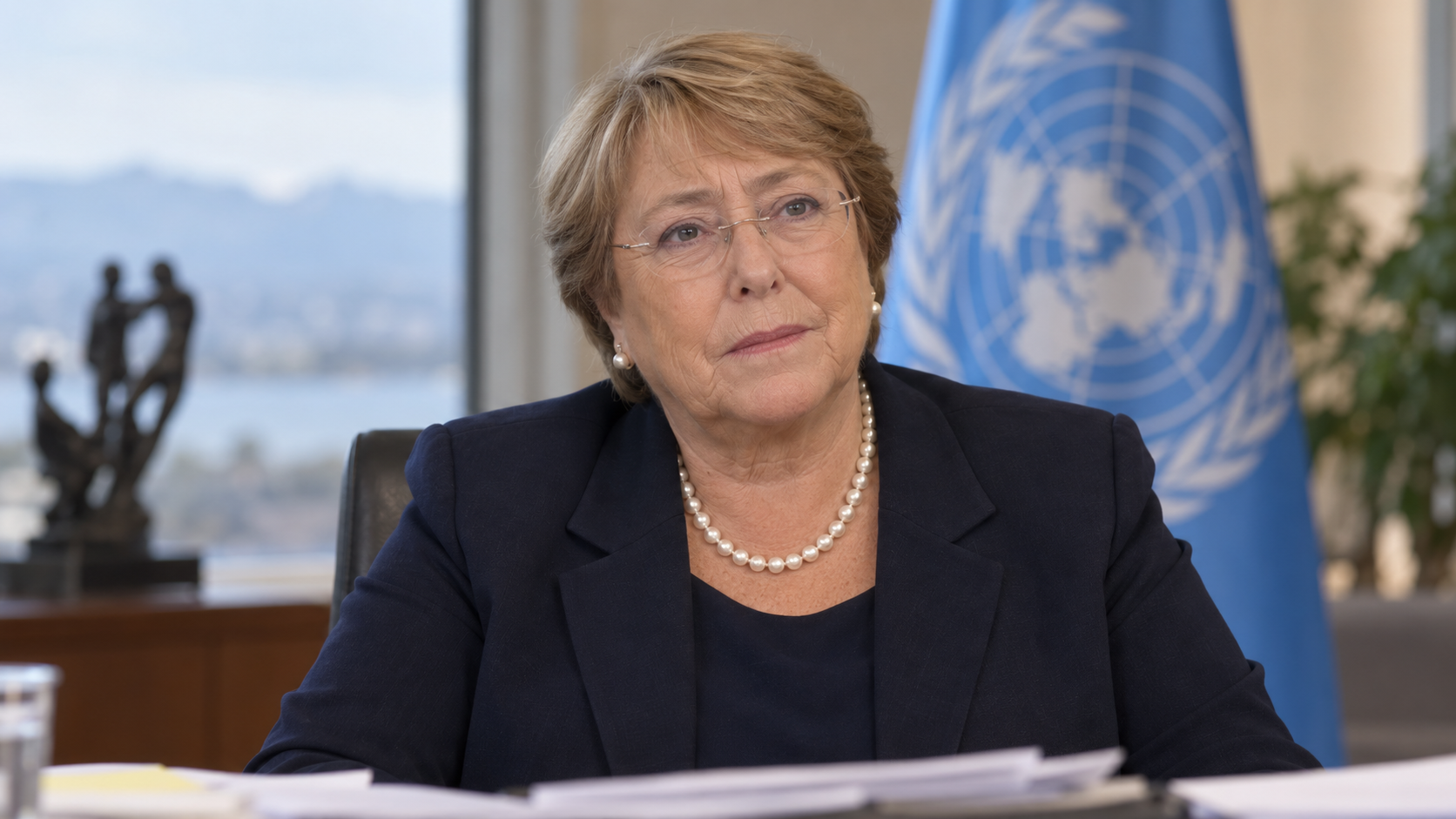
“Equality is at the heart of human rights.”
Michelle Bachelet placed equality at the centre of her message for Human Rights Day on December 10, 2021. The United Nations published a short video statement with the sentence quoted here and a longer message expanding the argument. Speaking as High Commissioner for Human Rights, she was responding to the inequalities exposed and intensified by the COVID-19 pandemic. Her concern extended beyond whether rights were formally recognized. It included whether people could enjoy those rights in practice. That distinction gives the statement its political force: a promise of equal dignity needs institutions and choices capable of making it meaningful in ordinary life.
Bachelet explicitly distinguished equality from sameness. Her message defended diversity and opposed discrimination; it did not ask everyone to think or act alike. This matters because political debates sometimes treat a demand for equal treatment as a demand to erase differences. The principle she described allows differences to remain while questioning whether they are used to deny opportunity, protection, or a voice. The wider message connected this challenge with health, education, social protection, environmental decisions, and the freedom to speak. Those connections show how the enjoyment of one right can depend on conditions usually discussed under another policy heading.
An everyday application is the design of a public service. A rule may look identical for everyone while its practical demands fall unevenly on people with different resources. Requiring an online appointment, for example, can create a barrier for someone without reliable internet or the assistance needed to use it. This is an illustration of the distinction between formal access and usable access, rather than a case described in the quoted sentence. Evaluating equality therefore involves listening to the people who encounter a system, examining its actual results, and asking which obstacles a reasonable change could remove without abandoning its legitimate purpose.
The statement also connects individual dignity with a shared responsibility. Public institutions decide how resources are distributed, which complaints receive attention, and whose experience informs decisions. Citizens contribute through the questions they ask and the treatment they accept as normal. Equality does not settle every disagreement over policy or guarantee that a particular programme will succeed. It supplies a standard against which those programmes can be tested. Bachelet’s message invites readers to examine the distance between a universal commitment and a person’s daily experience, then consider what practical work would narrow that distance. Recognition becomes more substantial when it is accompanied by a way to participate and seek correction.
Bachelet’s short Human Rights Day statement was issued on December 10, 2021. A longer UN message develops the same theme.
She was speaking as UN High Commissioner for Human Rights about inequalities exposed and intensified by the pandemic.
Equality in this message includes diversity and freedom from discrimination. It does not require people to share the same views or habits.
Formal recognition of a right can coexist with barriers to enjoying it. Health, education, social protection, and civic participation are linked.
A useful question is whether a public service can actually be used by the people it is intended to serve. Equal wording alone may leave unequal obstacles.
Listening to affected communities and providing a way to challenge exclusion make a commitment to dignity more concrete.
Explore more "Quotes of The Day"
Discover more notable quotes from influential voices across politics, science, business, technology, sports, and culture. Each quote offers insight into how ideas, beliefs, and decisions shape the world around us.