

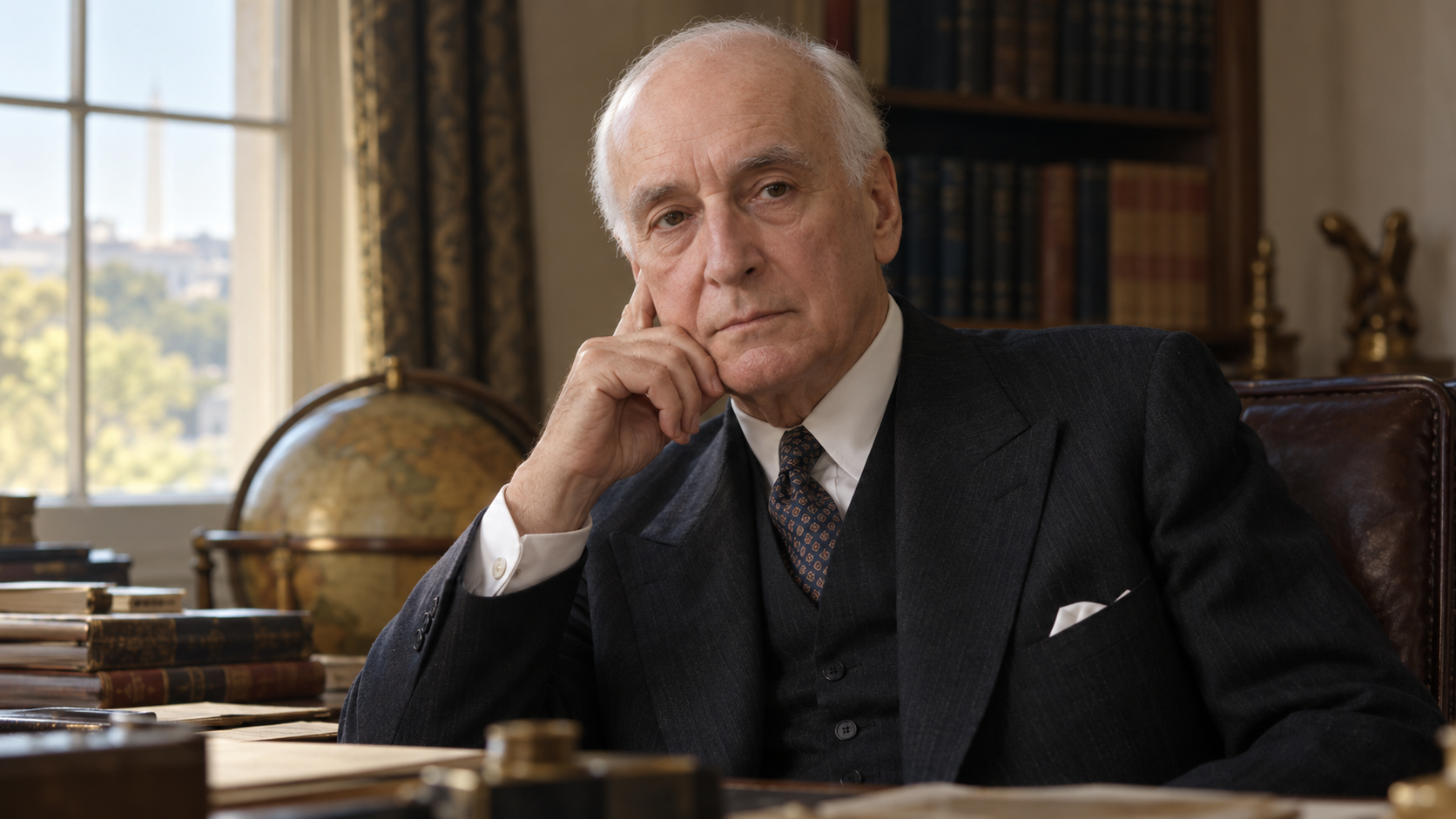
“peace has become as essential to civilized existence as the air we breathe is to life itself.”
Cordell Hull’s 1945 Nobel Peace Prize acceptance text placed the need for peace beside the need for breath. The words came after a war that had exposed the destructive reach of modern technology. Hull could not attend the Oslo ceremony because of poor health; the American ambassador to Norway, Lithgow Osborne, read his statement. This distinction matters: the passage belongs to Hull’s written argument, rather than a speech he personally delivered before that audience. Its urgency concerns the conditions under which civilization can continue, not simply the comfort of avoiding another diplomatic quarrel. Peace becomes a practical requirement for a shared future.
Hull had served as United States secretary of state and supported the creation of the United Nations. In the acceptance text, he presented international organization as a means through which governments could pursue peace. He did not describe its machinery as flawless. That qualification gives the quote more weight: arrangements made by people can provide useful ways to settle disputes without eliminating human error. His comparison with air identifies the stakes, while his discussion of institutions considers the means. A mechanism for cooperation still requires participants willing to use it honestly and to accept responsibilities beyond a moment of ceremonial agreement.
For readers today, the distinction between an institution and the commitment behind it remains useful. A treaty, negotiating forum, or procedure for mediation can make peaceful action possible. It cannot guarantee that every government will choose that action when interests collide. This is an interpretation of Hull’s argument, not a promise that any particular organization will prevent conflict. The quote asks us to judge international cooperation by what it helps preserve. That can include ordinary life: people remaining in their homes, children attending school, and public resources supporting health and infrastructure instead of repeated destruction. The scale is global, but the consequences are personal.
There is also a warning in the ordinary quality of breathing. Necessary things can receive little attention until they become difficult to obtain. A long interval without war may encourage the assumption that peace will maintain itself. Hull’s framing challenges that complacency by making prevention part of political responsibility. Citizens can ask whether leaders maintain channels of communication, take credible threats seriously, and explain the costs of escalation. None of those questions removes hard choices or settles the merits of a dispute. Together, however, they move peace from a pleasant closing phrase into the sustained work of keeping a society able to live.
Hull’s statement was read at the 1945 Nobel ceremony by Lithgow Osborne because Hull was absent through illness. The excerpt retains its original lowercase opening within a longer sentence.
The comparison follows the devastation of the Second World War. Its subject is civilization’s ability to survive growing destructive power.
Hull connected the need for peace with international cooperation and the newly established United Nations. He acknowledged that human institutions would have imperfections.
That context distinguishes a serious proposal from confidence in an automatic solution. Governments must choose to make peaceful mechanisms effective.
A present-day application is to examine whether diplomatic commitments have procedures, resources, and responsible participants behind them.
The line also invites attention before a crisis. Preserving peace includes patient prevention, even when that work attracts less notice than confrontation.
Explore more "Quotes of The Day"
Discover more notable quotes from influential voices across politics, science, business, technology, sports, and culture. Each quote offers insight into how ideas, beliefs, and decisions shape the world around us.