

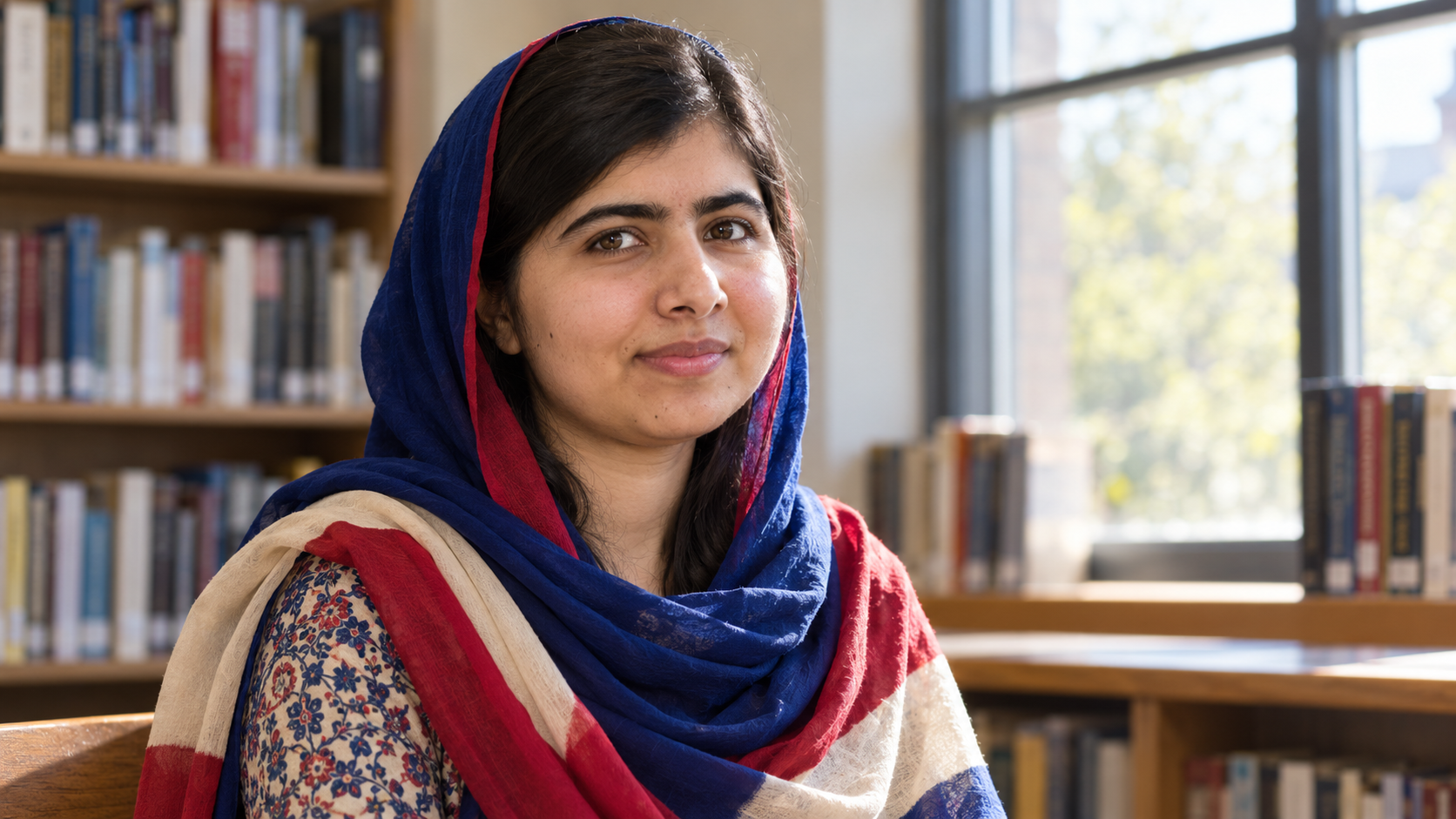
“Why is it that giving guns is so easy but giving books is so hard?”
Malala Yousafzai asked this question in her Nobel lecture on December 10, 2014. At seventeen, she addressed an audience of leaders and guests about children denied an education, particularly girls. Near the end of the speech, she compared the capacity to create war with the difficulty of providing schools and books. The question was deliberately simple. Its simplicity exposed a contrast that official explanations can make seem inevitable: governments and societies can mobilize resources for some purposes while describing education for every child as too costly or difficult. She asked her audience to reconsider what that contrast said about their priorities.
Giving books stands for more than distributing a physical object. The lecture called for free, good education through both primary and secondary school. A book has limited value if a child cannot enter a classroom, reach it safely, or learn from a supported teacher. Likewise, the comparison with guns is a rhetorical challenge rather than an accounting formula that makes all education problems identical to military spending. The question asks why urgency and organizational capacity are so unevenly applied. It brings choices about funding, protection, and opportunity into view, where an account of technical difficulty alone might leave them hidden.
Yousafzai grounded that challenge in the experiences of girls whose education was interrupted or denied. She described her own community and introduced other young people facing threats and exclusion. Those examples prevented the speech from treating access as a distant statistical concern. She also distinguished between knowing that education matters and taking action to provide it. Leaders whose own children attended good schools did not need another general lesson about its value. The issue was whether comparable opportunity would be available to other children. Her argument therefore concerned the unequal application of a principle that many officials already publicly accepted.
The passage can help readers examine a promise to make education a priority. What resources support the promise? Which children encounter barriers after an initial enrollment target has been met? Are families being asked to accept a narrower education than decision makers seek for their own children? These questions connect an appealing goal with its practical conditions. Yousafzai’s comparison does not erase the complexity of staffing schools or protecting students. It asks why complexity becomes a reason to postpone one purpose while other purposes receive determined action. The political force of the quotation lies in making those priorities answerable to the children whose opportunities depend on them.
The question appears near the conclusion of Yousafzai’s Nobel lecture in December 2014. It forms part of a call for action on children’s education.
Her demand included secondary schooling and educational quality. The reference to books should be read within that broader purpose.
The contrast challenges the distribution of political urgency and resources. It is not a claim that every school problem can be solved by one budget transfer.
Yousafzai pointed to the difference between recognizing education’s value and providing it to children beyond leaders’ own families.
A promise needs evidence about access, safety, teaching, and continued learning. Enrollment alone does not answer every question about opportunity.
The question invites comparison between accepted goals and actual commitments. It makes the reasons for delay open to public examination.
Explore more "Quotes of The Day"
Discover more notable quotes from influential voices across politics, science, business, technology, sports, and culture. Each quote offers insight into how ideas, beliefs, and decisions shape the world around us.