

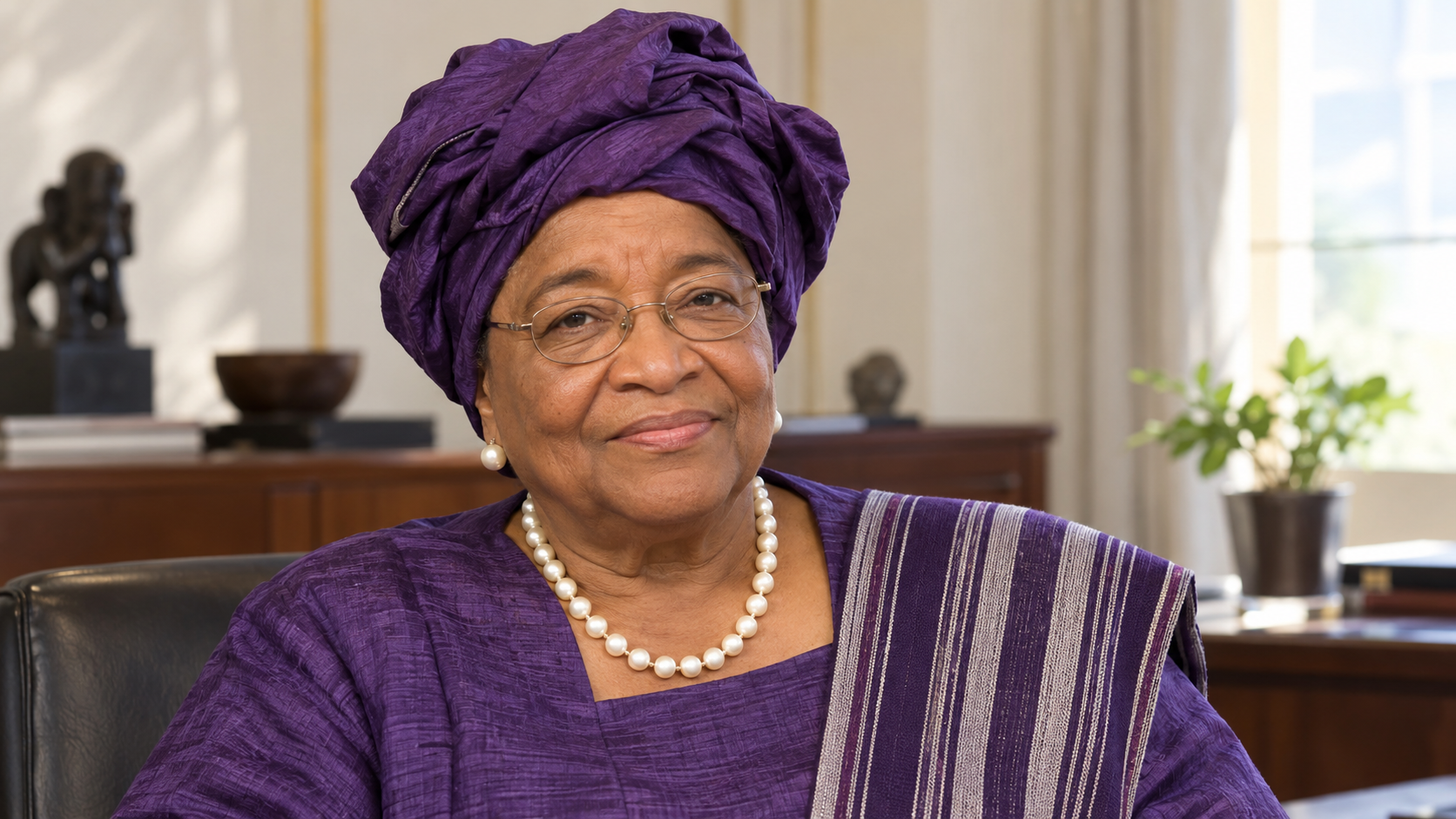
“Surely there is no place for a continuing belief that leadership qualities belong to only one gender.”
Ellen Johnson Sirleaf challenged this assumption in A Voice for Freedom, her Nobel lecture delivered in Oslo on December 10, 2011. She shared that year’s Peace Prize with Leymah Gbowee and Tawakkol Karman. The wording displayed here follows the Nobel Foundation’s published text; the Liberian Executive Mansion’s version of the delivered speech uses a different article before continuing belief. The surrounding passage connects leadership with girls’ education, protection from abuse, and the enforcement of rights. Sirleaf was therefore arguing about opportunities and institutions, as well as attitudes. Opening a political position to women means little if the routes toward education, safety, and participation remain closed.
The sentence rejects the idea that capacity to lead is a property of one gender. It does not claim that every woman will govern well, that every man will govern badly, or that representation alone resolves a country’s problems. Its point is that a categorical exclusion prevents people from being considered on their abilities and conduct. That distinction makes the argument compatible with rigorous scrutiny of every leader. A fair opportunity to serve includes the possibility of being judged by the same standards as others: competence, integrity, treatment of citizens, and willingness to answer for decisions. Equality should widen that scrutiny rather than exempt anyone from it.
Sirleaf’s speech described peace and political change as unfinished responsibilities. She spoke of rebuilding Liberia after war, honored women whose work would never receive formal recognition, and cautioned that a new political order could return to lawless practices. Her own presence as a head of state gave the gender argument a concrete setting, but she also acknowledged that an award could not license its recipients to speak for all women. Those qualifications matter. A celebrated individual can create visibility without representing every experience or interest. The practical significance of leadership depends on whether it expands opportunities for others and whether public institutions continue to protect rights when the ceremony has ended.
The quotation can guide examination of how organizations identify and develop leaders. Selection rules may formally allow everyone to compete while access to training, sponsorship, or meaningful assignments remains unequal. An institution can ask which qualities it actually needs, how those qualities are assessed, and whether assumptions about gender are substituting for evidence. Citizens can similarly distinguish the symbolic importance of a leadership milestone from the record of decisions that follows it. Sirleaf’s challenge is strongest when both questions remain open: who receives a fair chance, and how well do those entrusted with authority perform? Treating leadership as an accountable responsibility gives equal opportunity a concrete purpose beyond recognition.
The passage comes from Sirleaf’s December 2011 Nobel lecture, shared with laureates Gbowee and Karman. It follows discussion of education and rights enforcement.
This post follows the Nobel published wording. The Executive Mansion’s delivered transcript differs slightly in its article, while preserving the sentence’s argument.
The claim rejects gender as a reason to exclude a person from leadership. It does not guarantee the competence or integrity of any individual leader.
Sirleaf distinguished the visibility of an award from a mandate to speak for all women. Different experiences and voices remain necessary in political life.
Institutions can examine who receives training, assignments, and fair consideration. Formal eligibility alone does not show that access is equal.
Representation and accountability belong together. Opening leadership opportunities should be accompanied by consistent standards for the exercise of authority.
Explore more "Quotes of The Day"
Discover more notable quotes from influential voices across politics, science, business, technology, sports, and culture. Each quote offers insight into how ideas, beliefs, and decisions shape the world around us.