

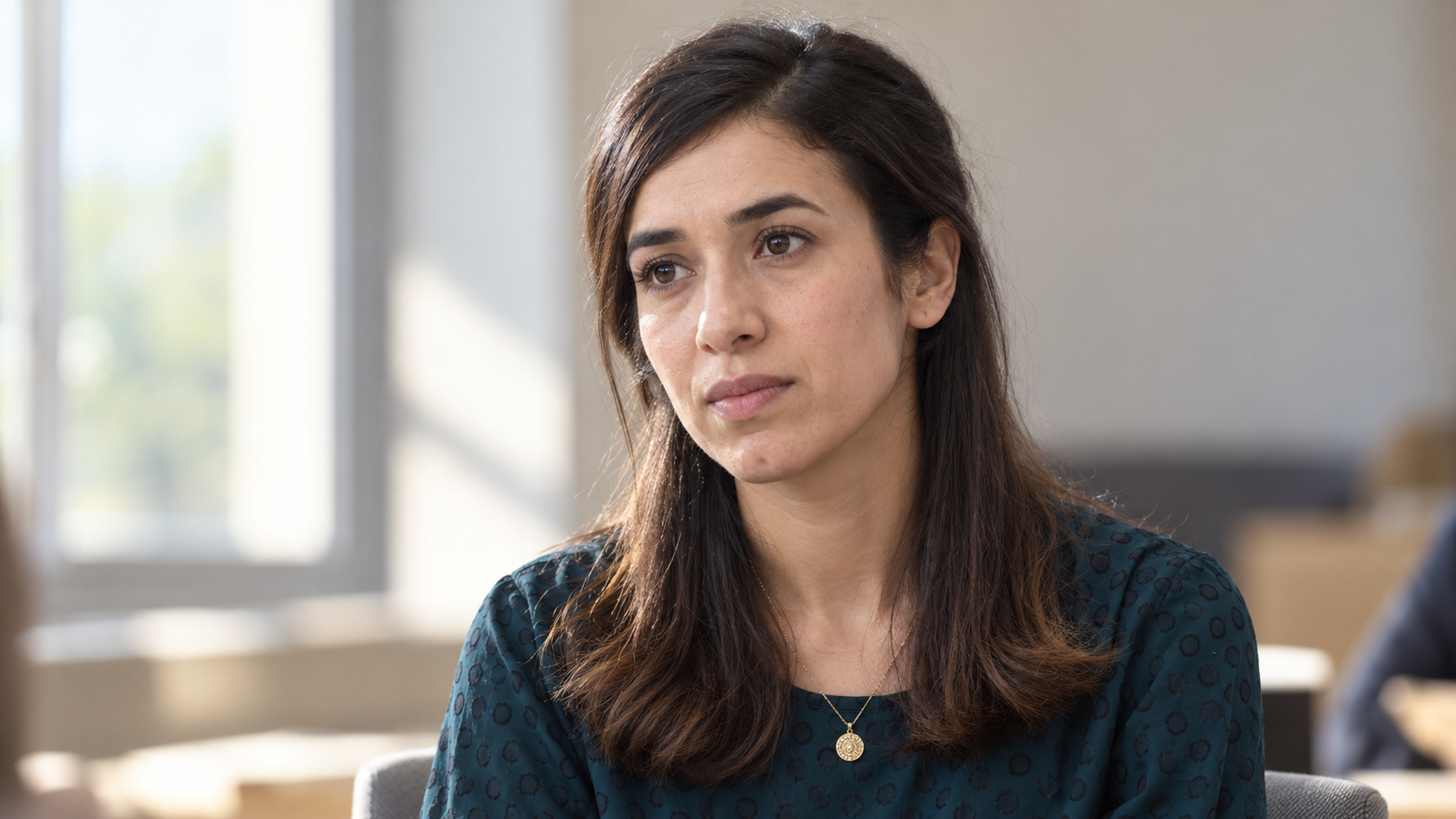
“With the voice and participation of women, we can make fundamental changes in our communities.”
Nadia Murad made this statement in her Nobel lecture on December 10, 2018. The quotation uses the official English translation of her address. After describing the persecution of the Yazidi community and calling for protection and justice, she turned to education and the participation of women in building peace. The sentence placed women within the work of changing community life, rather than treating them only as recipients of assistance. That context matters. Her appeal concerned the ability of affected people to influence reconstruction and public decisions, alongside the obligations of governments and international institutions to protect them and hold perpetrators accountable.
Voice and participation are related, but they are not interchangeable. Someone may be invited to describe an experience without having influence over what happens next. Participation asks whether that experience can affect priorities, resources, and the design of a response. Murad’s formulation brings the two together. Listening has political value when institutions create a path from what people say to decisions that concern them. The quotation does not claim that women share one perspective or offer an automatic solution to every problem. It argues that excluding their knowledge and agency restricts the possibilities for meaningful change within the communities to which they belong.
The surrounding lecture also rejected a response limited to sympathy. Murad called attention to safety, displacement, accountability, and the needs of people rebuilding ordinary lives. Those concerns give substance to the idea of fundamental change. A process may announce peace while people remain unable to return safely, earn a livelihood, or exercise their rights. A meeting may include women while practical barriers prevent many from attending or shaping its conclusions. The sentence asks readers to look at those conditions. It situates community rebuilding within the lives and choices of people affected by violence, while keeping the responsibilities of authorities in view.
Applied to a peace or reconstruction program, the passage suggests asking how participation actually works. Who helps set the agenda? Are there resources and protections that make involvement possible? Can participants challenge a proposal, and can they see how their contributions changed it? These are ways to distinguish an influential role from a ceremonial invitation. They also acknowledge that rebuilding takes time and depends on institutions as well as individual determination. Murad’s words make inclusion a matter of practical capacity and public responsibility. A community has more possibilities when women can bring their experience into decisions, help define the changes they need, and take part in carrying those changes forward.
The sentence appears in Murad’s December 2018 Nobel lecture. It follows appeals for protection and justice and a discussion of education and peace.
The quotation uses the official English translation. It concerns women’s agency in community life and decisions about rebuilding.
Being heard differs from influencing a decision. Participation requires a connection between people’s contributions and the priorities or resources that result.
Women do not form one uniform perspective. Including different experiences expands the information and agency available to a community.
A program can examine who sets agendas and whether people can challenge proposals. Practical barriers and safety affect whose participation is possible.
Community action does not replace the obligations of public institutions. Protection and accountability remain part of the conditions for lasting change.
Explore more "Quotes of The Day"
Discover more notable quotes from influential voices across politics, science, business, technology, sports, and culture. Each quote offers insight into how ideas, beliefs, and decisions shape the world around us.