

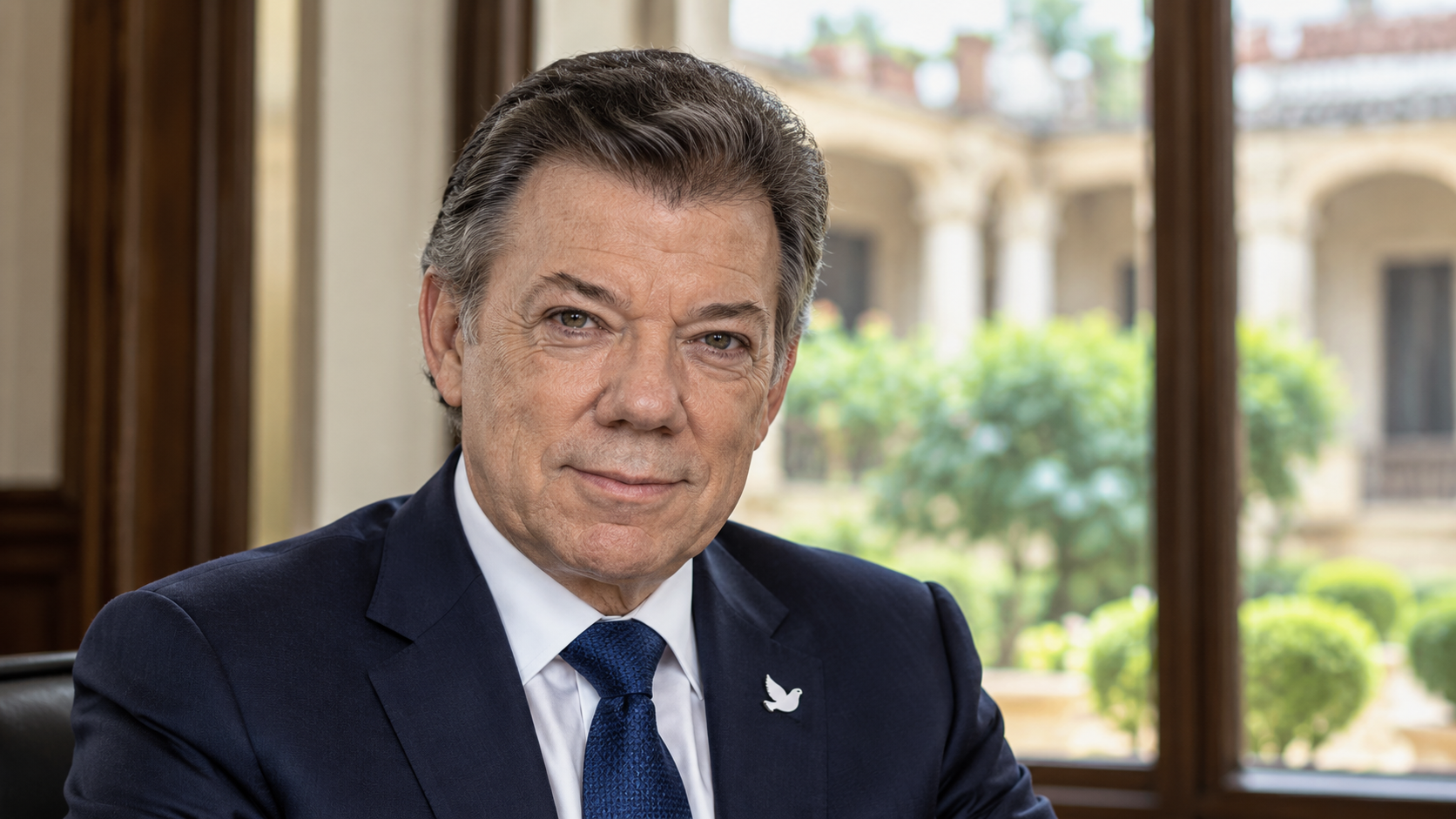
“Like life itself, peace is a process with many surprises.”
Juan Manuel Santos used this sentence in his Nobel lecture on December 10, 2016. The quotation follows the official English text of the Colombian president’s address. He immediately discussed an unexpected setback: voters had narrowly rejected the initial agreement with the FARC in a referendum earlier that year. Negotiations and a revised agreement followed. In that context, surprises were not simply pleasant discoveries. They included outcomes that threatened a carefully prepared effort. The statement presented peace as something unfolding through decisions and responses, rather than as a straight path whose destination had become certain once negotiators reached an agreement.
Calling peace a process shifts attention from a single event to continuing work. An announcement, signature, or ceremony can matter greatly, but it does not carry out every promise it contains. The people involved must respond to opposition, practical constraints, and changing circumstances. Santos’s account described listening to concerns after the referendum and seeking a revised agreement. That account is his explanation of the effort at a particular moment; it should not be mistaken for a neutral judgment that every dispute had been settled. The quotation is useful because it leaves uncertainty visible even within a speech celebrating a major political achievement.
Surprise also tests the relationship between determination and adaptation. A leader can abandon a purpose at the first setback, or insist on the original plan without examining what the setback reveals. Neither response exhausts the possibilities. Continued commitment can involve changing an approach, listening more carefully, or addressing a concern that had received insufficient attention. The passage does not make flexibility a substitute for principles or public consent. It asks readers to recognize that a complex agreement emerges from relationships among people with different experiences and interests. Those relationships may change during negotiation and implementation, creating new demands on the process.
The sentence offers a practical perspective for evaluating an initiative that promises peace. What arrangements allow problems to be identified and addressed after the public announcement? Who can raise a concern, and how will an unmet obligation be examined? Is there room to learn without making every difficulty a reason to discard the purpose? Such questions keep the attention on follow-through. They also resist the idea that success must look effortless to be credible. Santos’s formulation treats uncertainty as part of political work. Its lasting value lies in connecting an ambitious goal with the patience, scrutiny, and capacity to respond that are necessary when real people must turn an agreement into daily life.
Santos spoke in December 2016 after a referendum rejected the initial FARC agreement and a revised text was negotiated. The quotation uses the official English version.
His lecture was a participant’s account at a particular stage. It should not be read as a claim that all implementation problems had already been resolved.
A process includes work after a signature or ceremony. Obligations must be carried out as conditions and relationships change.
Adaptation can preserve a purpose while revising an approach. It should be assessed alongside principles, public consent, and affected people’s concerns.
Follow-through requires ways to identify and address unmet commitments. People need a meaningful route for raising problems after an agreement is announced.
Unexpected difficulties do not automatically establish failure or success. They make patience, scrutiny, and a capacity to respond especially important.
Explore more "Quotes of The Day"
Discover more notable quotes from influential voices across politics, science, business, technology, sports, and culture. Each quote offers insight into how ideas, beliefs, and decisions shape the world around us.