

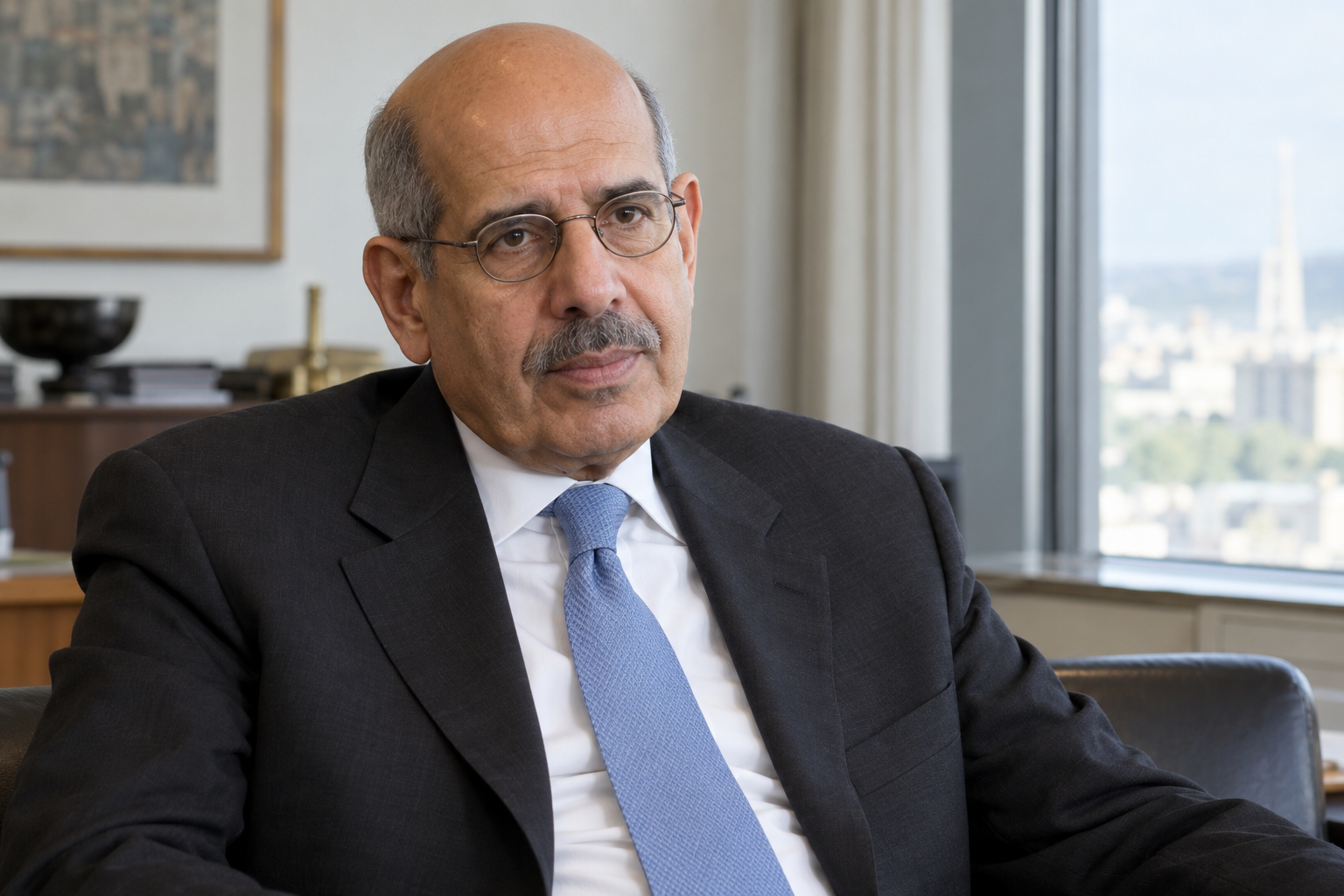
“And we will continue to carry out our mandate with independence and objectivity.”
Mohamed ElBaradei made this commitment in his Nobel lecture on December 10, 2005. The International Atomic Energy Agency and its director general shared that year’s Peace Prize. ElBaradei was speaking about the agency’s work and the standards that should guide it. The sentence refers to a particular institutional mandate, not to a claim that any officeholder may define a mission without limits. Independence and objectivity describe how that responsibility should be carried out. Together, they call for judgments that can withstand pressure and remain grounded in evidence, even when their conclusions are inconvenient to governments or other powerful actors.
Independence matters because a finding can lose credibility when an interested party appears able to dictate it. Yet independence cannot mean freedom from explanation or accountability. An institution still needs to show how it reached a judgment and why that judgment falls within its responsibilities. Objectivity adds a related demand: conclusions should follow the evidence rather than a preferred political outcome. This does not require pretending that every question is simple or that uncertainty disappears once experts become involved. It requires making uncertainty visible, distinguishing what is established from what remains unresolved, and applying standards consistently enough that people can examine their use.
The surrounding remarks acknowledged limits on the agency’s authority and resources. ElBaradei also credited the staff with whom he shared the honor. These details give the promise an institutional scale. Its success could not depend on the director’s resolve alone; it needed professional work, procedures, and cooperation. Elsewhere in the lecture, he discussed the requirements for effective verification. This context helps distinguish a pledge from an accomplished result. The sentence states a standard the agency intended to uphold. It does not prove that every judgment had met that standard or that future work would be beyond criticism. A meaningful commitment creates grounds on which performance can be assessed.
The same distinction is useful when evaluating claims of impartiality in public life. Rather than relying only on the speaker’s assurance, readers can look for a process that supports it: evidence open to examination, clear responsibilities, consistent criteria, and ways to address mistakes. Independence becomes fragile if pressure can determine findings without being acknowledged. Objectivity becomes fragile if inconvenient facts are excluded before a decision is made. An institution earns confidence by demonstrating how it handles both problems over time. ElBaradei’s sentence sets out an obligation of method as well as purpose. Its continuing value lies in asking whether the work behind a public conclusion deserves the trust that the conclusion requests.
ElBaradei spoke on December 10, 2005, after the IAEA and its director general shared the Nobel Peace Prize.
The commitment concerns how a defined institutional mandate should be carried out. It is a promise of method, not unlimited authority.
Independence calls for judgments protected from interested pressure. It remains compatible with explanation and accountability.
Objectivity calls for conclusions supported by evidence. Uncertainty should be identified rather than hidden behind an assurance of expertise.
The lecture acknowledged institutional limits and credited the staff. A director’s pledge still depends on procedures and professional work.
Readers can examine consistent criteria and ways to correct mistakes. A claim of impartiality deserves assessment through practice.
Explore more "Quotes of The Day"
Discover more notable quotes from influential voices across politics, science, business, technology, sports, and culture. Each quote offers insight into how ideas, beliefs, and decisions shape the world around us.